How much do you add to the milk for latte, Australian white and cappuccino? What is the ratio of coffee to milk between latte and frill?
Recently, Qianjie has shared with you the characteristics and production of Italian milk coffees such as latte, Australian white, and capabu. However, because each order is introduced, some friends cannot intuitively understand the difference between them. Because of this, entries such as titles have become popular searches on Qianjie public accounts.
So today, Qianjie will come here to simply share with you the characteristics of lattes, cabbors, and Australian white. We only need to understand their respective characteristics and differences between them, so that we can know how much milk we need to add to these coffees when making them, or how to make a relatively authentic cup of milk coffee "according to the materials." Why do you say that? Because if you often go to coffee shops to drink coffee, it should not be difficult to find that the same product in different coffee shops production standards are different! Take lattes, for example. Some coffee shops serve a large latte, while others serve a smaller latte. (For reference only)
The reason why this difference occurs is not only that different stores have different understandings of different products, but also because the coffee beans and milk that everyone uses are different. The coffee extracted from some coffee beans will taste more bitter, some will be sour, some will be stronger, and some will be lighter... The same is true for milk. It is the existence of these differences that makes us need to use different ratios to make the same product, because only in this way can we better show the characteristics of current materials and make the products more authentic!
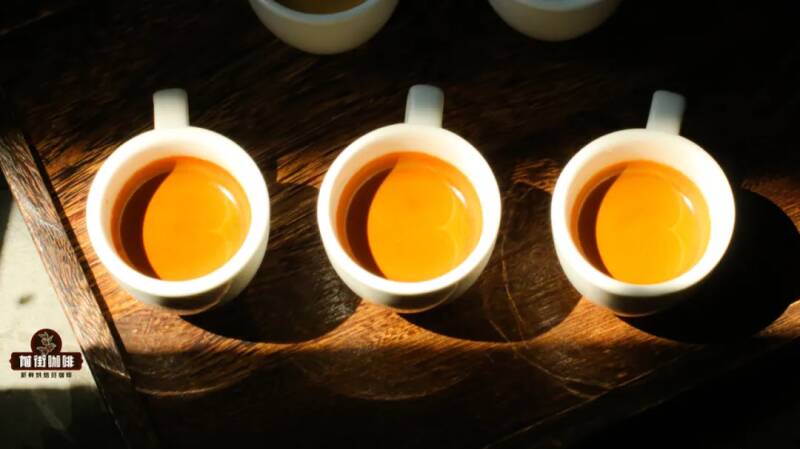
Okay, without saying much, let's let Qianjie share the characteristics of these dairy coffees and what parameters Qianjie uses to make them ~
The characteristics and production of lattes are first and foremost lattes. As the most popular existence among dairy coffees, lattes will be much more popular than other dairy coffees. Not only because its taste reaches a wider audience, but also because it can carry a variety of complex and exquisite drawing patterns.
The characteristic of lattes is that the flavors of milk and coffee can be balanced, which is often mentioned in the front street. What does it mean? It's just that its coffee flavor is not that strong, and we won't drink too much bitterness from this cup of coffee. But at the same time, the taste of coffee will not be completely covered by milk, complementing each other. So that's why lattes are more popular-the coffee is not strong. So if we want to make such a cup of milk coffee, we need to add a lot of milk to the coffee to balance the taste of the coffee.
Take Qianjie as an example. When Qianjie uses the classic Qianjie Italian mixture in the bean list to make lattes, the ratio of coffee to milk will be 1:5. Because the roasting degree of this coffee bean will be deeper and the overall taste will be stronger, a large amount of milk is needed to neutralize it. The extraction formula for espresso coffee is 20g (powder amount), 30s (time), and 40ml (liquid weight). It is made according to a ratio of 1:5, and the amount of milk that needs to be added is 200ml. If you make a hot latte, Qianjie will also send out a 0.5cm thick milk foam during the process of heating the milk, which is used to add to the overall texture of the coffee, and then you can make an exquisite drawing.
The feeling of drinking the latte made in this way is just as mentioned in front of the street. Because the flavors of coffee and milk are very balanced, it will not be too bitter to drink and is easy to accept. Then because the taste of milk does not stand out enough to obscure the taste of coffee, we can clearly taste the flavor characteristics of chocolate, toast, nuts, and cream of the classic blend. Due to the presence of thin milk bubbles, the coffee tastes smooth and solid. The overall aftertaste is long and very good ~ But if Qianjie uses medium/medium light roasted coffee beans from Doudan to make espresso coffee, such as Qianjie Essi Humbera, then the ratio of coffee to milk will be 1:4 to 1: 4.5, that is, 40ml of espresso liquor will be combined with 160 to 180ml of milk to make latte.
Because this bean is not roasted so deeply, if we want the flavor of coffee to be demonstrated, we need to appropriately reduce the amount of milk on the original basis. The latte produced in this way will not taste as mellow as the one made with the classic combination of medium and deep baking, but the overall taste will be smoother, and then it will be less bitter and easier to taste. The flavor is also well expressed, and you can obviously drink the berries and flowers of the flower.
The characteristics of cappuccino and making cappuccino are the most distinctive among the three cups. Why? Because as Qianjie shared, it not only has milk bubbles that bulge higher than the cup, but also has a quite strong coffee flavor and dense taste. With one bite, whether it is Xiaobai, who has just come into contact with coffee, or a coffee guy who has been deeply cultivating in the circle for many years, they will have a fragrant aroma in their mouths and will be unforgettable.
If we want to make cappuccino like this, we need to reduce the proportion of milk in the cup and at the same time send out a thick and dense milk foam during the heating process. Take Qianjie as an example. When Qianjie uses the classic blend from bean lists to make cappuccino, the ratio is 1:4, that is, 40ml of espresso is mixed with 160ml of milk. But all of this milk will not be added to the cup, because there will be a thick milk bubble in the cup, which is about 2 cm. Its existence will bring a more dense taste to the coffee, and at the same time reduce the proportion of milk and make the coffee taste stronger.
If Front Street uses medium/medium lightly baked Front Street Essei Humbera, the proportion of milk will be further reduced, with a ratio of 1: 3.5. Only in this way can we make coffee have sufficient concentration and taste.
Characteristics and Production of Australian White Although Australian White was born and became popular slightly later, its popularity is no less than that of the first two. Because its characteristics, like the former two, are independent and distinctive. The characteristic of Australian White is that the coffee has a strong taste but is not bitter, and has a very high sweetness. Although it may seem like a combination of the first two, it is a completely different experience. And if we want to make such a cup of Australian White, there are two ways to choose from. The first method will be relatively simple and is also used in more coffee shops nowadays, which is to control the amount of milk.
The base of coffee still uses espresso that is consistent with latte and cappuccino, while the amount of milk is between latte and cappuccino. Take Qianjie as an example. When Qianjie uses the classic blend of medium and deep baked beans in the bean list, the ratio is 1: 4.5, that is, 40ml of espresso coffee will be matched with 180ml of milk, and then a thin milk foam with a thickness of 0.3 cm will be served. The Australian white produced in this way will have a very silky taste, and the coffee will also have a strong flavor. The flavors of chocolate, caramel, nuts and other flavors will be very prominent, and the bitterness will be low. If you use medium and lightly roasted coffee beans, such as Essi Humbera in Qianjie Bean List, then the amount of milk will be less.
There is another way that will be more troublesome, because we will use the Ristretto, a short version of espresso, to make it. The so-called short extract/Ristretto refers to espresso coffee with relatively incomplete extraction. Similarly, 20g of powder is used. Conventional concentration will extract 40ml, while short extract/Ristretto will only extract 30ml of coffee liquor.
Because the end segment is omitted and too much bitterness is not dissolved, the taste of coffee will be relatively less bitter, and it will have a higher sweetness when drinking, but the aftertaste will be slightly shorter. Similarly, Qianjie is an example. When extracting Ristretto, Qianjie used parameters such as 20g powder, 30 seconds extraction time, and 30ml liquid weight. Then add 120ml of milk in a ratio of 1:4 to make a cup of Australian white.
Using these parameters, the Australian white bitterness will be less, the coffee will have a higher sweetness, and it will taste smoother. But the disadvantage is that in order to have enough flavor substances in 30ml of coffee liquor, we need to adjust the grinding to increase the efficiency of extraction and allow a small amount of hot water to dissolve more. For coffee shops with large cups, it is very inconvenient to use this method without having an additional bean grinder! Therefore, most merchants, including Qianjie, will choose to adjust the proportion of milk.
So the above are the characteristics and recipes of latte, capablo, and Australian white. You can refer to it and then add the right amount of milk according to the characteristics of your coffee beans, so that you can make a relatively authentic cup of milk coffee.
- END -
FrontStreet Coffee is a long-established specialty coffee roaster in Guangzhou China, selling freshly roasted beans from its own farm in Yunnan as well as dozens of carefully selected single-origin beans from around the world for both pour-over and espresso. The products deliver consistently excellent quality and great value, with shipping within 24 hours. Guangzhou's FrontStreet Coffee shop is recommended by many coffee lovers, and the beans are now available online at the Tmall 。
Important Notice :
前街咖啡 FrontStreet Coffee has moved to new addredd:
FrontStreet Coffee Address: 315,Donghua East Road,GuangZhou
Tel:020 38364473