What is the cause of coffee astringency? Why does the brewed coffee feel astringent?
Recently, a friend discovered a problem. He found that compared with deep-roasted coffee, it always seemed easier to brew astringent coffee when making lightly roasted beans. But he wasn't sure, so he went to ask Qianjie.
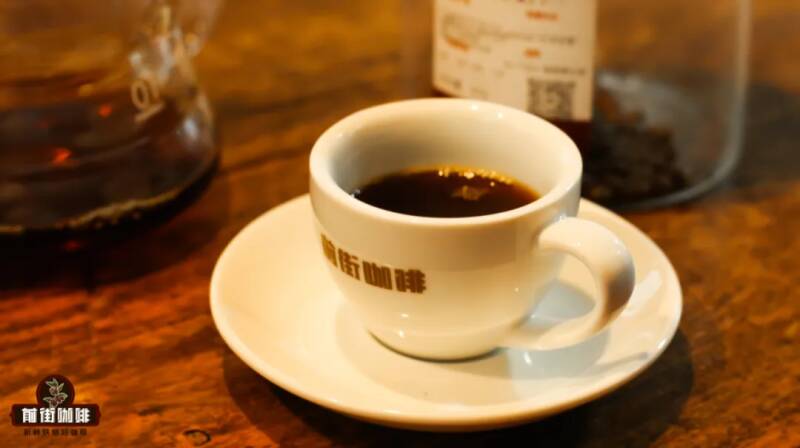
What is astringent feeling? In fact, it is a sense of convergence of being "grasped" or a rough feeling of folds produced by the mouth and tongue. This experience is caused by the combination of saliva protein after a certain substance enters the mouth. Because this is a tactile experience rather than a taste, it is called astringent. The situation mentioned by the friend above is not a so-called illusion, it is indeed the case. Compared with deep-roasted coffee, lightly roasted coffee is indeed easier to break out astringent coffee. Of course, this is also related to brewing.
The main source of astringency in coffee is the polyphenols in coffee, such as tannic acid, tartaric acid, and quinic acid degraded into chlorogenic acid. If you feel obvious astringency when drinking coffee, then the high probability is that these substances account for too much of the coffee, or that these substances are dissolved in large quantities from the coffee beans.
There are many factors that determine the amount or amount of these substances in coffee beans, such as variety, planting, harvesting, processing, and the roasting mentioned by the previous friend. The depth or light degree of roasting can determine the amount or amount of "astringent substances" in the coffee beans. When the coffee beans are roasted deeper, the less the proportion of substances that can cause astringency will be in the coffee, because many substances will be consumed and decomposed during the long roasting process. Conversely, the shallower the baking, the more it remains. Therefore, we can often taste obvious astringency in some lightly roasted coffees, because these polyphenols that can cause astringency are retained in large quantities during roasting, and it is relatively easy to brew more "astringent", giving the coffee a clear astringent feeling.
But in most cases, as long as there is no problem with the coffee beans and roasting is relatively normal, and there is no lack of development or extreme roasting levels such as extremely light roasting, it is difficult for us to use the conventional brewing method. It is easy to rush out the astringent feeling of coffee. Unless your brewing parameters are not suitable for this coffee bean, causing the flavor substances in the coffee to not dissolve enough, or allowing too much "astringent substances" to dissolve, this will cause the coffee to have obvious astringent feeling.
What is improper cooking that aggravates the astringent feeling? In fact, to put it bluntly, Qianjie means insufficient extraction and excessive extraction. The reason why we can easily get rid of the astringency of lightly roasted coffee is because lightly roasted beans are relatively not so easy to brew. Compared with deep-roasted coffee beans, the density of lightly roasted coffee beans will be higher, so when the extraction efficiency of the parameters we use is too low, it will be difficult for the positive flavor substances in the coffee to be completely dissolved. This will lead to the fact that there is not enough flavor to reduce the proportion of astringency in coffee, and the astringency can be well displayed. In other words, we can drink an obvious astringency from coffee. In addition, there may be various unpleasant feelings such as hay and sourness.
Too rough grinding, too low water temperature, too short extraction time, and insufficient stirring times/intensity are the main reasons for insufficient coffee extraction and obvious astringency. As Qianjie mentioned, in addition to insufficient extraction, excessive extraction can also easily cause obvious astringency in the coffee. When we are still extracting the flavor substances after they have completely dissolved them, then those undesirable substances in the coffee, including those that give the coffee a significant astringent feeling, will be excessively dissolved. Because these unpleasant flavors and feelings can easily be captured by us, we can clearly feel their existence even if they do not account for a large proportion of coffee.
The factors leading to this situation are the opposite of insufficient extraction, such as too high water temperature, too fine grinding, too frequent stirring, and too long extraction time. When we brew lightly roasted coffee, the factor that often causes excessive extraction is the excessive extraction time!
Because the density of lightly baked beans is relatively high and the grind used is relatively fine, the penetration rate of water flow is relatively slow. If it is not brewed properly, we can easily block the sewer with coffee powder, and then the drainage speed drops sharply, and the extraction time is forced to be extended. As a result, the coffee is over-extracted, causing various unwelcome over-extraction performances including obvious astringency.
So next, Qianjie will share how Qianjie avoids the astringent feeling and makes a pot of lightly roasted coffee. This is a cooking technique that Qianjie once shared. Although it did not cook very well, it should also have certain reference value ~
Brewing Share The coffee beans used in this brewing of Qianjie are Qianjie washed Yejia·Guo Dingding from Qianjie Tmall Taobao bean list! It is a coffee bean grown in the high altitude area of Yega Shefi, Ethiopia. It is relatively lightly roasted and has a high density, making it a good representative of lightly roasted coffee. This is also a coffee bean that Qianjie prefers because it has a very obvious floral aroma and fresh fruit flavor.
And if we want to make such a coffee well, in addition to focusing on the parameters used during extraction, the method of injecting water cannot be ignored. Because the extension of the extraction time caused by the density of the coffee itself will improve the extraction efficiency, we can reduce the extraction efficiency of hot water by reducing the number of stirring methods. At the same time, this can also effectively prevent coffee powder from clogging the filter paper and reduce the situation that hot water cannot seep down! The extraction parameters are as follows: amount of powder used: 15g, degree of grinding: 10 scale of Ek43, fine sugar grinding, 70%~75% sieving rate of No. 20 sieve (If you don't know how many grids correspond to your bean grinder, try to adjust it as fine as possible, as long as the powder pit that is washed out does not appear muddy)
Powder to water ratio: 1:15 (15g coffee powder is matched with 225ml hot water) Brewing water temperature: 92°C Use filter cup: V60
First, we inject twice the amount of water as the powder and steam it for 30 seconds to expel carbon dioxide from the coffee beans.
Then, we use a moderate water flow to inject water. The specific operation is to inject it from the center first and then slowly bypass it outward, stop expanding the range when it is almost close to the wall of the filter cup, and then loop it back and forth inside and out. The total water injection volume in this section is 100ml.
When the hot water injected in the second section has almost penetrated, we began to inject the third section of hot water. The total amount of hot water in this section is 50ml, and it is injected from the middle by using a small water flow around a small circle.
Similarly, when the third section of hot water has almost seeped down, we inject the last 45ml of hot water. This hot water does not need to be stirred, and a small water flow can be injected at a fixed point in the center. This can effectively reduce the extraction efficiency increased due to the extended extraction time.
The total time was 2 minutes and 25 seconds. Although the brewing time is longer than that previously shared by Qianjie, the extraction rate of coffee is just right. There is neither astringency due to insufficient extraction, nor any bitterness or astringency due to excessive extraction. The taste of coffee is mainly sweet and sour, with the aroma of jasmine, lemon, berries, and oolong tea. The overall taste is smooth and the aftertaste is long, much like tasting a cup of oolong tea with a strong aroma of flowers and fruits. All in all, as long as there is no problem with the coffee beans themselves and we use the appropriate parameters to brew, there is a high probability that we will not get a pot of coffee with obvious astringent taste ~
- END -
FrontStreet Coffee is a long-established specialty coffee roaster in Guangzhou China, selling freshly roasted beans from its own farm in Yunnan as well as dozens of carefully selected single-origin beans from around the world for both pour-over and espresso. The products deliver consistently excellent quality and great value, with shipping within 24 hours. Guangzhou's FrontStreet Coffee shop is recommended by many coffee lovers, and the beans are now available online at the Tmall 。
Important Notice :
前街咖啡 FrontStreet Coffee has moved to new addredd:
FrontStreet Coffee Address: 315,Donghua East Road,GuangZhou
Tel:020 38364473