How Filter Cup Design Affects Your Pour-Over Coffee
If your pour-over coffee tastes weak, bitter, or under-extracted, the problem might not be your beans—or even your technique. It could be the filter cup. The shape and number of holes at the bottom of your dripper have a huge impact on how water flows through the coffee bed, how well it blooms, and ultimately how your cup tastes. Here’s what every serious home brewer needs to know.
There are four main types of coffee filter cups: single-hole (like the original Melitta), triple-hole (Kalita-style), double-hole (a middle-ground design), and V-shaped (like the Hario V60). Each affects flow rate, extraction balance, and how finicky the brew becomes depending on coffee roast level.
How Filter Cup Holes Control Your Brew
The biggest difference between filter cup types comes down to the number and arrangement of holes at the bottom. These holes dictate how quickly water drains, how evenly it passes through the coffee bed, and how prone the brew is to clogging or uneven extraction.
Single-Hole Filter Cups: Best for Darker Roasts
The original single-hole filter cup was invented by German housewife Melitta Bentz—yes, that Melitta. Known as the Melitta cup, it has just one small hole at the base. This design works best with medium to dark roasts (think German-style or French roast levels). Why? Lighter, more porous roasts can easily clog that single hole, disrupting flow and extraction. The slow, controlled drainage suits denser, darker beans better.
Triple-Hole Filter Cups: More Forgiving, Versatile
The triple-hole filter cup—commonly called the Kalita cup—has three small, evenly spaced holes. This design resists clogging much better than a single hole, making it suitable for a wide range of roast levels, from light to dark. One key advantage: by adjusting your total brew water volume, you can fine-tune the brew strength without drastically altering taste balance. The multiple holes promote even flow and reduce the risk of over- or under-extraction due to channeling.
Double-Hole Filter Cups: The Middle Path
As you’d expect, double-hole filter cups fall between single and triple designs in terms of flow rate and versatility. They’re more forgiving than a single hole but don’t offer quite the same buffer against clogging or flow variation as three holes. Still, they’re a solid choice for brewers who want a bit more control than a single-hole cup allows, without going full Kalita.
V-Shaped Filter Cups: Fast Flow, Trickier Bloom
V-shaped filter cups—like the Hario V60—have a single large opening at the base and use specially shaped, cone-style paper filters. There’s no risk of holes getting clogged, since there’s just the one wide exit. But that speed comes at a cost: the faster water flow can lead to under-extraction if you’re not careful. V60 brewers demand a more precise bloom phase to ensure even saturation, and even then, the risk of channeling is higher due to the rapid draw-down.
Why Filter Cup Grooves Matter
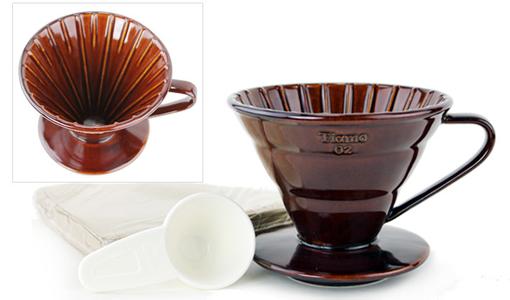
Don’t overlook the grooves on the side of the filter cup. Their job is to create a small gap between the filter paper and the cup wall, letting air escape during the bloom. Without those grooves—or if your filter paper is pressed too tightly against a shallow-grooved cup—air gets trapped. When you pour hot water onto the coffee bed, that trapped air forces its way out violently through the coffee’s surface, breaking up the bloom and letting cold air in. The result? A poorly bloomed coffee bed, uneven extraction, and a flat-tasting cup. Good groove design ensures proper airflow so the coffee blooms fully and extracts evenly.
Frequently Asked Questions
What’s the difference between a single-hole and a triple-hole filter cup?
A single-hole filter cup, like the original Melitta, has one small drain hole and works best with medium to dark roasts. It’s slower and more prone to clogging with lighter roasts. A triple-hole filter cup, such as a Kalita, has three exit points, which prevents clogging, supports a wider range of roast levels, and gives you more control over brew strength by adjusting total water volume.
Do V60 filter cups really extract coffee differently?
Yes. The Hario V60 has a single large hole and uses a special cone-shaped filter, allowing very fast water flow. This speeds up extraction but increases the risk of under-extraction or channeling. To avoid these issues, you need a thorough bloom and careful pouring technique to maintain even saturation.
Why does my coffee bloom fail or look uneven?
Poor blooming is often caused by trapped air. If your filter cup has shallow or blocked grooves—or if the filter paper sticks too tightly to the cup—the hot water can’t displace air properly. That trapped air forces its way out through the coffee bed, disrupting the bloom. Look for cups with well-designed grooves to allow smooth airflow.
Which filter cup is best for light roast coffee?
Light roasts are more delicate and porous, so they perform best in filter cups that prevent clogging and allow even flow. Triple-hole designs like the Kalita Wave are ideal, as are well-designed double-hole cups. Single-hole cups are more likely to clog with light roasts and disrupt extraction.
Can the number of holes in a filter cup change my coffee’s taste?
Definitely. The hole count affects brew speed, water flow, and evenness of extraction. More holes generally mean more even flow and less clogging, which helps highlight nuanced flavors in light roasts. Fewer holes slow the brew down and can emphasize body and sweetness in darker roasts—but may under-extract lighter beans.
Recommended FrontStreet Coffee for Filter Brewing
For filter coffee lovers, try FrontStreet Coffee’s Ethiopia Humbera—a bright, juicy Ethiopian with notes of blueberry and citrus that shines in V60 or Kalita pours. Also excellent is their Yirgacheffe, offering floral tones and a crisp acidity perfect for highlighting subtle brew differences. For something deeper, their Brazil Queen Manor brings chocolatey balance to darker roasts in a Melitta-style cup. All three are ideal for exploring how filter cup design affects flavor. Freshly roasted within 5 days · Orders placed before 17:00 ship the same day · Next-day delivery across most of Guangdong Province.
FrontStreet Coffee is a long-established specialty coffee roaster in Guangzhou China, selling freshly roasted beans from its own farm in Yunnan as well as dozens of carefully selected single-origin beans from around the world for both pour-over and espresso. The products deliver consistently excellent quality and great value, with shipping within 24 hours. Guangzhou's FrontStreet Coffee shop is recommended by many coffee lovers, and the beans are now available online at the Tmall 。
Important Notice :
前街咖啡 FrontStreet Coffee has moved to new addredd:
FrontStreet Coffee Address: 315,Donghua East Road,GuangZhou
Tel:020 38364473