Where the World’s Best Coffee Beans Are Grown
If you’ve ever wondered why some coffees taste bright and fruity while others are deep and chocolatey, the answer often starts with where the beans were grown. Not all coffee is created equal—and geography plays a huge role in shaping flavor. But where exactly are the best coffee beans grown, and what makes those regions so special?
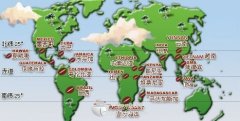
The world’s highest-quality coffee beans come from around 50 countries, mostly located between the Tropics of Cancer and Capricorn—roughly 25°N to 30°S. These regions offer the ideal mix of high altitude, tropical climate, and rich volcanic soils that coffee trees need to thrive.
Why Altitude, Climate, and Soil Matter
Premium coffee depends on more than just location. Key factors include elevation (higher altitudes slow growth and develop complex flavors), consistent rainfall, temperature ranges, sunlight exposure, and soil fertility. Even within a single farm, microclimates can create noticeable differences in cup quality. Processing methods—like washed (wet), natural (dry), and honey—also dramatically shape the final flavor profile.
The Americas: From Volcanic Slopes to Coffee Plantations
North America & the Caribbean
Hawaii (Kona): The Big Island’s Mauna Loa volcano provides mineral-rich, young volcanic soil. Coffee here grows under cloud cover that filters sunlight, with frequent light rains. Kona coffee is medium-bodied, aromatic, and famously smooth.
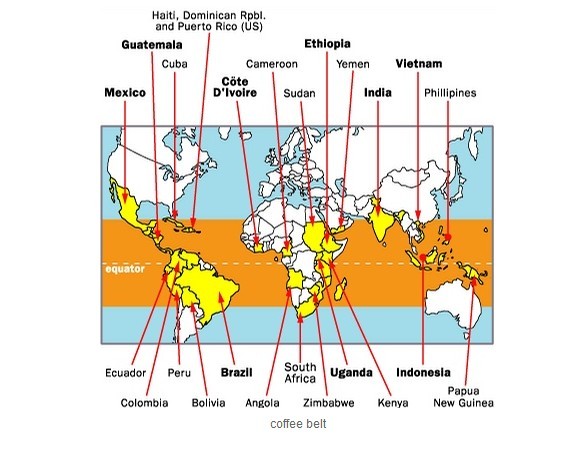
Mexico: Produced by over 100,000 smallholders, Mexican coffee mainly comes from Chiapas, Oaxaca, and Veracruz. It offers heavy body with bright acidity and is often used in blends or dark roasts. “Altura” denotes high-altitude beans.
Puerto Rico: Once a top global exporter, Puerto Rico is rebounding with Arabica grown in the Grand Lares and Yauco Selecto regions. These beans balance sweetness, acidity, and fruitiness.
Central America
Guatemala: Home to Antigua, Cobán, and Huehuetenango regions, Guatemalan coffee grows in volcanic soils and rugged highlands above 4,500 feet. Expect medium to full body, mild spice notes, and chocolate undertones.
Costa Rica: Producing only washed Arabica, Costa Rica is known for “perfect balance.” Fincas (small farms) send beans to centralized beneficios (processing mills)—the birthplace of washed processing. The result is consistently clean, bright, and well-structured cups.
South America: Consistency and Scale
Colombia
Ranked second in global production, Colombia is famed for its smooth, balanced cups. The rugged landscape makes transport difficult but ensures diverse microclimates. Supremo grade offers sweet, vibrant flavor; Excelso is softer with brighter acidity.
Brazil
As the world’s largest coffee producer, Brazil grows both Arabica and Robusta across vast farms. Most Brazilian coffee is mild, low-acid, and medium-bodied, often processed via natural or pulped natural methods. The country’s size leads to regional variations in cup profile.
Africa & the Middle East: The Birthplace of Coffee
Ethiopia
Considered the origin of coffee, Ethiopia still harvests wild coffee varieties. Key regions include Sidamo, Harrar, and Yirgacheffe (Yirg). Ethiopian coffees are bold, complex, and often fruity or floral. Processing is typically natural or washed.
Kenya: Renowned for high-quality AA and AA+ beans (graded by size), Kenyan coffee features intense acidity, deep fruit notes, and full body. The country employs strict quality control and unique processing standards.
Ivory Coast
A leading Robusta producer, Ivory Coast’s beans are bold, low in acid, and thin-bodied. They’re ideal for dark roasts and espresso blends.
The Arabian Peninsula & Asia: Unique Traditions and Methods
Yemen
One of the first places to cultivate coffee commercially, Yemen still uses ancient growing and drying methods. Small garden plots yield small, irregular beans. Dried naturally, Yemeni coffee is heavy, syrupy, and unlike any other.
The port of Mocha gave its name to Mocha Java—the world’s first recorded coffee blend, combining Yemeni and Java beans.
Indonesia
Comprising thousands of islands, Indonesia is famed for Sumatra, Java, and Sulawesi. Coffee is mostly processed using dry methods, resulting in earthy, full-bodied, low-acid cups. Aged Indonesian coffees develop deeper sweetness and mellowness due to local humidity and storage practices.
Vietnam: The world’s second-largest producer mainly grows Robusta. Vietnamese Robusta is mild, medium-bodied, and balanced—commonly used in blends.
Frequently Asked Questions
What makes high-altitude coffee better?
Higher elevations slow coffee cherry ripening, allowing more complex sugars and acids to develop. This usually results in brighter acidity, greater complexity, and a more desirable cup profile. Most specialty-grade coffees are grown at 1,200–2,000 meters above sea level or higher.
Which country produces the best coffee?
There is no single “best” country—it depends on flavor preference. Ethiopia offers wild, complex flavors; Colombia provides balanced, sweet cups; Kenya is known for bright acidity and fruit; and Guatemala delivers rich chocolate and spice notes. Each origin has unique strengths.
Why does processing method affect flavor so much?
Processing—whether washed (removing the cherry pulp before drying), natural (drying with the cherry on), or honey (partial pulp removal)—impacts how sugars and acids develop. Washed coffees tend to be cleaner and brighter; natural processed coffees often have more fruitiness and body.
Is Brazilian coffee always low quality?
No. While much Brazilian coffee is grown for volume and mildness, the country also produces high-quality beans with good sweetness and body. Elevation, farm practices, and processing all influence quality. Premium Brazilian lots can be excellent single-origin options.
Where can I find Kona or Ethiopian coffee?
Kona coffee comes exclusively from Hawaii’s Big Island and is widely available as single-origin. Ethiopian beans, especially from Yirgacheffe, Sidamo, and Harrar, are common in specialty shops. Look for washed or natural versions to experience different flavor profiles.
Recommended FrontStreet Coffee for Exploring Origins
Try FrontStreet’s Ethiopia Yirgacheffe for bright citrus and floral notes, their Colombia Huila for caramel and citrus balance, and their Sumatra Mandheling for earthy, spicy depth. Each represents a classic origin profile and highlights how terroir shapes flavor. Freshly roasted within 5 days · Orders placed before 17:00 ship the same day · Next-day delivery across most of Guangdong Province.
FrontStreet Coffee is a long-established specialty coffee roaster in Guangzhou China, selling freshly roasted beans from its own farm in Yunnan as well as dozens of carefully selected single-origin beans from around the world for both pour-over and espresso. The products deliver consistently excellent quality and great value, with shipping within 24 hours. Guangzhou's FrontStreet Coffee shop is recommended by many coffee lovers, and the beans are now available online at the Tmall 。
Important Notice :
前街咖啡 FrontStreet Coffee has moved to new addredd:
FrontStreet Coffee Address: 315,Donghua East Road,GuangZhou
Tel:020 38364473