How to Steam Milk for Latte Art with an Espresso Machine
If your latte art collapses or your cappuccino lacks texture, the issue likely starts with how you steam your milk. Even with great espresso, poor milk texture ruins the drink. Many baristas struggle with inconsistent foam—either too bubbly, too thin, or lacking microfoam structure. Here’s how to fix it, step by step, based on proven technique and science.
To steam milk properly for latte art, aim for a starting temperature below 4°C (milk storage temp), use whole milk (3%+ fat) balanced with some skim or cold-frothed milk, and control steam pressure and pitcher movement to create microfoam through a two-phase process: stretching (volume expansion) and texturing (smooth microfoam formation).
Why Milk Temperature Matters for Foam Quality
Milk temperature is critical when steaming. For every 2°C rise in storage temperature, milk’s shelf life halves—and higher temperatures break down milk fat, reducing foam stability. The optimal milk storage temperature is around 4°C. When steaming, starting with colder milk (closer to 4°C) ensures proteins denature evenly, improving foam structure. Higher fat breakdown from heat or age leads to thinner, less stable foam.
How Milk Fat Content Affects Foam Texture
Different milk fat levels produce distinct foam characteristics:
| Fat Content | Milk Type | Foam Traits |
| <0.5% | Skim/nonfat | Most foam volume, coarse texture, light body, large bubbles |
| 0.5–1.5% | Low-fat | Medium foam amount, smooth texture, heavier body, medium bubbles |
| >3% | Whole milk | Less foam volume, dense texture, thick body, small bubbles |
Using only whole milk can limit foam volume. Combining whole milk with some cold-frothed or skim milk often yields better texture and volume.
Steam Wand Types and Their Effects
Steam wands come in two main designs: external-expansion (wide outward blast) and concentrated (focused jet). Each affects how you position the wand and angle the milk pitcher. With an external-expansion wand, avoid placing the tip too close to the pitcher rim to prevent chaotic turbulence. A concentrated wand requires careful angle control to produce smooth foam. Adjust your technique based on your machine’s wand type.
Steam Pressure and Pitcher Size
Higher steam pressure creates faster foam but can produce larger, coarser bubbles—especially in smaller pitchers. Lower pressure results in slower steaming but finer control and fewer large bubbles. Use a 600cc pitcher for cappuccinos and a 1000cc pitcher for lattes. The right pitcher size prevents overflow and supports proper microfoam development. Always use a spouted (pointed-tip) pitcher for latte art, and practice with different spout shapes.
The Role of Steam Dryness
Drier steam (lower water content) produces denser, smoother foam with less trapped water. The drier the steam, the better the milk texture. Aim for maximum steam dryness from your machine.
Why Use Steamed Milk at All?
Steaming milk incorporates air into liquid milk via steam pressure, using milk proteins’ surface tension to form microbubbles. This increases the milk’s volume and alters its texture. Heat causes lactose to dissolve, while fat stabilizes the bubbles. The result is a creamy, sweet mouthfeel that complements espresso. Properly textured milk bonds strongly with coffee, allowing both flavors to shine without clashing.
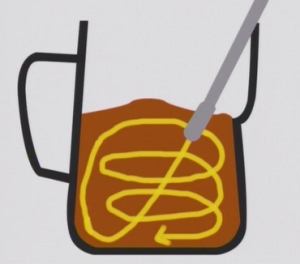
Two-Phase Milk Steaming: Stretching and Texturing
Great milk foam comes from two distinct phases:
- Stretching (Phase One): Introducing air to expand milk volume.
- Texturing (Phase Two): Breaking larger bubbles into microfoam and evening out texture.
There are two common methods: combining both phases or separating them. The combined method yields softer, silkier foam that’s easier to pour into latte art but may lack density. The separated method (stretch then texture) creates firmer, more elastic foam ideal for velvety drinks—but demands more skill for pouring patterns.
Step-by-Step: Separate Stretching and Texturing Method
Phase One – Stretching (Creating Volume)
- Position the steam wand tip at the center-right edge of the pitcher, about 1cm deep, angled 45° upward.
- Turn on the steam and lower the pitcher slowly to roll the milk, incorporating air and expanding volume.
- When the milk reaches roughly 80% full (approx. 4°C–5°C rise), move the wand tip to the center-right near the rim to create a whirlpool.
- Adjust angle and depth to fold in larger bubbles, stopping when milk hits your target temperature (~60°C–65°C).
Phase Two – Texturing (Smoothing the Foam)
- Reset the wand tip to the center-left edge of the pitcher, angled 45° downward, about 1cm deep.
- Activate the steam and lower the pitcher to create a steady whirlpool motion.
- Control movement and angle to maintain the vortex, expanding milk to about 90% full.
- Hold the pitcher steady and deepen the wand slightly to continue steaming until the milk reaches final temperature (~65°C), then stop.
Frequently Asked Questions
What’s the best milk temperature for steaming?
Ideally, start with milk stored at 4°C. During steaming, milk temperature should rise to about 60–65°C. Avoid going over 70°C to prevent scalding and excessive fat breakdown, which ruins foam texture.
Does milk fat content affect latte art?
Yes. Whole milk (3%+ fat) creates denser foam that holds shape better, but too much fat reduces foam volume. A mix of whole and skim or cold-frothed milk often gives the best balance of texture and pourability for latte art.
What’s the difference between stretching and texturing milk?
Stretching introduces air to increase milk volume (the foamy stage). Texturing breaks down large bubbles into microfoam and smooths the texture (the velvety stage). Both are essential for quality foam.
Can I steam milk with any steam wand?
Yes, but technique varies. External-expansion wands need more distance from the pitcher rim, while concentrated wands require precise angles. Adjust your method based on your machine’s steam wand design.
Do I need a special pitcher for latte art?
Yes. Use a spouted (pointed-tip) milk pitcher. Sizes vary: 600cc for cappuccinos, 1000cc for lattes. The right pitcher helps control pour and supports proper foam development.
Is drier steam better for milk foam?
Yes. Drier steam has less water content, producing smoother, denser foam. Aim for the driest steam your machine can produce to improve texture.
Recommended FrontStreet Beans for Milk-Based Drinks
For latte and cappuccino lovers, try FrontStreet Coffee’s Ethiopia Huakui – a bright, juicy Ethiopian single origin with notes of blueberry and citrus that still shine through milk. Pair it with FrontStreet’s Classic Blend for a balanced, chocolatey espresso base that froths well and complements steamed milk. Both beans are roasted to highlight sweetness and body, making them ideal for milk drinks with smooth microfoam. Freshly roasted within 5 days · Orders placed before 17:00 ship the same day · Next-day delivery across most of Guangdong Province.
FrontStreet Coffee is a long-established specialty coffee roaster in Guangzhou China, selling freshly roasted beans from its own farm in Yunnan as well as dozens of carefully selected single-origin beans from around the world for both pour-over and espresso. The products deliver consistently excellent quality and great value, with shipping within 24 hours. Guangzhou's FrontStreet Coffee shop is recommended by many coffee lovers, and the beans are now available online at the Tmall 。
Important Notice :
前街咖啡 FrontStreet Coffee has moved to new addredd:
FrontStreet Coffee Address: 315,Donghua East Road,GuangZhou
Tel:020 38364473