How to Steam Milk for Latte Art with a Commercial Espresso Machine
If you’re learning to make coffee, chances are you’re more excited about pouring hearts and tulips than dialing in grind size or extraction time. But here’s the truth: no matter how skilled you are, bad milk foam ruins latte art. The secret? It all starts with how you steam the milk.
The best milk foam for latte art comes from properly steamed milk with fine, stable microfoam. To get it right, you need to control how air is introduced into the milk using the steam wand—usually by positioning it just below the surface.
How Does Milk Foam Form?
Milk foam forms when air is injected into the milk and trapped by milk proteins. The proteins wrap around the air bubbles, while milk fat helps stabilize the foam. Higher protein content leads to more foam; higher fat content makes the foam more stable. That’s why whole milk or properly textured milk creates better latte art.
Three Ways to Steam Milk with a Commercial Semi-Automatic Espresso Machine
We tested three common steam wand positions to see how they affect milk foam quality. All tests used the same milk type and volume. Here’s what we found, based on how the steam wand was placed in relation to the milk’s surface:
1. Steam Wand Just Below the Milk Surface
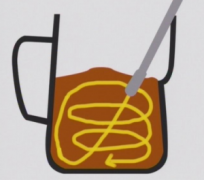
With the steam wand positioned at or just beneath the milk surface, air is injected throughout the steaming process. This creates large, unstable bubbles and thick foam on top. The resulting foam is too airy and uneven—difficult to pour for latte art. If you try, you’ll need to skim off the big bubbles with a spoon first.
2. Steam Wand Inserted About 1cm Into the Milk
When the steam wand is inserted around 1cm into the milk, it initially injects air to create microfoam. Once the foam layer builds up and covers the wand, air intake stops, and the remaining steam only heats the milk. This can produce decent milk texture, but requires careful control to avoid large bubbles early on.
3. Steam Wand Fully Submerged in Milk
With the wand completely underwater, no air enters the milk. As a result, no foam forms at all—just hot milk. This method won’t give you the microfoam needed for pouring latte art. Without air, there’s no foam structure to shape.
Which Method Makes the Best Milk for Latte Art?
The ideal method is a controlled version of Option 2: insert the steam wand just below the milk surface to introduce air in the first few seconds, then submerge it slightly to heat and stretch the milk without creating large bubbles. This produces smooth, velvety microfoam with the right consistency for latte art.
For best results, position the wand so the tip is slightly off-center at the milk’s surface to create a whirlpool effect. Start with the wand just breaking the surface to add air, then lower it to heat the milk to about 55–60°C (131–140°F), aiming for a slight hiss followed by a deep rolling sound.

Frequently Asked Questions
How do I get microfoam for latte art?
To get microfoam, insert the steam wand just below the milk surface to add air in short bursts, then submerge it to stretch and heat the milk. The goal is fine, velvety bubbles—no large bubbles or dry foam on top. Steam to 55–60°C (131–140°F).
What’s the best steam wand position for foam?
The best position is just under the milk surface, off to the side. This lets you introduce air early, then submerge to heat without creating big bubbles. Keep the tip near the surface initially, then deeper as the foam builds.
Why does my milk have big bubbles?
Big bubbles happen when you keep the steam wand at the surface too long or don’t control airflow. To avoid them, start with brief air injection, then submerge the wand to heat the milk without adding more air.
Can I steam milk without foam for coffee?
Yes—if you fully submerge the steam wand with no air intake, you’ll get hot milk with no foam. But this won’t work for latte art, which requires microfoam.
What temperature should steamed milk be for latte art?
For best texture and sweetness, steam milk to 55–60°C (131–140°F). Going hotter can scorch the milk and degrade texture, making it harder to pour art.
Does milk fat content affect foam stability?
Yes—higher fat content (like in whole milk) makes foam more stable. That’s why whole or 2% milk is often better for latte art than skim milk, which can be too foamy but less stable.
Recommended FrontStreet Beans for Latte Art
For great latte art, start with a well-extracted espresso that produces a rich, stable crema. FrontStreet Coffee’s Classic Blend offers balanced acidity, chocolate notes, and a thick crema ideal for milk drinks. Their Commercial Blend is designed for bold body and caramelized sweetness, making it another excellent choice for lattes and cappuccinos. Both blends yield the crema thickness (around 3mm) and structure needed for smooth milk integration and clean latte art pours. Freshly roasted within 5 days · Orders placed before 17:00 ship the same day · Next-day delivery across most of Guangdong Province.
FrontStreet Coffee is a long-established specialty coffee roaster in Guangzhou China, selling freshly roasted beans from its own farm in Yunnan as well as dozens of carefully selected single-origin beans from around the world for both pour-over and espresso. The products deliver consistently excellent quality and great value, with shipping within 24 hours. Guangzhou's FrontStreet Coffee shop is recommended by many coffee lovers, and the beans are now available online at the Tmall 。
Important Notice :
前街咖啡 FrontStreet Coffee has moved to new addredd:
FrontStreet Coffee Address: 315,Donghua East Road,GuangZhou
Tel:020 38364473