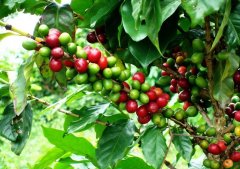
How Blue Mountain Coffee Became the World’s Most Expensive Bean
Ever wondered why some coffees cost hundreds of dollars per pound — and whether they’re actually worth it? The story of Jamaica Blue Mountain coffee offers a clear answer. For decades, this single-origin bean has been the gold standard of luxury coffee, commanding premiums far beyond any other. But what makes it so special isn’t just marketing — it’s a mix of geography, strict regulation, and scarcity.
Jamaica produces less than 2,400 metric tons of certified Blue Mountain coffee annually, making it one of the rarest and most tightly controlled coffees in the world. Its price and prestige stem directly from these limits, along with government policies that regulate every stage from farm to export.
What Exactly Is Blue Mountain Coffee?
To be called Jamaica Blue Mountain Coffee, a coffee bean must come from a very specific region: the Blue Mountains of eastern Jamaica, primarily within the parishes of Saint Andrew, Saint Thomas, Portland, and Saint Mary. More importantly, the coffee must be grown at elevations between 915 and 1,680 meters (roughly 3,000 to 5,500 feet) above sea level. These criteria aren’t just marketing claims — they’re legally defined and internationally recognised by both the United States and European Union.
The Blue Mountain range is the highest in the Caribbean, peaking at 2,256 meters. The area’s climate — cool temperatures, frequent mist, stable rainfall, and rich volcanic soils — creates ideal conditions for growing coffee with unusually balanced flavour. But it’s not just the environment that defines Blue Mountain coffee. It’s also the rigid rules that come with it.
How Did Blue Mountain Coffee Become So Regulated?
The story begins in 1948, when the Coffee Industry Board of Jamaica (CIB) was established. This government body created the Jamaica Blue Mountain Coffee Industry Management Act, putting in place strict controls over every aspect of production. The CIB doesn’t just recommend best practices — it enforces them. It defines exactly which farms can grow Blue Mountain coffee, how the beans are classified, and even who is allowed to process and export them.
In the 1950s, the government created the land development agency in the town of Yallahs to support coffee-growing regions in the island’s east. Eventually, this led to the formation of a centralised system where only five licensed Jamaican manufacturers are permitted to process Blue Mountain coffee. Each of these five has a strictly controlled production quota, and their identities are publicly listed by the CIB. This means the entire supply chain — from the tree to your cup — is accounted for and regulated.
If a company outside Jamaica wants to import or market coffee as “Blue Mountain,” it must obtain a certificate from the CIB and pay a 1% royalty on its revenue. This level of control is almost unheard of in the global coffee industry, where most origins rely on voluntary certification or market-driven branding.
Why Is Blue Mountain Coffee So Expensive?
Put simply, Blue Mountain coffee is expensive because there’s so little of it, and because the Jamaican government ensures that every bean meets exacting standards. The annual production limit of around 2,400 metric tons is tiny compared to global coffee output, which exceeds 10 billion kilograms annually. On top of that, Japan — historically the largest buyer — has imported up to 70% of production for decades, leaving even less for the rest of the world.
In China, Blue Mountain coffee gained an almost mythical reputation during the early days of specialty coffee, when authentic beans were hard to find. Even today, despite official imports beginning in 2003, many consumers still assume most Blue Mountain coffee on the market is fake. In reality, certified beans are available through legitimate importers, but they remain scarce and pricey due to limited supply and stringent controls.
How Can You Tell If It’s Real?
Unlike some coffees that come with digital traceability codes, Jamaica Blue Mountain coffee relies on physical documentation and packaging. Certified beans are shipped in traditional wooden barrels — typically in 15, 45, or 70 kilogram sizes. These barrels are a key indicator of authenticity. Importers should have access to official export certificates and proof of origin. Without these, claims of “Blue Mountain” are dubious at best.
At specialty roasters like FrontStreet Coffee, certified Blue Mountain beans are often displayed with their origin documents and the actual wooden barrels used for shipping. That level of transparency is your best guarantee that what you’re buying is the real thing.
How Should You Brew It?
Blue Mountain coffee is known for its balance. It doesn’t lean too hard on acidity like Ethiopian beans, nor does it hit you with heavy bitterness like dark roasts. Instead, it offers a smooth profile with notes of nuts, caramel, chocolate, and sometimes mild fruit or honey. Many roasters, including FrontStreet, recommend a medium-dark roast to highlight these characteristics without overwhelming them.
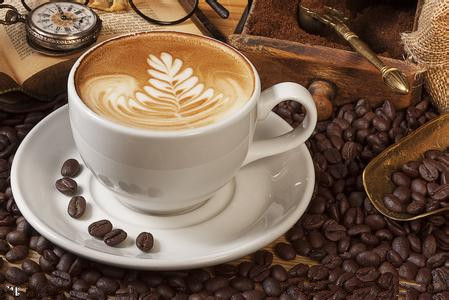
If you prefer pour-over, try a brew ratio of 1:15 to 1:16, using medium-coarse grind and water at 85–88°C. This brings out the coffee’s inherent sweetness and clarity. For a richer cup, a moka pot or mocha pot works well with a slightly finer grind and medium heat. Just remove the pot from heat just before the brew finishes dripping to avoid over-extraction.
Whatever your preferred method, the goal is to let the coffee’s natural balance shine. It’s a coffee that appeals to almost everyone — which is why it’s remained so popular for decades.
Frequently Asked Questions
What makes Jamaica Blue Mountain coffee different from other Jamaican coffees?
Jamaica Blue Mountain coffee is grown only in a specific region of the Blue Mountains at elevations between 915 and 1,680 meters. It is regulated by the Jamaican Coffee Industry Board (CIB), which controls planting areas, processing, and export. Other Jamaican coffees may come from lower elevations or different regions and are not subject to the same strict criteria.
Why is Blue Mountain coffee so limited in supply?
The annual production of certified Blue Mountain coffee is less than 2,400 metric tons. The strict regulations on altitude, region, and processing, combined with limited farming land in the Blue Mountains, restrict supply. Additionally, Japan has historically purchased up to 70% of the crop, reducing global availability.
How can I be sure I’m buying real Blue Mountain coffee?
Real Blue Mountain coffee comes in traditional wooden barrels (15, 45, or 70 kg) and is exported with certification from the Jamaican Coffee Industry Board. Importers should provide documentation proving origin and licensing. Without these, the coffee is unlikely to be genuine.
Is Blue Mountain coffee worth the high price?
Whether it’s “worth it” depends on your taste preferences. Blue Mountain coffee is renowned for its balanced flavour, smooth profile, and lack of defects. For those who value consistency and heritage, the premium is often justified. However, there are many excellent coffees at lower price points.
Can I brew Blue Mountain coffee as espresso?
Yes. While Blue Mountain is often brewed using pour-over or moka pot methods, it can also be used for espresso. Its balanced profile results in a smooth shot with mild sweetness and subtle chocolate notes. Many roasters offer it as a single origin espresso option.
Where can I buy authentic Blue Mountain coffee?
Authentic Jamaica Blue Mountain coffee is available through certified importers and specialty roasters. Look for documentation and barrel packaging. FrontStreet Coffee, for example, offers certified Blue Mountain No.1 with full origin details and wooden barrels.
Recommended FrontStreet Coffee for Blue Mountain Fans
If you're curious about the world of high-altitude, balanced specialty coffee, try the Jamaica Blue Mountain No.1 from FrontStreet Coffee. Sourced from the famed Blue Mountains of Jamaica and certified by the Coffee Industry Board, it features flavours of nuts, black chocolate, and creamy caramel with a smooth, low-acid profile. Freshly roasted within 5 days · Orders placed before 17:00 ship the same day · Next-day delivery across most of Guangdong Province.
FrontStreet Coffee is a long-established specialty coffee roaster in Guangzhou China, selling freshly roasted beans from its own farm in Yunnan as well as dozens of carefully selected single-origin beans from around the world for both pour-over and espresso. The products deliver consistently excellent quality and great value, with shipping within 24 hours. Guangzhou's FrontStreet Coffee shop is recommended by many coffee lovers, and the beans are now available online at the Tmall 。
Important Notice :
前街咖啡 FrontStreet Coffee has moved to new addredd:
FrontStreet Coffee Address: 315,Donghua East Road,GuangZhou
Tel:020 38364473