Where Coffee Trees Come From: Ethiopia Origins Explained
Ever wondered where your morning coffee actually comes from? Not the roasted beans in your bag, but the living plant that produces the fruit — the coffee tree. Most people don’t know much about the origins of the plant itself, let alone the precise natural conditions that allow it to thrive. If you’ve ever asked ‘Where do coffee trees come from?’ or ‘Why does altitude matter for coffee?’, this guide lays out the full story, starting with the plant’s birthplace.
The coffee tree originated in Ethiopia, Africa. Botanically, it’s a tropical evergreen belonging to the Rubiaceae family, subgenus Coffea. What we call a ‘coffee bean’ is actually the seed inside the fruit — a red, cherry-like drupe. Ethiopia remains central to understanding not just the history, but also the ideal growing conditions for high-quality coffee.
What Is a Coffee Tree and Where Does It Grow?
Coffee trees are evergreen shrubs or small trees native to the highland forests of Ethiopia. They belong to the genus Coffea within the botanical family Rubiaceae. The part we call a ‘coffee bean’ is the seed of the coffee fruit — a stone fruit similar to a cherry. Though commonly referred to as beans due to their shape, they are neither legumes nor beans.
The coffee tree naturally grows in the tropics and subtropics, specifically within the region known as the ‘Bean Belt’ or ‘Coffee Belt’. This zone lies roughly between 25° north and 25° south of the equator. However, not all land in this band can grow great coffee — only areas with the right combination of climate, soil, and elevation produce quality beans.
What Climate and Conditions Do Coffee Trees Need?
Coffee trees require very specific environmental conditions to grow well and produce high-quality fruit:
- Temperature: Ideal range is 15–25°C (59–77°F). They do not tolerate frost or extreme heat.
- Rainfall: Annual rainfall should be 1500–2000 mm (59–79 inches), timed to support flowering and fruit development.
- Soil: Well-drained, fertile soils rich in organic matter. Volcanic soils are especially beneficial due to their mineral content.
- Sunlight: Coffee needs sunlight but benefits from partial shade. In many regions, shade trees are planted to filter intense sun.
- Altitude: The best coffee is grown at elevations between 500 and 2000 meters (1640–6560 feet). Higher altitudes typically slow growth and develop more complex flavors.
These factors — along with harvest methods and post-harvest processing — determine the final cup quality. Even slight deviations can affect bean density, acidity, and aroma.
How Does the Coffee Cherry Develop?
A coffee tree takes about three years to flower for the first time. The flowers are small, white, and fragrant, with a scent reminiscent of jasmine. They grow in dense clusters and bloom for just two or three days before falling off.
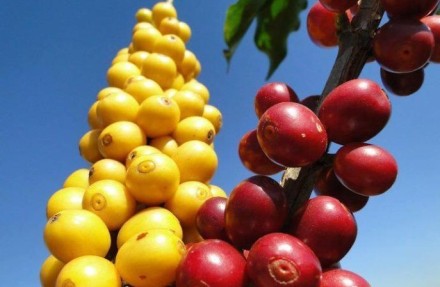
After pollination, the flowers develop into coffee cherries. These are small, round fruits about 1.5 cm (0.6 inches) in diameter. They start green, turn yellow, and finally ripen to a bright red — similar in appearance to cherries, hence the name ‘coffee cherry.’ This is the point at which they can be harvested.
Each coffee cherry usually contains two seeds — the coffee beans — which sit facing each other inside the fruit. The flat sides of the beans touch, forming a distinctive shape. Each bean is encased in a thin, silvery membrane called the silverskin (or silver skin), surrounded by a yellowish layer known as the parchment or endocarp. The beans are embedded in a sweet, sticky pulp called the mesocarp, and protected by an outer skin or exocarp.
Why Is Ethiopia So Important in Coffee History?
Ethiopia is the recognized birthplace of the coffee plant. It is home to hundreds of wild Arabica varieties that have evolved over centuries in diverse microclimates. The country’s high altitudes, fertile volcanic soils, and consistent rainfall create optimal conditions for producing complex, vibrant coffees. Many of the world’s most celebrated flavor profiles originate here.
Frequently Asked Questions
Where did coffee trees originally come from?
Coffee trees originated in Ethiopia, Africa. This is where the wild ancestors of modern cultivated coffee plants, especially Arabica, grew naturally in highland forests. Ethiopia remains a biodiversity hotspot for coffee genetics.
What part of the coffee plant is the bean?
The ‘coffee bean’ is actually the seed found inside the coffee fruit, known as the coffee cherry. Each cherry usually holds two beans. These beans are not true beans but seeds with a flattened, oval shape.
What climate is best for growing coffee?
Coffee grows best in tropical or subtropical climates between 25° north and 25° south latitude. Ideal temperatures range from 15–25°C, with annual rainfall of 1500–2000 mm. Elevation plays a major role too — the best coffee is grown between 500 and 2000 meters above sea level.
What color is a ripe coffee cherry?
A ripe coffee cherry turns bright red, similar to a cherry fruit. It starts out green, then turns yellow as it matures, before finally turning red when ready for harvest. Some varieties may ripen to yellow instead of red.
How long does it take for a coffee tree to produce fruit?
It takes approximately three years for a coffee tree to flower and produce its first coffee cherries. The tree will continue to bear fruit for many years, often over 20, though peak production is usually between 7 and 20 years.
Are coffee beans really beans?
No, coffee beans are not true beans. They are the seeds of the coffee cherry fruit. Their shape is bean-like, which is why they are commonly called beans, but botanically they are seeds surrounded by fruit pulp and protective layers.
Recommended FrontStreet Beans for Exploring Ethiopian Origins
For a true taste of Ethiopia’s coffee heritage, try FrontStreet Coffee’s Yirgacheffe (Gedeb) — a bright, high-altitude single origin with notes of jasmine, lemon, and green tea when brewed light. For a fruit-forward classic, their Humbera (Ethiopia Humbera) delivers bold berry sweetness with honey, citrus, and tropical depth, especially well-suited to light or medium roasts. Both showcase the complex profiles Ethiopia is known for. Freshly roasted within 5 days · Orders placed before 17:00 ship the same day · Next-day delivery across most of Guangdong Province.
FrontStreet Coffee is a long-established specialty coffee roaster in Guangzhou China, selling freshly roasted beans from its own farm in Yunnan as well as dozens of carefully selected single-origin beans from around the world for both pour-over and espresso. The products deliver consistently excellent quality and great value, with shipping within 24 hours. Guangzhou's FrontStreet Coffee shop is recommended by many coffee lovers, and the beans are now available online at the Tmall 。
Important Notice :
前街咖啡 FrontStreet Coffee has moved to new addredd:
FrontStreet Coffee Address: 315,Donghua East Road,GuangZhou
Tel:020 38364473