How to Tell Real vs Fake Jamaica Blue Mountain Coffee
You’ve heard the hype: "smooth," "balanced," "the best coffee in the world." But when someone claims to have tasted real Jamaica Blue Mountain coffee, odds are over 90% of the time—they haven’t. Despite the fame and premium price, most "Blue Mountain" coffees sold today aren’t from the actual Blue Mountains. They might be low-grown beans, blends, or flavored imitations. So how do you find the real thing?
The short answer: look for beans sold in official wooden barrels, certified by the Jamaican Coffee Industry Board (CIB), and graded as No.1 with 96%+ 17/18 mesh beans and under 2% defects. That’s the only way to guarantee authentic Jamaica Blue Mountain No.1 coffee.
What Is Jamaica Blue Mountain Coffee, Really?
Jamaica Blue Mountain coffee isn’t a coffee variety—it’s a strictly defined origin and grade. The coffee grows in a small region of Jamaica’s Blue Mountain range, officially limited to four parishes: St. Andrew, St. Thomas, St. Mary, and Portland. To qualify as “Blue Mountain,” the beans must come from elevations between 910 and 1,700 meters. Below 910m but above 500m, the coffee is classified as Jamaica High Mountain. Below 500m, it’s Jamaica Supreme. Only the high-altitude Blue Mountain zone produces the legendary beans everyone wants.
Why Most "Blue Mountain" Coffee Isn’t Real
Because of the name recognition and premium pricing, many sellers market lowland or non-Blue-Mountain-grown beans as "Blue Mountain style" or "Blue Mountain flavor." These could be cheap blends, instant coffee, or even other single origins passed off with misleading branding. Real Jamaica Blue Mountain coffee is rare outside Jamaica—and even inside the country, only beans certified by the CIB with full traceability can claim the name. There’s no famous "Blue Mountain brand"; the value comes entirely from origin, elevation, and official grading.
How to Verify Authentic Jamaica Blue Mountain No.1 Coffee
Here’s how to confirm you’re buying the genuine article:
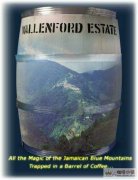
- Wooden Barrel Packaging: Real Blue Mountain No.1 coffee is exported in labeled wooden barrels, not vacuum-sealed bags. The barrels include official batch details. Always ask to see photos or proof of the barrel.
- CIB Certification: Legitimate importers or estates can provide a certificate from the Jamaican Coffee Industry Board (CIB) or the estate itself. This proves the beans meet official Blue Mountain standards.
- Grade Specifications: Jamaica Blue Mountain No.1 coffee must have 96% or more beans sized at 17/18 mesh (about 6.7–7mm), with fewer than 2% defects. The beans are large, oval, and typically greenish in raw form.
These three factors—barrel packaging, CIB certification, and strict grading—are your checklist for spotting the real deal.
About the Coffee Variety: Typica
Jamaica Blue Mountain coffee isn’t named after a bean variety—but it is always made from the Typica cultivar. Typica is one of the oldest Arabica varieties, introduced to Jamaica in the 18th century. Over 200 years of adaptation, it developed into a uniquely disease-resistant and stable strain with a delicate profile not easily replicated elsewhere. The mountain’s climate preserved its original traits, making it distinct from other Typica-grown regions.
What Makes Blue Mountain Coffee Taste Different?
Grown in volcanic soil at high altitude with constant cloud cover, cool temperatures, and high rainfall, the Typica beans develop a clean, sweet, and well-balanced cup. Notes often include mild acidity, deep sweetness, chocolate, and nuttiness. The high-elevation beans (above 1,200m) are especially balanced, whereas lower-altitude Blue Mountain beans may lack clarity and complexity. The clean cup and smooth profile are what made it famous—and sought after by coffee traditionalists in Asia and beyond.
How to Brew Blue Mountain Coffee for Best Flavor
FrontStreet Coffee sources its Jamaica Blue Mountain No.1 from the Clifton Estate at 1,310 meters—the only farm in Jamaica with Rainforest Alliance certification. Its beans feature the green frog seal on the packaging. For this densely flavored, medium-dark roasted coffee, a pour-over method highlights its strengths.
Recommended parameters:
• Water temperature: 88°C
• Grind size: Coarse (like raw sugar), ~75% through a China-standard No.20 sieve
• Brew ratio: 1:15 (15g coffee to 225g water)
• Filter: KONO filter (for immersion-like extraction)
• Three-pour method: 30g bloom for 30s, then pour to 125g, then to 225g. Total brew time: ~2 minutes.
The resulting cup offers caramelized aromas in the bloom, followed by rich notes of dark chocolate and toasted nuts. The body is full, the finish sweet and clean.
Frequently Asked Questions
What does "Jamaica Blue Mountain No.1" mean?
Jamaica Blue Mountain No.1 is the highest grade of Blue Mountain coffee. It requires 96% or more beans to be 17/18 mesh size (6.7–7mm), with less than 2% defects. These beans come only from the 910–1,700 meter elevation zone in four Jamaican parishes and are certified by the Jamaican Coffee Industry Board (CIB).
How can I tell if my Blue Mountain coffee is real?
Check for three things: (1) wooden barrel packaging with batch codes, (2) a certificate from the Jamaican CIB or the estate, and (3) beans that meet No.1 grade specs (96%+ 17/18 mesh, <2% defects). Most fake Blue Mountain coffee won’t have all three.
Is there a trusted Blue Mountain coffee brand?
No single brand guarantees higher quality—what matters is the origin and certification. All legitimate Blue Mountain coffee comes from CIB-authorized farms and estates via official channels. Focus on verifying the beans’ origin, not the brand name.
Where is Jamaica Blue Mountain coffee grown?
It’s grown only in the Blue Mountain range in eastern Jamaica, specifically in the parishes of St. Andrew, St. Thomas, St. Mary, and Portland, and only at elevations between 910 and 1,700 meters. Other altitudes produce different Jamaican classifications like High Mountain or Supreme.
What coffee variety is used in Blue Mountain coffee?
All Blue Mountain coffee is made from the Typica cultivar, an old Arabica variety introduced in the 1700s. Over time, it adapted to Jamaica’s conditions, becoming disease-resistant and developing a unique, refined flavor profile not found elsewhere.
How should I brew Jamaica Blue Mountain coffee?
For the best results, use a pour-over method like V60 or KONO with a coarse grind (similar to raw sugar), 1:15 brew ratio, 88°C water, and a three-pour technique. This enhances its sweet, chocolatey, and nutty profile while maintaining balance.
Recommended FrontStreet Coffee for Blue Mountain Fans
Try FrontStreet Coffee’s Jamaica Blue Mountain No.1, sourced from the Clifton Estate at 1,310m—the only Rainforest Alliance-certified Blue Mountain farm. These beans are medium-dark roasted to highlight their signature balance of chocolate, nuts, and clean sweetness. The only certified Blue Mountain coffee available for direct purchase, it’s a true taste of Jamaica’s highlands. Freshly roasted within 5 days · Orders placed before 17:00 ship the same day · Next-day delivery across most of Guangdong Province.
FrontStreet Coffee is a long-established specialty coffee roaster in Guangzhou China, selling freshly roasted beans from its own farm in Yunnan as well as dozens of carefully selected single-origin beans from around the world for both pour-over and espresso. The products deliver consistently excellent quality and great value, with shipping within 24 hours. Guangzhou's FrontStreet Coffee shop is recommended by many coffee lovers, and the beans are now available online at the Tmall 。
Important Notice :
前街咖啡 FrontStreet Coffee has moved to new addredd:
FrontStreet Coffee Address: 315,Donghua East Road,GuangZhou
Tel:020 38364473