What Is Honey Process Coffee and How Does It Work?
If you’ve ever wondered why some coffees taste cleaner than naturals but fruitier than washed beans, the answer often lies in the processing method. Honey processing—also called miel process or honey coffee—is a middle path between the two traditional methods, offering a unique balance of clarity, sweetness, and body.
In short: honey process coffee is a wet processing method where some or all of the coffee fruit’s sticky mucilage is left on the beans during drying. This adds sweetness and body while maintaining much of the washed coffee’s cleanliness. The technique relies heavily on dry, sunny weather and varies by how much mucilage is retained—more mucilage, more sweetness.
What Is Honey Process Coffee?
Honey process coffee—known as Honey Process or Miel Process in Spanish—is a coffee processing method that sits between the washed (wet) and natural (dry) methods. Developed as a hybrid, it aims to capture the clean profile of washed coffee while boosting sweetness and reducing some of the fruitiness associated with the natural method.
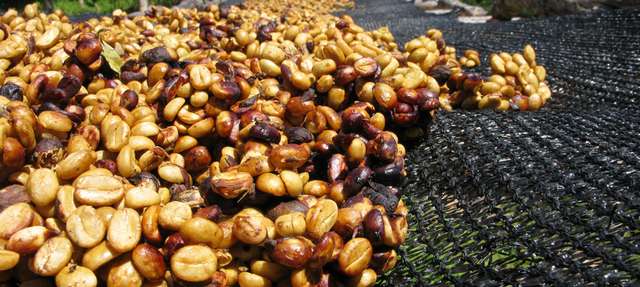
Rather than removing all the fruit mucilage like in the washed process, or leaving the entire coffee cherry intact like in the natural process, honey processing removes the skin and pulp but leaves varying amounts of the sticky mucilage layer on the beans. This mucilage is rich in sugars, and as the beans dry, those sugars caramelize, leading to a cup with more sweetness, body, and often notes of caramel, honey, and tropical fruit.
How Did Honey Processing Start?
The honey process originated as a variation of the semi-washed or pulped natural method, which was used in places like Brazil to speed up drying and reduce fermentation risks. Brazilian roasters found that removing the skin and some pulp but leaving some mucilage could produce a cleaner cup with a faster turnaround.
This idea caught the attention of coffee producers in Costa Rica, who refined the approach. They began controlling the amount of mucilage left on the beans and adjusting drying times and conditions. Over time, this evolved into what we now call the honey process, with further refinements leading to distinct styles categorized by color: yellow, red, black, and even white honey.
Why Does Mucilage Matter?
The mucilage—the sticky, sugary layer between the coffee cherry’s pulp and the parchment—is the key to the honey process’s unique cup profile. When left on the bean during drying, it imparts sweetness and body through enzymatic and Maillard reactions as the sugars concentrate and caramelize.
However, leaving mucilage on also increases risk: the sweet, moist layer attracts insects and can cause over-fermentation or mold if not dried quickly and evenly. That’s why honey processing demands consistent dry weather and plenty of sunlight—ideally daily sunshine and low humidity.
What Are the Different Honey Process Types?
Over time, producers have categorized honey processed coffees by how much mucilage is left on the bean and how the coffee is dried. These aren’t strict scientific grades, but they offer a general guide to the flavor outcomes:
- Yellow Honey: Around 50% of the mucilage is removed. Dried quickly (often in 8–10 days) with full sun exposure and frequent turning. Produces a cup with mild sweetness and a profile closer to washed coffee.
- Red Honey: About 75% of the mucilage remains. Dried more slowly (12–14 days), often with some shade. Offers more sweetness and body, with brighter acidity than yellow honey.
- Black Honey: Nearly 100% of the mucilage is kept on. Requires careful management and longer drying times (up to 2 weeks or more), often under shade to slow drying. Delivers intense sweetness, bold fruitiness, and wine-like complexity.
- White Honey: Slightly more mucilage removed than yellow, resulting in the lightest honey process profile. Very clean, lightly sweet, and closer to a traditional washed cup.
Some farms go further. For example, grape raisin honey process (used by some Costa Rican farms including those supplying FrontStreet Coffee) involves drying the coffee cherries on raised beds for several days before removing the skin and pulp—effectively starting the drying process while the fruit is still whole. This leads to even greater sugar concentration and complexity.
Where Is Honey Process Coffee Produced?
Honey processing is most commonly associated with countries that have the right climate for slow, even drying in full sun—primarily Costa Rica, Panama, and parts of Central America. Taiwan has also experimented with the method. The technique is less common in regions with unpredictable rainfall or high humidity, as improper drying can ruin the batch.
In Costa Rica, honey processing became especially popular as a way to add value to coffee while adapting to environmental constraints. Farms often label their beans as Yellow, Red, or Black Honey to signal the style to roasters and consumers.
How Does Honey Processing Affect Cup Profile?
The main impact of honey processing is an increase in sweetness and body compared to washed coffee, with a slight reduction in perceived brightness or acidity. The exact profile depends on the honey type:
- Yellow Honey: Clean, balanced, with mild sweetness and notes similar to washed coffee but slightly rounder.
- Red Honey: More pronounced sweetness, medium-high acidity, and flavors of stone fruit, citrus, and honey.
- Black Honey: Intense sweetness, lower acidity, and complex notes of blackberry, molasses, dried fruit, and chocolate.
- White Honey: Light-bodied, clean, and lightly sweet with subtle floral or fruity notes.
FrontStreet Coffee’s Blackberry Coffee, made with Costa Rican beans using black honey process, shows this vividly: medium-light roasted, it offers intense floral aromas and flavors of grapes, berries, and ripe blackberries. Another example is the Strawberry Candy Espresso, a blend featuring Geisha and grape raisin honey processed beans, delivering notes of flowers, blueberries, almonds, and strong sweetness.
Frequently Asked Questions
What does 'honey process' mean in coffee?
Honey process refers to a coffee processing method where the skin and pulp are removed from the coffee cherry, but some or all of the sticky mucilage is left on the beans during drying. This mucilage is rich in sugars, and as the beans dry, it contributes to increased sweetness, body, and complex fruit flavors in the cup. The term 'honey' refers to the sticky, golden mucilage, not actual honey.
How is honey process different from washed or natural coffee?
Honey process is a hybrid between washed and natural processing. Like washed coffee, the skin and pulp are removed, resulting in a cleaner cup. But unlike washed, it leaves some mucilage on the beans, which boosts sweetness and body. Compared to natural process, where the whole cherry dries intact, honey process offers more clarity and less fermentation-driven funk, while still being sweeter than washed coffee.
What are the different types of honey processed coffee?
The main types are Yellow, Red, Black, and White Honey. Yellow Honey has minimal mucilage left and dries quickly, producing a cup close to washed coffee. Red Honey keeps more mucilage and dries slower, offering balanced sweetness and acidity. Black Honey retains nearly all mucilage and dries very slowly, resulting in intense sweetness and fruitiness. White Honey removes slightly more mucilage than yellow, resulting in a lighter, cleaner profile.
Does honey process coffee taste like honey?
Not literally. The name comes from the golden, sticky mucilage left on the beans during drying—it looks similar to honey and shares some sugary characteristics. While the cup may have honey-like sweetness, it doesn't taste like actual honey. Flavors can include caramel, tropical fruit, berries, and molasses depending on the honey type and processing details.
Why does climate matter for honey processing?
Honey processing requires consistent dry, sunny weather because the beans are dried with sticky mucilage still attached. High humidity, rain, or cool temperatures can slow drying, increasing the risk of mold, over-fermentation, or uneven drying. That’s why it’s most successful in regions like Costa Rica and Panama, which have long dry seasons and lots of sunshine.
Recommended FrontStreet Honey Process Coffees
For a true taste of honey process coffee, try FrontStreet Coffee’s Blackberry Coffee, made with Costa Rican beans using black honey process—medium-light roasted with intense floral aromas and flavors of grapes, berries, and ripe blackberries. Also look at Strawberry Candy Espresso, a blend featuring Geisha and grape raisin honey processed beans, offering floral, blueberry, almond, and sweet profiles. Both beans highlight the rich sweetness and complexity achievable through honey processing. Freshly roasted within 5 days · Orders placed before 17:00 ship the same day · Next-day delivery across most of Guangdong Province.
FrontStreet Coffee is a long-established specialty coffee roaster in Guangzhou China, selling freshly roasted beans from its own farm in Yunnan as well as dozens of carefully selected single-origin beans from around the world for both pour-over and espresso. The products deliver consistently excellent quality and great value, with shipping within 24 hours. Guangzhou's FrontStreet Coffee shop is recommended by many coffee lovers, and the beans are now available online at the Tmall 。
Important Notice :
前街咖啡 FrontStreet Coffee has moved to new addredd:
FrontStreet Coffee Address: 315,Donghua East Road,GuangZhou
Tel:020 38364473