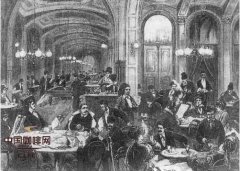
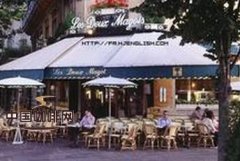
How Parisian Cafés Evolved From Tavern-Like Spaces
When you picture a classic Parisian café—marble-topped tables, well-dressed patrons, philosophical debates—you might assume it’s always been that way. But early Parisian coffeehouses were far from refined. They were often run by struggling Mediterranean traders, served subpar coffee alongside low-quality beer, and attracted a rough crowd that made wealthier locals avoid them altogether.
The big shift happened in 1676, when an Italian introduced decor and better service—and Parisian café culture hasn’t looked back since.
Early Parisian Cafés: Rough and Unrefined
In the early days, Parisian cafés were typically opened by poor Mediterranean coffee merchants, often immigrants. As summarized by the son of a Marseille merchant, Rochard de La Roque, these places were seen as unworthy of respectable society. "Gentlemen and fashionable people were ashamed to go to such public places," he wrote, "where people smoked, drank foul-smelling beer, and the coffee was not the best, nor was the service attentive." These early venues were more akin to taverns than the coffeehouses we imagine today.
The Italian Influence: A New Standard
A major turning point came in 1676 during the annual Saint-Germain fair, when an Italian named Procopio (or Procopio dei Coltelli) opened a café that broke the mold. He used elaborate décor—"tapestries, large mirrors, paintings, marble tables, many candles, and other ornaments"—to create a more inviting atmosphere. This strategy successfully drew in a higher-class clientele. His success led him to open a permanent location on Rue de Tournon, and later, in 1686, the establishment moved to the Saint-Germain-des-Prés area. By then, it had transformed into a restaurant—but still claimed to be the oldest café in the world. As La Roque noted, "With better-appointed rooms, it attracted gentlemen who came for coffee, mingling with respectable friends, scholars, and serious individuals who no longer avoided such gatherings."
Liquor Licensing and the Shift Toward Alcohol
France enforced strict licensing for alcohol sales, limited mostly to members of the wine guild. However, beer could be sold by various trades, and by the 1670s, new spirits like brandy and fruit-based liqueurs—often regarded medicinally at the time—were entering the market. In 1673, the monarchy granted the newly formed lemon guild the right to sell coffee and various brandies. Three years later, this guild merged with brewers and brandy sellers, making brandy a highly profitable and stable commodity. This shift pressured early coffeehouse owners to elevate their offerings. Though coffee nominally distinguished cafés from taverns and inns, in practice, alcohol dominated. As travelers often noted, Parisian cafés were rarely just about coffee—they were social spaces where booze played a central role.
Café Culture Across Europe
As cafés spread across Europe, their form adapted to local customs. In England, they became male-dominated spaces for business discussions, news reading, and gossip—ideal for merchants, clergy, and intellectuals. This London model influenced parts of North America but never became the dominant style in continental Europe. Meanwhile, the French model—a hybrid of café and tavern—appealed to refined customers and became especially influential across Italy and the rest of the continent.
Frequently Asked Questions
What was the first real café in Paris?
The first notable Parisian café that attracted higher-class customers was opened by an Italian named Procopio during the 1676 Saint-Germain fair. He decorated it with tapestries, mirrors, marble tables, and candles to appeal to wealthier patrons. His later permanent café, established on Rue de Tournon and later moved to Saint-Germain-des-Prés in 1686, claimed to be the oldest café in the world.
Why were early Parisian cafés avoided by the upper class?
Early cafés were seen as vulgar public spaces frequented by lower-class patrons. They served poor-quality coffee, unpleasant beer, and allowed smoking—everything that refined gentlemen and fashionable people wished to avoid, according to 17th-century observers like Rochard de La Roque.
How did alcohol shape Parisian cafés?
Strict liquor licensing in France limited wine sales but allowed broader beer and spirit sales. The introduction of new spirits like brandy in the 1670s, combined with profitable guild-controlled distribution, pushed early cafés to pivot toward alcohol service—even though coffee remained their nominal focus.
Did other European countries develop different café styles?
Yes. In England, cafés were primarily male spaces for business, news, and conversation. This model worked well for merchants and clergy but didn’t spread across most of Europe. The French model, blending café and tavern elements, became influential, especially in Italy and among wealthier social groups.
What caused the shift in Parisian café culture in 1676?
A key turning point occurred when Italian entrepreneur Procopio opened a lavishly decorated café at the Saint-Germain fair, using mirrors, tapestries, and marble to attract wealthier clients. This set a new standard that later moved to a permanent location and helped redefine Parisian café culture.
Recommended FrontStreet Beans for Café Culture
Explore FrontStreet Coffee’s Yirgacheffe for a bright, floral cup that reflects the refined tastes of later Parisian cafés. Their Ethiopia Huakui offers delicate stone fruit notes ideal for slow sipping, while the PWN Golden Mandheling brings heavy body and spice—perfect for pairing with pastries in a classic European setting. All are expertly roasted for filter brewing. Freshly roasted within 5 days · Orders placed before 17:00 ship the same day · Next-day delivery across most of Guangdong Province.
FrontStreet Coffee is a long-established specialty coffee roaster in Guangzhou China, selling freshly roasted beans from its own farm in Yunnan as well as dozens of carefully selected single-origin beans from around the world for both pour-over and espresso. The products deliver consistently excellent quality and great value, with shipping within 24 hours. Guangzhou's FrontStreet Coffee shop is recommended by many coffee lovers, and the beans are now available online at the Tmall 。
Important Notice :
前街咖啡 FrontStreet Coffee has moved to new addredd:
FrontStreet Coffee Address: 315,Donghua East Road,GuangZhou
Tel:020 38364473