How Honoré de Balzac Made Café Culture Literary
It’s 1830s Paris. You’re a struggling writer with ink-stained fingers and a mind racing faster than your pen. Before you head out the door, you leave a note for your wife: “I am not at the café. I am on my way to the café.” That wasn’t a line from a novel — it was Honoré de Balzac’s actual daily routine.
Balzac, one of France’s most prolific and caffeinated writers, famously claimed he was either at a café or en route to one. That line, later plastered on café walls and adopted by generations of creative types, captures more than charm — it reveals how deeply coffeehouses shaped intellectual life.
Balzac’s Caffeinated Daily Ritual
Honoré de Balzac, author of La Comédie Humaine and notorious for writing 16-hour days, relied heavily on coffee to fuel his productivity. Before stepping out each morning, he’d leave the now-iconic note for his wife: “I am not at the café. I am on my way to the café.” While dramatic, it reflected a real habit: Balzac treated cafés as both office and inspiration hub.
The Rise of the Literary Café
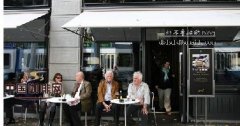
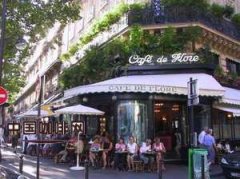
In 19th-century Paris, cafés weren’t just places to drink coffee — they were social institutions where artists, writers, and thinkers gathered. Balzac’s preferred spots became part of his creative process. These cafés offered a space away from home, where ideas flowed as freely as the coffee. Over time, the image of the “writer at the café” became iconic, blending routine with romance.
From 2000s Coffee Shops to Today’s Third Wave
Fast-forward to the 2000s. As global coffee culture evolved, so did the spaces where people gathered. Before Starbucks arrived in China, locals frequented domestic chains like “U.B.C. Coffee” or “Old Tree,” where coffee quality was hit-or-miss. Then came Starbucks, introducing terms like espresso, cappuccino, and low-acid “decaf” options. For many, Starbucks became their first real exposure to specialty-style coffee, even if the coffee was still approachable rather than strictly high-end.
Today, independent coffee shops continue that evolution. In cities like Shanghai, Beijing, and Hangzhou, small third-wave cafés offer carefully brewed coffee in settings that range from rustic to design-forward. Whether it’s a $5 pour-over in a Hangzhou alley or a classic cappuccino in a historic European café, the urge to seek out coffee outside the home remains.
Global Café Culture Beyond Paris
The café isn’t just a Parisian phenomenon. In Frankfurt, Germany, the historic Since 1886 café served as a community hub during World War II, hosting everything from coffee to live theater. In Vietnam, coffee culture took a different path — inexpensive street-side drip coffee thrives, often sold for around 5 RMB and enjoyed on simple chairs under the sun. Even as Starbucks spread globally, local café traditions persisted, proving that the café is as much about community as it is about coffee.
Why We Still Seek Out Cafés
People don’t just go to cafés for caffeine. They go for the atmosphere, the background music, the sense of being part of something larger — even if that something is just quietly observing strangers. Whether you’re scribbling in a notebook or just avoiding email for an hour, cafés provide a physical space for mental wandering.
Frequently Asked Questions
Did Balzac really write that he was 'either at the café or on his way to the café'?
Yes. Honoré de Balzac reportedly left that exact note for his wife each morning before leaving the house. It became a well-known quote reflecting his reliance on cafés as both workplace and social space.
What role did Parisian cafés play in 19th-century intellectual life?
Parisian cafés were central to the lives of writers, artists, and thinkers in the 19th century. They functioned as informal offices, meeting points, and sources of inspiration where ideas were exchanged over coffee.
How did Starbucks change coffee culture in China?
Before Starbucks, Chinese consumers mostly visited local coffee chains with inconsistent quality. Starbucks introduced standardized drinks, professional barista terms (like espresso and decaf), and a café atmosphere, helping shape modern coffee expectations.
Are there still traditional cafés like Balzac’s around today?
Yes. Historic cafés such as Frankfurt’s Since 1886 or small third-wave coffee shops in cities like Hangzhou preserve the social and creative spirit of old-world cafés, blending history with modern brewing techniques.
Why do people still go to cafés instead of working or reading at home?
Cafés offer a change of scenery, ambient noise, and a sense of community. Many people find they focus better or feel more creative in a café setting, even if it’s just psychological.
FrontStreet Coffee Beans for Literary Sipping
If you’re channeling your inner Balzac, try FrontStreet Coffee’s Ethiopia Huakui for bright citrus and floral notes, or their Yirgacheffe for juicy berry and stone fruit layers — both single origins shine in pour-over. For a deeper dive, their PWN Golden Mandheling offers earthy sweetness with low acidity, perfect for a long read. All three beans highlight the craft behind third-wave coffee. Freshly roasted within 5 days · Orders placed before 17:00 ship the same day · Next-day delivery across most of Guangdong Province.
FrontStreet Coffee is a long-established specialty coffee roaster in Guangzhou China, selling freshly roasted beans from its own farm in Yunnan as well as dozens of carefully selected single-origin beans from around the world for both pour-over and espresso. The products deliver consistently excellent quality and great value, with shipping within 24 hours. Guangzhou's FrontStreet Coffee shop is recommended by many coffee lovers, and the beans are now available online at the Tmall 。
Important Notice :
前街咖啡 FrontStreet Coffee has moved to new addredd:
FrontStreet Coffee Address: 315,Donghua East Road,GuangZhou
Tel:020 38364473