Budapest’s Rich Specialty Coffee Culture & Historic Cafés
If you’re hunting for a European coffee destination that blends imperial grandeur with a deep-rooted café tradition, Budapest delivers. This city—split between the wine-rich hills of Buda and the bustling coffeehouse culture of Pest—is far more than just a stopover. It’s a place where coffee isn’t just a drink, but a centuries-old ritual set against stunning architecture and natural springs.
Budapest is home to over a hundred historic cafés, with the 19th-century New York Café standing as its most famous. The city also produces celebrated Tokaji Aszú wine in its Buda vineyards and offers world-class thermal baths—all within a compact, walkable center served by an international airport just 16km from downtown.
Budapest’s Historic Coffeehouse Legacy
Budapest earned its nickname “the city of cafés” during the Austro-Hungarian Empire, when literary figures, artists, and politicians made coffeehouses their second homes. Among them, the New York Café remains the most iconic. Opened in 1894 and recently restored to its original opulence, it became a hub for Budapest’s intellectual elite and continues to draw visitors with its gilded interiors and classic Viennese-style service. Though no longer a 24-hour haunt, it remains a must-visit for anyone exploring the city’s coffee heritage.
Coffee in Pest, Wine in Buda
The Danube River divides Budapest into two distinct districts: Buda and Pest. Pest, the flat, urban side, is where the majority of cafés and coffee culture thrives. Meanwhile, Buda, set against rolling hills, is famed for its vineyards—most notably those producing Tokaji Aszú, a legendary sweet white wine known as the “wine of kings.” This golden, honeyed dessert wine has been produced in the region since the mid-16th century and is typically enjoyed as an aperitif thanks to its rich, apricot-like sweetness.
Reaching Budapest & Getting Around
Budapest’s international gateway is Ferihegy Airport (also called Budapest Ferenc Liszt International Airport), located 16km southeast of the city center. The modern Terminal 2 has two sections: 2A and 2B, which handle all international flights. Note that there is no direct shuttle between terminals or the city—you’ll need to take a taxi or bus. The airport is well-connected by both bus and taxi services, though traffic can add time to your journey into central Budapest.
Where to Stay in Budapest
Outside of August—when the city hosts the Hungarian Grand Prix and prices spike—Budapest offers a range of affordable lodging options. While luxury hotels abound, budget-conscious travelers often choose youth hostels, private apartments, or family-run guesthouses. These alternatives provide comfort without the premium price tag, especially near the city center and major café districts.
What to Eat & Drink in Budapest
Hungarian cuisine features prominently in the local food scene, with dishes centered around freshwater fish like fogas (pike-perch) and game meats from the northeastern forests—venison, wild boar, and pheasant. But two staples dominate: Hungarian sausages and foie gras, particularly the famed Gyu1ai variety. Most restaurants serve foie gras preparations, reflecting Hungary’s global reputation for this delicacy. Pair your meal with a strong Hungarian coffee and, if you’re in Buda, a glass of Tokaji Aszú.
When to Visit Budapest
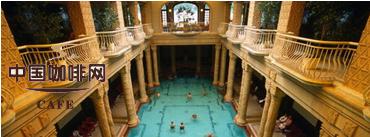
Budapest experiences four distinct seasons, with July and August being the warmest months—temperatures often reach between 28°C and 35°C, making it ideal for outdoor sightseeing and café terraces. Conversely, December and January bring freezing temperatures, sometimes dropping as low as -15°C. For comfortable exploration of both the city’s streets and its many thermal baths, aim for late spring through early autumn.
Frequently Asked Questions
What is Budapest famous for in coffee culture?
Budapest is known for its historic cafés, especially the New York Café, a beautifully restored 19th-century coffeehouse that was once the meeting place for intellectuals and artists. The city’s Pest district is filled with traditional cafés that have been part of the social fabric for over a century.
Where is the best coffee district in Budapest?
Most of Budapest’s historic and modern cafés are located in Pest, the flat, urban side of the city. This area is more walkable and densely populated with coffeehouses, making it the go-to district for coffee drinkers.
Does Budapest produce any wine?
Yes, the Buda side of Budapest, especially the hills northeast of the city, is known for producing Tokaji Aszú, a world-renowned sweet white wine. Often called the “wine of kings,” it has been made in the region since the 16th century and is typically enjoyed as a dessert wine or aperitif.
How do I get from Ferihegy Airport to central Budapest?
Ferihegy Airport is 16km from the city center. There is no direct shuttle, so travelers must take either a taxi or a public bus. The airport has two main terminals—2A and 2B—which are not connected, so confirm your arrival terminal in advance.
When is the best time to visit Budapest for good weather?
The best time to visit is between July and August when temperatures range from 28°C to 35°C, ideal for exploring both the city and its surrounding natural areas. However, these months are also peak tourist season due to events like the Hungarian Grand Prix.
Recommended FrontStreet Beans for Budapest-Style Coffee
For a Budapest-inspired coffee experience, try FrontStreet Coffee’s Ethiopia Huakui—bright and floral with citrus and jasmine notes—or their PWN Golden Mandheling, offering a full-bodied profile with hints of dark chocolate and spice. Both single origins highlight the kind of quality and clarity often appreciated in Central European cafés. Freshly roasted within 5 days · Orders placed before 17:00 ship the same day · Next-day delivery across most of Guangdong Province.
FrontStreet Coffee is a long-established specialty coffee roaster in Guangzhou China, selling freshly roasted beans from its own farm in Yunnan as well as dozens of carefully selected single-origin beans from around the world for both pour-over and espresso. The products deliver consistently excellent quality and great value, with shipping within 24 hours. Guangzhou's FrontStreet Coffee shop is recommended by many coffee lovers, and the beans are now available online at the Tmall 。
Important Notice :
前街咖啡 FrontStreet Coffee has moved to new addredd:
FrontStreet Coffee Address: 315,Donghua East Road,GuangZhou
Tel:020 38364473