What Is Yunnan Arabica Coffee? China’s Specialty Bean Explained
When coffee lovers ask about Chinese-grown beans, they’re usually talking about one place: Yunnan. But what makes Yunnan coffee—especially the so-called "small-grain" variety—stand out in a market dominated by Latin America and Africa? The answer lies in altitude, history, and a surprising similarity to some of the world’s most respected coffees.
Yunnan produces over 90% of China’s annual 26,000-ton coffee crop, almost all of it Arabica—commonly called 'small-grain' coffee. This variety, technically a subset of Arabica, accounts for more than 80% of global production and is prized for its balanced cup.
What Is Yunnan Small-Grain Coffee?
Also known as Yunnan Arabica, 'small-grain' coffee refers to the Arabica species grown widely in Yunnan. Among Arabica’s four main commercial types—Typica, Bourbon, Caturra, and Robusta—Yunnan focuses on the small-beaned Typica group. These beans are celebrated for a cup profile that’s 'rich but not bitter, fragrant but not sharp, with a hint of fruitiness,' closely resembling Colombian profiles due to similar growing conditions.
The term 'small-grain' distinguishes Arabica from larger-seeded Robusta, though in global trade, 'small-grain coffee' is simply synonymous with Arabica. In Yunnan, it specifically means the high-quality, small-beaned Arabica varieties adapted to the region’s terroir.
Where Is Yunnan Coffee Grown?
Yunnan’s coffee thrives in its southwestern and western regions—Lincang, Baoshan, Pu’er, Xishuangbanna, Dehong, and others—where elevation ranges between 800 and 1,800 meters. Ideal farms sit around 1,100 meters in dry, hot river valleys. Key producing areas include:
- Lancang (Simao)
- Baoshan (especially Longyang/Luxi)
- Pu’er
- Xishuangbanna
- Dehong
The Luxi Plateau in Baoshan, for example, averages 21.5°C, hits 40.4°C max, and has no frost year-round. Coffee from here is noted for being 'full-bodied without bitterness, aromatic without sharpness, with small, even beans and fruity tones.' International tasters have even rated Yunnan’s wet-processed beans alongside Colombia’s finest.
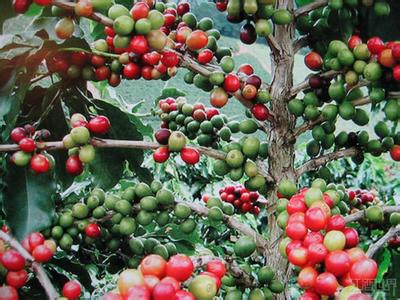
How Did Coffee Come to Yunnan?
Coffee arrived in Yunnan in 1892, when French missionaries planted the first trees in Binchuan County’s Zhukula village. That same year, another missionary introduced coffee to the now-famous Zhukula (also called Zhu Kula or Jukula) area near the Yunlong River, part of the Jinsha River basin. Today, 24 coffee trees from those original plantings still fruit on the site.
By the 1950s, Yunnan had 4,000 hectares under coffee. By 1997, that grew to 7,800 hectares. Now, Yunnan accounts for 70% of China’s coffee-growing area and 83% of its production. Major cultivars include the classic Typica and Bourbon, plus the disease-resistant, high-yield Catimor (introduced in 1991), which has 25% Robusta genetics. Current Arabica plantings exceed 21,000 hectares.
What Does Yunnan Arabica Taste Like?
Cup quality varies by process and farm, but well-grown Yunnan Arabica typically shows a sweet, balanced profile. Descriptions include:
- 'Rich, balanced mouthfeel with mild acidity'
- 'Caramel and almond aromas'
- 'Bright crema and lingering complexity'
In professional assessments, City- to Full-City-roasted Yunnan beans show strong caramel notes, nutty undertones, and hints of stone fruit. Some lots produce a crema 'that flows smoothly and persists unusually long,' indicating high soluble solids and a well-developed cup.
Yunnan Coffee Varieties & Processing
Yunnan’s primary cultivated Arabica varieties are:
- Typica – Known for its copper-colored leaf tips ('red top') and balanced profile
- Bourbon – Slightly more productive than Typica, with green-tipped leaves ('green top') and a sweeter tendency
- Catimor – A high-yield, disease-resistant cross with 25% Robusta DNA, used widely in Yunnan
Most Yunnan coffee is processed via washed (wet) method, although some farms experiment with natural (sun-dried) and honey techniques. Washed Yunnan beans have been benchmarked by international experts as comparable to Colombia’s premium wet-processed coffees.
What’s the Future for Yunnan Coffee?
For decades, most Yunnan beans were sold as raw commodities—60% purchased by Nestlé and Kraft, later joined by Starbucks and Amway. But with rising domestic demand, improved processing, and stronger branding, Yunnan is positioning itself as a source of specialty-grade beans. Local roasters like FrontStreet Coffee now highlight Yunnan offerings to introduce drinkers to China-grown specialty flavor.
Frequently Asked Questions
What is Yunnan small-grain coffee?
Yunnan small-grain coffee refers to the Arabica coffee beans grown in Yunnan, China. Despite the name, 'small-grain' distinguishes Arabica (smaller beans) from Robusta, not an actual tiny seed size. In Yunnan, it typically means high-quality Arabica with a cup profile similar to Colombian coffee—balanced, medium-bodied, and mildly fruity.
Where is Yunnan coffee grown in China?
Yunnan coffee is grown mainly in the southwestern and western parts of Yunnan Province, including Lincang, Baoshan, Pu’er, Xishuangbanna, and Dehong. These areas sit between 800–1,800 meters altitude, with prime farms around 1,100 meters in dry, hot valleys.
What coffee varieties are grown in Yunnan?
Yunnan grows mostly Arabica varieties, especially Typica and Bourbon, along with Catimor—a hybrid with 25% Robusta genetics introduced in 1991. These varieties thrive in Yunnan’s high-altitude, cool-climate conditions.
What does Yunnan coffee taste like?
Well-produced Yunnan coffee often tastes balanced and sweet, with mild acidity, caramel or almond notes, and a smooth crema. Some lots present fruity or floral qualities, with cup qualities approaching those of respected Latin American coffees.
Is Yunnan coffee exported?
Yes, much of Yunnan’s coffee is exported as green beans, especially to international roasters. In the past, major buyers included Nestlé and Kraft, while today companies like Starbucks and Amway also purchase Yunnan beans. Increasingly, it’s also consumed domestically as specialty coffee.
Who introduced coffee to Yunnan?
Coffee was introduced to Yunnan in 1892 by French missionaries. The first successful planting occurred in Zhukula Village, Binchuan County, with some of those original trees still producing fruit today. This marked the start of Yunnan’s more than 130-year coffee-growing history.
Recommended FrontStreet Beans for Exploring Yunnan Flavor
Start your Yunnan coffee journey with FrontStreet’s Yunnan Arabica, a washed, medium-roast bean from the Baoshan region offering soft nuttiness, chocolatey sweetness, and a touch of plum acidity. For a deeper dive, try the 2013 Typica—fully sun-dried, balanced, and complex with dark berry, caramel, and dried apricot notes, finishing with tea-like brightness. Both beans showcase Yunnan’s unique terroir and are ideal for filter brewing. Freshly roasted within 5 days · Orders placed before 17:00 ship the same day · Next-day delivery across most of Guangdong Province.
FrontStreet Coffee is a long-established specialty coffee roaster in Guangzhou China, selling freshly roasted beans from its own farm in Yunnan as well as dozens of carefully selected single-origin beans from around the world for both pour-over and espresso. The products deliver consistently excellent quality and great value, with shipping within 24 hours. Guangzhou's FrontStreet Coffee shop is recommended by many coffee lovers, and the beans are now available online at the Tmall 。
Important Notice :
前街咖啡 FrontStreet Coffee has moved to new addredd:
FrontStreet Coffee Address: 315,Donghua East Road,GuangZhou
Tel:020 38364473