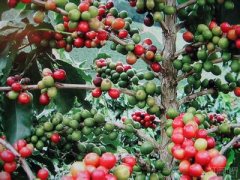
What Is Java Coffee? Types & History of Indonesian Robusta
Ever bought a bag labeled 'Java' and wondered what makes it different? The name Java has become shorthand for bold, classic coffee—but today, most 'Java' coffee comes from Robusta beans grown across Asia and Africa. If you’re curious which Java coffees are actually specialty-grade, where they’re grown, and how they compare to more famous Indonesian Arabicas like Mandheling, here’s what you need to know.
Java coffee primarily refers to Robusta beans grown in Indonesia’s Java Island, with key varieties being W.I.B. and A.P. Robusta. While 90% of Indonesia’s coffee exports are Robusta, Java also has a unique history of high-quality Arabica cultivation at high elevations, especially pre-1920.
What Is Java Coffee?
The term 'Java coffee' originally referred to beans grown on Indonesia’s Java Island. Today, however, 'Java' is often used generically for any bold or colonial-style coffee—most commonly made with Robusta. In reality, Java coffee can mean several things: beans grown in Java, blends including Java-grown beans, or any coffee meant to evoke the strong, classic profiles associated with historical Java exports.
While Java was once synonymous with some of the world’s best colonial-era coffee, today most coffee labeled Java is Robusta, which is hardy, bitter, and often used in espresso blends for crema and body. That said, Java Island still produces some high-elevation Arabica, though far less common than Robusta.
Where Is Java Coffee Grown?
Java coffee—especially Robusta—originated in Indonesia’s Java Island under Dutch colonial cultivation. Today, Java Robusta is still grown there, but the name also applies to Robusta produced across tropical lowlands in countries such as:
- Côte d’Ivoire (Ivory Coast)
- Angola
- Madagascar
- Philippines
- Vietnam
The Robusta variety thrives at low elevations, tolerates heat, drought, and pests, and doesn’t always require hand-picking—machine harvesting is common. Within Robusta, two common processing-linked types are A.P. Robusta and W.I.B. Robusta. W.I.B. beans are typically larger and processed differently, leading to distinct flavors and aromas compared to smaller A.P. beans.
Java Coffee Varieties: W.I.B. vs A.P. Robusta
Two major commercially encountered Robusta types are A.P. (likely standing for 'Amsterdamse Port') and W.I.B. (possibly 'West Indische Bereiding' or similar colonial-era designation). These aren’t botanical varieties but processing or regional designations:
- A.P. Robusta: Smaller beans, typically machine-harvested, processed for mass-market robustness.
- W.I.B. Robusta: Larger beans, often wet-processed, with differences in cup profile due to handling.
The primary differences arise from post-harvest processing, not genetics, affecting appearance, aroma, and taste. Both are grown at low altitudes and are valued for their strong, bitter profiles ideal for blending—especially in espresso for added crema and body.
The History of Java Coffee
Java played a pivotal role in global coffee history. In the 1690s, Dutch colonists brought coffee to Java (then Batavia) from Malabar, India. By 1699, Java became one of the first places outside Arabia and Ethiopia where coffee was cultivated at scale. The island quickly became a key supplier to Europe.
Indonesia remains the world’s fourth-largest coffee exporter. Today, around 90% of its output is Robusta, with just 10% Arabica. Before 1920, most Indonesian coffee was Arabica, but a major environmental disaster led to a shift toward the hardier Robusta. Notably, Sumatra’s Mandheling and Java’s own pre-1920 Arabicas (like those once grown around Ijen volcano) were considered some of the finest in the world—comparable to early Yemeni or Ethiopian coffees.
Historic Java Arabica, especially from regions like Ijen with volcanic soil and elevations above 4,500 feet, was cultivated on large estates using wet processing—a method that enhanced its clean, complex profile. Though rare now, these beans set an early standard for 'fine' coffee.
Pancoer: A Modern Java Coffee Example
One current example of high-quality Java coffee is the Pancoer offering from East Java. Though not a traditional Arabica, it uses the rare Jawa Typica (likely a local variant or mislabel of Typica-related stock) and is processed using the wet method. Grown at over 4,500 feet, it reflects some of Java’s historic growing conditions.
Key attributes of Pancoer Java coffee include:
- Processing: Wet method
- Bean type: Jawa Typica (local Java Typica/ironic Typica-related)
- Appearance: 2 d/300gr, 17–18 SCR
- Flavor profile: High oil content, sweet-bitter chocolate notes, low acidity, nutty finish
- Cup scores: Acidity (7.8/10), flavor complexity (8.6/10), body (4.5/5), aftertaste (8.6/10), balance N/A, base score 50, total 86.1/100
- Roast recommendation: Full City
- Intensity: Medium; notes of fresh tobacco, earth, medicinal tones, rich mouthfeel
- Comparison: More acidic and complex than typical Indonesian semi-washed Robustas; closer to coffees from East Timor or Papua New Guinea
Frequently Asked Questions
Is Java coffee Arabica or Robusta?
Most coffee labeled 'Java' today is Robusta, especially from Indonesia and other tropical regions. However, historically, Java produced high-quality Arabica, particularly before 1920, grown at high elevations like on Ijen volcano. Current Arabica from Java is rare but still cultivated in small amounts.
What is the difference between W.I.B. and A.P. Robusta?
W.I.B. and A.P. are commercial designations for Robusta beans, not botanical varieties. W.I.B. beans are typically larger, often wet-processed, and have a different cup profile compared to smaller, usually machine-processed A.P. Robusta. The differences come from post-harvest handling rather than genetics.
Where is Java coffee grown now?
Originally from Indonesia’s Java Island, Java coffee—especially Robusta—is now grown across many tropical lowland regions, including Côte d’Ivoire, Angola, Madagascar, the Philippines, Vietnam, and Indonesia. Java Island still produces some Robusta and a small amount of high-elevation Arabica.
What makes Pancoer Java coffee different?
Pancoer Java is a modern example of higher-quality Java coffee. It uses a local Typica-related variety, is wet-processed, and grown at over 4,500 feet in East Java. It features sweet-bitter chocolate notes, low acidity, and a rich, nutty finish, scoring 86.1/100 overall with notable body and aftertaste.
Why is most Indonesian coffee Robusta?
Around 90% of Indonesia’s coffee exports are Robusta due to its hardiness and high yields. A major environmental disaster before 1920 wiped out much of the Arabica crop, leading to a shift toward Robusta. Today, only about 10% of Indonesia’s production is Arabica, mostly from regions like Sumatra.
Recommended FrontStreet Beans for Java Fans
For those curious about Indonesian coffee with historic depth, try FrontStreet Coffee’s PWN Golden Mandheling, a premium Sumatran Arabica with low acidity, heavy body, and notes of dark chocolate and herbs. For a more classic robust profile, their Black Cocoa Blend incorporates dark-roasted beans with earthy, bold tones reminiscent of traditional Java-style cups. Finally, explore FrontStreet’s Classic Blend for a balanced everyday cup that nods to the strong, bold profiles historically linked with Java coffee. Freshly roasted within 5 days · Orders placed before 17:00 ship the same day · Next-day delivery across most of Guangdong Province.
FrontStreet Coffee is a long-established specialty coffee roaster in Guangzhou China, selling freshly roasted beans from its own farm in Yunnan as well as dozens of carefully selected single-origin beans from around the world for both pour-over and espresso. The products deliver consistently excellent quality and great value, with shipping within 24 hours. Guangzhou's FrontStreet Coffee shop is recommended by many coffee lovers, and the beans are now available online at the Tmall 。
Important Notice :
前街咖啡 FrontStreet Coffee has moved to new addredd:
FrontStreet Coffee Address: 315,Donghua East Road,GuangZhou
Tel:020 38364473