How Seesaw Wants to Be China’s Answer to Starbucks
Foreigners keep sharing photos of themselves drinking at Seesaw cafés on Instagram—why? And how did this relatively small Shanghai-based coffee brand get picked as one of Evernote’s few featured enterprise customers? With just six cafés in its first three years, Seesaw moved faster than most in China’s premium coffee scene, and now it has bigger plans.
Yes, Seesaw wants to be China’s version of a specialty-focused Starbucks—and it’s already operating at a scale that surprises people in the niche coffee industry.
Ambitious Growth in China’s Premium Coffee Market
Founded on April 15, 2012, with its first location on Shanghai’s Yuanyuan Road, Seesaw expanded to six cafés within two years and kept growing. By early 2015, it had opened its largest location yet—a 200-square-meter flagship store inside Shanghai’s K11 Art Mall, double the size of its original Yuanyuan Road shop. That flagship includes an open kitchen and launched alongside a series of coffee-themed events in March. The brand also has a presence in Yiwu, the hometown of one of its founders.
The Team Behind the Vision
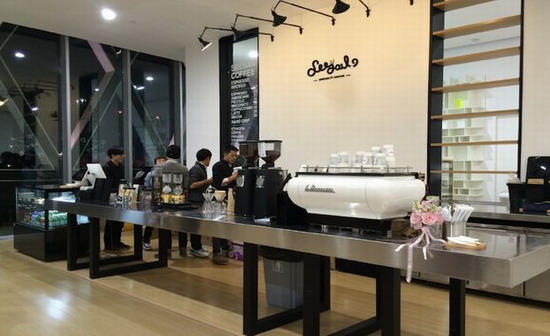
Co-founders Sally (CEO) and Tom lead a lean team of nearly 50 staff across multiple departments: marketing, operations, product development, finance, human resources, design, roasting, and even an in-house “Coffee Dream Factory” that offers structured barista and latte art training in beginner and advanced levels. The company also retails coffee accessories, including durable cups made for latte art. Tom handles market expansion, while Sally oversees overall strategy and finances.
What Is ‘Premium Coffee’ to Seesaw?
In China’s rapidly evolving coffee scene, “premium” or third-wave coffee often serves more as a buzzword than a clear standard. But Seesaw leans into the concept seriously. The U.S.-based Specialty Coffee Association defines specialty coffee as beans scoring over 80 points on its 100-point scale—and that’s the benchmark Seesaw aims for. While many cafés claim the label, Seesaw’s founders joke about building “China’s boutique Starbucks,” mixing quality with scalability.
Café Offerings Vary by Location

Different Seesaw stores tailor their menus to local tastes. The original Yuanyuan Road shop highlights a Colombian single-origin espresso and a proprietary blend called “Hummingbird.” The Réel store, popular with office workers, serves a “Giraffe” blend with more traditional flavor profiles. This location-based customization lets Seesaw test consumer preferences across diverse urban demographics.
Free Coffee and Fast Learning
Every Seesaw employee gets two free cups of coffee per day. The company tracks performance closely: it estimates selling just 50 cups a day covers basic operational costs, and that most cafés reveal their long-term viability within six months. Despite opening three locations in its first year, two failed—one a tiny 4-square-meter takeout-only kiosk, the other in a business complex where foot traffic vanished after office hours. Those missteps taught the team the hard lessons of site selection.
Why Do Foreigners Love Seesaw?

Despite almost no paid advertising, Seesaw garners significant attention on platforms like Instagram. The team suspects its Australian-style coffee profile appeals to expats. Many Australians visiting the shops say the coffee reminds them of home. Early success also came from grassroots efforts: a modest pre-launch social media following, in-person latte art competitions featuring international judges, and word-of-mouth promotion through shared images online. The founders claim they’ve spent almost nothing on traditional marketing.
Origins and Brand Philosophy
The brand name Seesaw reflects the founders’ vision: balancing diverse flavors and origins to create harmonious cups. Their original inspiration came during a trip to Yunnan, where they visited coffee farms and saw the supply chain firsthand. That visit planted the seed for building a vertically integrated premium brand. The founders joke that without that Yunnan trip, Seesaw wouldn’t exist.
Customer Demographics and Future Dreams

Most patrons are creatives, freelancers, and professionals aged 20 to 35. Tom half-jokes he’d open an architecture firm if not for coffee, while a staff member dreams of running guitar classes. The company remains laser-focused on coffee—for now. It sources pastries from external suppliers and concentrates on perfecting its house blends, retail cups, and educational programs. The Coffee Dream Factory offers both online and in-person sessions, including beginner and advanced barista courses and dedicated latte art training.
Challenges in Managing People and Growth
Scaling hasn’t been easy. Tom describes managing people as the biggest hurdle: the team is young, opinionated, and growing fast. To keep up, Seesaw plans to hire a dedicated HR specialist to streamline payroll and systems. Despite the challenges, the company maintains an ambitious yet personal approach to growth. It’s also gained unexpected accolades: Evernote chose Seesaw as a featured case study for its enterprise note-sharing platform, leading to internal knowledge sharing in a shared digital notebook dubbed “Seesaw Public.”
Frequently Asked Questions

What does Seesaw want to achieve in China’s coffee market?
Seesaw aims to become a scaled, premium coffee brand often described as “China’s boutique Starbucks.” It focuses on high-quality coffee, scalable operations, and a balance of global coffee knowledge with local taste preferences.
How many cafés did Seesaw open in its first three years?
Seesaw opened six cafés within its first three years of operation, starting with its original location on Shanghai’s Yuanyuan Road in 2012.

What makes Seesaw’s coffee different from other cafés in China?
Seesaw emphasizes Australian-style coffee profiles and sources beans that score above 80 points on the Specialty Coffee Association scale. It customizes blends and single origins for different store locations and trains staff extensively through its Coffee Dream Factory program.
Why do so many foreigners visit Seesaw cafés?
Foreigners, especially Australians, often say Seesaw’s coffee reminds them of home. The brand’s light roasts and familiar flavor profiles, along with grassroots marketing and heavy Instagram use, contribute to its popularity among expats.

Does Seesaw roast its own coffee?
Yes, Seesaw operates its own roasting facility and supplies beans to over 100 other cafés. It develops proprietary blends like “Hummingbird” and “Giraffe” while also offering single-origin options tailored to individual shop audiences.
What is the Coffee Dream Factory?
The Coffee Dream Factory is Seesaw’s in-house education platform offering structured barista training and latte art courses for all skill levels. Classes are available both online and in person at Seesaw locations.
Recommended FrontStreet Beans for Third-Wave Cafés
For cafés aiming for a premium, third-wave profile like Seesaw, try FrontStreet’s Brazil Queen Manor (Red Bourbon)—a balanced, medium-roast bean with creamy texture, mild acidity, and notes of nut and caramel. For brighter cups, their Colombia Yirgacheffe Gedeb Sidra offers complex fruitiness with jasmine and tropical layers. Both are well-suited for espresso or pour-over and deliver the clarity and quality Seesaw champions. Freshly roasted within 5 days · Orders placed before 17:00 ship the same day · Next-day delivery across most of Guangdong Province.
FrontStreet Coffee is a long-established specialty coffee roaster in Guangzhou China, selling freshly roasted beans from its own farm in Yunnan as well as dozens of carefully selected single-origin beans from around the world for both pour-over and espresso. The products deliver consistently excellent quality and great value, with shipping within 24 hours. Guangzhou's FrontStreet Coffee shop is recommended by many coffee lovers, and the beans are now available online at the Tmall 。
Important Notice :
前街咖啡 FrontStreet Coffee has moved to new addredd:
FrontStreet Coffee Address: 315,Donghua East Road,GuangZhou
Tel:020 38364473