How Lu Xun Made Gongfei Café Famous Without Drinking Coffee
When you think of a historic literary café, you imagine a place where great minds debated over signature espressos or iconic lattes. But in 1930s Shanghai, one coffeehouse earned fame not for its drinks—but for the writer who never touched them. Here’s how Lu Xun turned Gongfei Café into a hub of revolutionary thought without ever sipping its coffee.
The short answer: Lu Xun visited Gongfei Café repeatedly in the 1930s—not for its menu, but to attend meetings that helped form the Chinese Left-Wing Writers’ League. He always ordered just a cup of green tea, yet his presence made the café legendary among intellectuals.
What Was Gongfei Café?
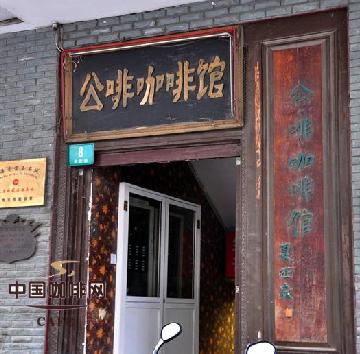
Gongfei Café sat near the tram terminus on North Sichuan Road in Shanghai, right across from the famous Uchiyama Bookstore. It wasn’t Shanghai’s oldest or finest coffeehouse, but its location and clientele made it pivotal. The café was foreign-owned, which offered a degree of safety from local police surveillance—making it an ideal meeting spot for left-wing writers.
Why Did Lu Xun Never Drink Coffee There?
Despite its name and reputation as a coffeehouse, Lu Xun never drank coffee at Gongfei—or anywhere else. In his essay “Revolutionary Coffeehouse,” he mocked the idea of “proletarian coffee” enjoyed by literary elites, writing: “I have never set foot in such coffee shops.” His preferred drink was always tea, specifically green tea, which he drank exclusively during his visits to Gongfei.
How Did Gongfei Become a Literary Hub?
After publishing his skeptical essay on coffeehouses, Lu Xun himself began using Gongfei Café for practical purposes. Just a year later, he started attending gatherings there to plan the formation of the Chinese Left-Wing Writers’ League. These meetings brought together key figures like Xia Yan and Yang Hansheng. According to writer Wei Mengke, while others ordered coffee, Lu Xun and Xia Yan would sit drinking tea. Other accounts, including from Xiao Hong and Xiao Jun—who visited after arriving from the northeast with manuscripts—and Zhou Yang’s wife, confirm that meetings often moved from the Uchiyama Bookstore to Gongfei’s upstairs private rooms, where conversations over tea and coffee shaped modern Chinese literature.
What Made Gongfei Café So Important to Chinese Literary History?
Gongfei Café wasn’t notable for its interior or menu, but for its role as a safe, central meeting point. As Yang Qianshu recalled, the foreign ownership meant it attracted less attention from authorities. This allowed it to become a critical node in the network of 1930s literary activism. Virtually every aspiring writer or intellectual of the era who sought out Lu Xun followed the same path: start at Uchiyama Bookstore, then proceed to Gongfei Café for discussion and debate.
Frequently Asked Questions
Did Lu Xun ever drink coffee at Gongfei Café?
No, Lu Xun never drank coffee at Gongfei Café—or anywhere else, as far as records show. Despite visiting frequently, he always ordered green tea and criticized the notion of “proletarian coffee” in his essay “Revolutionary Coffeehouse.”
What was the significance of Gongfei Café in 1930s Shanghai?
Gongfei Café was a key meeting place for left-wing Chinese writers in the 1930s, especially those involved in forming the Chinese Left-Wing Writers’ League. Its foreign ownership offered some protection from police, making it a relatively safe spot for political discussions.
Who did Lu Xun meet at Gongfei Café?
Lu Xun met other prominent writers and activists at Gongfei Café, including Xia Yan, Yang Hansheng, Xiao Hong, Xiao Jun, and Zhou Yang. These meetings were crucial for organizing the Left-Wing Writers’ League and discussing literature and politics.
Why did Lu Xun prefer tea over coffee?
Lu Xun preferred tea, specifically green tea, and avoided coffee entirely. He expressed skepticism about the Westernized café culture and the idea of intellectual coffee drinking in his writing.
Where was Gongfei Café located?
Gongfei Café was located near the tram terminus on North Sichuan Road in Shanghai, directly across from the Uchiyama Bookstore, a well-known intellectual hub of the time.
Recommended FrontStreet Beans for Literary Coffee Pairings
While Lu Xun drank only tea, today’s readers might pair their literary explorations with FrontStreet Coffee’s Ethiopia Humbera—a bright, floral Ethiopian single origin with notes of jasmine and bergamot—or the Brazil Queen Manor, a smooth medium roast with hints of caramel and almond. For something closer to a classic cup, the FrontStreet Classic Blend offers balanced chocolate and nut tones. Freshly roasted within 5 days · Orders placed before 17:00 ship the same day · Next-day delivery across most of Guangdong Province.
FrontStreet Coffee is a long-established specialty coffee roaster in Guangzhou China, selling freshly roasted beans from its own farm in Yunnan as well as dozens of carefully selected single-origin beans from around the world for both pour-over and espresso. The products deliver consistently excellent quality and great value, with shipping within 24 hours. Guangzhou's FrontStreet Coffee shop is recommended by many coffee lovers, and the beans are now available online at the Tmall 。
Important Notice :
前街咖啡 FrontStreet Coffee has moved to new addredd:
FrontStreet Coffee Address: 315,Donghua East Road,GuangZhou
Tel:020 38364473