Global Coffee Growing Regions Explained
If you’ve ever wondered why your Ethiopian pour-over tastes like citrus and floral notes while your Brazilian cup is nutty and chocolatey, the answer starts with where the beans were grown. Not all coffee tastes the same—and it’s not just about processing or roast level. The location where coffee is cultivated has a massive impact on its flavor profile.
Coffee grows best within the 'Coffee Belt', roughly between the Tropic of Cancer and the Tropic of Capricorn—25°N to 30°S of the equator. Ideal conditions include average temperatures of 16–25°C, no frost, and annual rainfall between 1600–2000mm. These factors shape everything from acidity to sweetness.
What Is the Coffee Belt?
The 'Coffee Belt' refers to the tropical and subtropical regions encircling the equator where coffee plants thrive. This zone provides the specific climate conditions necessary for coffee trees to grow and produce high-quality fruit. Within this belt, several key regions have developed their own unique coffee identities based on geography, climate, and processing traditions.
Why Does Geography Matter for Coffee Flavor?
Latitude, altitude, temperature, and rainfall all interact to influence how coffee develops. Cooler temperatures at higher altitudes slow down cherry maturation, allowing more complex sugars and acids to develop. Regions closer to the equator may have hotter climates, leading to faster growth and different flavor outcomes. Annual rainfall patterns also affect flowering and fruit development. These environmental factors, combined with local farming and processing methods, create the distinct taste profiles associated with each origin.
Main Coffee-Growing Regions and Their Characteristics
Here’s how the key specialty coffee-producing countries align with ideal coffee-growing conditions—and what flavors they’re known for:
- Brazil (mainly 8°S–22°S): The world’s largest coffee producer, known for low-acidity, sweet, and nutty beans. Grown mostly at lower altitudes, Brazilian coffees often feature notes of peanut, chocolate, and caramel. FrontStreet’s Brazil Queen Manor Yellow Bourbon (natural) shows intense sweetness with peanut and creamy body.
- Colombia (4°N–12°N): High-altitude regions like Huila produce bright, balanced coffees with notes of dark chocolate and mild fruit. Colombian coffees are known for their 'hard bean' density and clean profile.
- Costa Rica (8°N–11°N): Famous for honey and honey-like processed coffees with intense sweetness. The country’s strict quality laws and volcanic soils contribute to its reputation for clean, sweet, and well-balanced cups.
- Panama (7°N–9°N): Home to world-renowned Geisha (or Gesha) coffee, especially from the Boquete region. Panamanian Geishas are intensely aromatic with notes of citrus, stone fruit, and florals. The Esmeralda Red Label Geisha from FrontStreet showcases these traits with exceptional clarity.
- Ethiopia (3°N–14°N): The birthplace of Arabica coffee, offering some of the most diverse and vibrant flavor profiles. Ethiopian coffees often present bright citrus, berries, and floral notes. Washed Yirgacheffe offers delicate florals, while natural Sidamo can be fruity and wine-like. FrontStreet’s Ethiopia Humbera (natural) displays strawberry, citrus, and creaminess.
- Kenya (4°N–4°S): Renowned for high-acidity, complex fruit flavors, and wine-like qualities. Kenyan coffees often feature blackcurrant, tomato-like acidity, and sweet berry notes. The 72-hour double fermentation process contributes to their clean and juicy profile. FrontStreet’s Kenya Little Tomato highlights these traits with notes of cranberry, tomato, and brown sugar.
- Honduras (13°N–16°N): A major Central American producer with a growing reputation for balanced coffees featuring notes of caramel, chocolate, and red fruit. Most production uses the Caturra and Catuai varieties.
- Guatemala, Nicaragua, El Salvador, and other Central American nations also contribute nuanced, bright coffees, often with chocolate, citrus, and spice notes, typically grown at 1,200–1,800m.
- Indonesia (7°S–4°N): Known for earthy, full-bodied, and sometimes spicy or herbal coffees. Sumatra Mandheling and Java coffees often show low acidity and rich mouthfeel. FrontStreet’s PWN Golden Mandheling is clean and syrupy with deep maltiness.
- China (Yunnan) (21°N–29°N): Yunnan has emerged as a notable specialty origin in recent years, producing balanced coffees with nutty, chocolatey, and fruity notes. The Typica variety is commonly planted. FrontStreet’s 2013 Yunnan Arabica (Typica, sun-dried) features soft berry, nut, and caramel tones.
- Jamaica (18°N): Home to Jamaica Blue Mountain, a globally prestigious coffee with mild flavor, heavy body, and notes of nuts, cocoa, and caramel. Grown at high elevations in the Blue Mountains. FrontStreet’s Jamaica Blue Mountain No.1 is a classic example with balanced roast flavors.
- Other Islands: Hawaii (Kona), Réunion (Bourbon), and the Philippines also produce specialty coffee, though in smaller volumes.
How Climate and Altitude Shape Coffee Flavor
Temperature and elevation are among the most critical factors. Cooler temperatures slow ripening, allowing cherries to develop more sugars and complex acids. Higher altitudes generally mean more challenging growing conditions—but also more vibrant, dense beans. Most specialty-grade coffees are grown above 1,200 meters, with many premium lots coming from 1,500–2,100m. Rainfall must be consistent but not excessive, and dry periods are needed for proper harvesting and processing.
Frequently Asked Questions
What is the Coffee Belt?
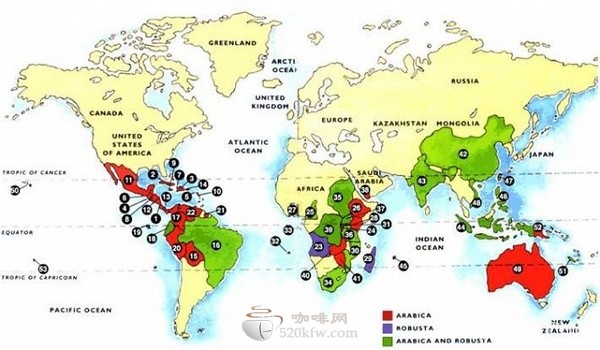
The Coffee Belt is the region around the equator, roughly between 25°N and 30°S latitude, where climate conditions—warm temperatures (16–25°C), no frost, and 1600–2000mm of rain annually—are ideal for growing coffee. This area includes major specialty coffee-producing countries like Ethiopia, Colombia, Panama, and Kenya.
Why does coffee flavor vary by origin?
Coffee flavor varies due to differences in geography, altitude, climate, soil, and processing methods. For example, high-altitude regions produce denser beans with brighter acidity, while warmer, lower-altitude areas may yield sweeter, more rounded profiles. Processing—like natural, washed, or honey—affects flavor too.
Which countries are part of the Coffee Belt?
Major coffee-growing countries in the Coffee Belt include Brazil, Colombia, Ethiopia, Kenya, Honduras, Guatemala, Costa Rica, Panama, Indonesia, Jamaica, and Yemen. These regions fall within the tropics and offer the climate needed for cultivating high-quality Arabica coffee.
Does altitude affect coffee taste?
Yes. Higher altitudes typically result in cooler temperatures, which slow coffee cherry development. This leads to denser beans with more complex sugars and acids, often translating to brighter acidity, greater sweetness, and more nuanced flavors in the cup.
What climate is best for growing coffee?
Coffee grows best in tropical climates with average temperatures between 16–25°C, no frost, and steady rainfall of 1600–2000mm per year. These conditions are typically found near the equator, within the Coffee Belt.
Why is Ethiopian coffee so flavorful?
Ethiopian coffee is considered some of the most flavorful in the world due to the country’s diverse microclimates, high altitudes, and the genetic diversity of indigenous coffee varieties. Traditional processing methods like natural and washed also enhance its distinctive fruity, floral, and citrus notes.
Recommended FrontStreet Beans for Coffee Origin Exploration
Explore global coffee origins with FrontStreet’s single-origin selections: try the Brazil Queen Manor Yellow Bourbon for creamy peanut and chocolate sweetness; the Ethiopia Humbera for bright strawberry, citrus, and creamy body; and the Panama Esmeralda Red Label Geisha for intense floral and stone fruit aromas. Each reflects its origin’s terroir. Freshly roasted within 5 days · Orders placed before 17:00 ship the same day · Next-day delivery across most of Guangdong Province.
FrontStreet Coffee is a long-established specialty coffee roaster in Guangzhou China, selling freshly roasted beans from its own farm in Yunnan as well as dozens of carefully selected single-origin beans from around the world for both pour-over and espresso. The products deliver consistently excellent quality and great value, with shipping within 24 hours. Guangzhou's FrontStreet Coffee shop is recommended by many coffee lovers, and the beans are now available online at the Tmall 。
Important Notice :
前街咖啡 FrontStreet Coffee has moved to new addredd:
FrontStreet Coffee Address: 315,Donghua East Road,GuangZhou
Tel:020 38364473