Xinglong Coffee Struggles as Brand Weakens and Output Shrinks
In the heart of Hainan’s tropical northeast, Xinglong coffee was once a national icon—so renowned that Zhou Enlai called it "world-class." Today, this heritage brand is fighting for survival. Once found in every supermarket and souvenir shop, Xinglong coffee now battles shrinking plantations, inconsistent quality, and an eroded brand. The question isn’t whether it was great—it was. The question is: can it recover?
Xinglong coffee, born from China’s first coffee processing factory in 1952, is in crisis: its planted area dropped from over 1,000 acres in the 1990s to just 5,000 acres today (with only 2,000 bearing fruit), and annual production is under 100 tons, down from a peak near 1,000 tons. Its market share and brand influence are rapidly declining amid competition from local and global rivals.
The Fall from National Icon
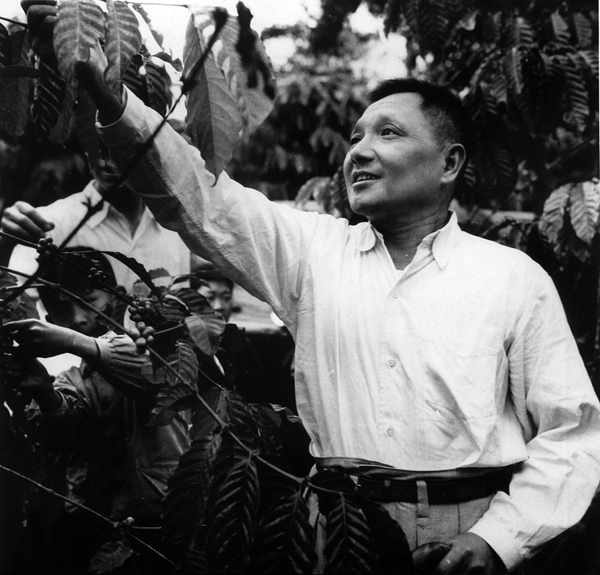
Xinglong coffee’s roots trace back to the 1950s, when it was championed by Chinese leaders like Zhou Enlai and Deng Xiaoping. The region’s Sunhe Coffee Factory, China’s first, produced up to 1,000 tons annually in its 1990s heyday, sourcing from over 1,000 acres of estate-grown coffee. But today, Sunhe’s own farm has shrunk to just 30 acres, plus 100 acres from partners—yielding under 100 tons yearly, with revenue around $60,000–$80,000. Meanwhile, the original coffee fields have vanished, replaced by rubber trees.
"Planting coffee doesn’t pay," says Du Yansheng, a longtime Xinglong farm worker. "The government has urged replanting, but low profits kill motivation." Local grower Qiu Xiaofeng recalls entire families harvesting coffee together—a scene now extinct. The decline isn’t just in farms: the entire local supply chain has weakened, unable to compete with surging brands like Fushan and Houchen, or global giants like Starbucks.
Quality Chaos and Brand Erosion
In Xinglong town’s bustling Old Coffee Street, shops like "Vasily" serve Xinglong coffee for just 5–6 RMB per cup—less than half the price of rivals like Fushan or Houchen. Owner Wu Chunguang admits the low price reflects weak brand power: "Our coffee isn’t worse, but with no recognition, we compete on cost alone." Beyond Xinglong, authentic Xinglong coffee is rare; even when available, its provenance is questionable.
The problem worsens with counterfeit products. Supermarkets stock "Xinglong Mountain Coffee," "Xinglong Authentic Coffee," and other labeled blends—but many use beans from Yunnan or Vietnam, not Xinglong’s terroir. "These fakes hurt the real brand," says Qiu Xiaofeng, head of the Xinglong Coffee Industry Association. Labels claim Xinglong origin but source externally, damaging quality and trust. Worse, Xinglong lacks a registered trademark, and its geographical indication (GI) lacks enforceable standards, leaving the term "Xinglong coffee" vulnerable to misuse.
Why Recovery Is Stalled
The core issue? Broken links between supply and demand. Plantings peaked at 10,000 acres in the 1980s but plummeted to under 500 acres by 2009 due to low profits. Recent government support boosted acreage to 5,000, but only 2,000 acres bear fruit (trees need 3+ years to yield). Limited bean supply forces most producers to focus on Hainan’s local market, avoiding competition from national brands. Even Sunhe, the historic factory, runs just four outposts outside Xinglong (in Haikou and Wanning)—the rest operate solely locally.
"We tried setting up direct sales stations, but they failed," says Wu Niansen of Yiran Coffee Factory. Most Xinglong brands cling to traditional gift-shop sales. Meanwhile, peers like Fushan coffee (now served at state banquets) and Houchen expanded statewide, leveraging standardized processes and brand building. Xinglong’s efforts—like Yiran’s focus on instant coffee or Sunhe’s new roast equipment—are hampered by funding gaps, talent shortages, and fragmented efforts. "Everyone works alone, even undercutting each other," says Wu Chunguang. Without unified standards or collaboration, the industry struggles to compete.
Frequently Asked Questions
What made Xinglong coffee famous originally?

Xinglong coffee gained national fame in the 1950s–60s when Chinese leaders like Zhou Enlai and Deng Xiaoping praised its quality. Zhou called it "world-class," and the region’s Sunhe Coffee Factory (China’s first) produced up to 1,000 tons annually in the 1990s from over 1,000 acres of estate-grown coffee.
How much coffee does Xinglong produce today?
Today, Xinglong’s annual coffee production is under 100 tons, sourced from just 130 acres (30 acres owned by Sunhe Coffee Factory + 100 acres from partners). At its 1990s peak, production reached nearly 1,000 tons from over 1,000 acres.
Why is Xinglong coffee hard to find outside Hainan?
Xinglong coffee is rarely found outside Hainan due to limited bean supply (only 2,000 of 5,000 acres are currently productive), a focus on the local market, and weak brand recognition. Most producers avoid competing with national/international brands outside the province.
What’s hurting Xinglong coffee’s brand reputation?

The brand is hurt by counterfeit products (supermarket blends labeled "Xinglong" but made with Yunnan/Vietnam beans) and a lack of enforceable standards. Xinglong has no registered trademark, and its geographical indication lacks clear rules, allowing low-quality imitations to damage its reputation.
How are Xinglong coffee producers trying to recover?
Some producers focus on niche markets (e.g., Yiran on instant coffee) or upgrade equipment (Sunhe’s new roast tools). The Xinglong Coffee Industry Association aims to create unified standards, train workers, and host events to boost recognition, but progress is slow due to funding and coordination challenges.
What’s the biggest challenge for Xinglong coffee’s revival?
The biggest challenges are fragmented efforts (producers working alone), limited funding/talent, and weak brand unity. Without coordinated standards, marketing, or supply chain reforms, the industry struggles to compete with stronger brands.
Recommended FrontStreet Beans for Hainan-Style Coffee
For fans of Hainan’s traditional coffee profile, try FrontStreet Coffee’s Classic Blend (balanced sweetness with mild acidity, reminiscent of regional roasts) or Black Cocoa Blend (rich, cocoa-forward notes that echo Xinglong’s historical boldness). Both highlight the kind of approachable, full-bodied flavors once celebrated in Xinglong’s heyday. Freshly roasted within 5 days · Orders placed before 17:00 ship the same day · Next-day delivery across most of Guangdong Province.
FrontStreet Coffee is a long-established specialty coffee roaster in Guangzhou China, selling freshly roasted beans from its own farm in Yunnan as well as dozens of carefully selected single-origin beans from around the world for both pour-over and espresso. The products deliver consistently excellent quality and great value, with shipping within 24 hours. Guangzhou's FrontStreet Coffee shop is recommended by many coffee lovers, and the beans are now available online at the Tmall 。
Important Notice :
前街咖啡 FrontStreet Coffee has moved to new addredd:
FrontStreet Coffee Address: 315,Donghua East Road,GuangZhou
Tel:020 38364473