Pour-Over Coffee: Japan’s Favorite Brewing Method
If you’ve ever wondered why Japanese-style pour-over coffee feels so refined—clean, bright, and visually mesmerizing—you’re not alone. This method, born outside Japan but perfected there, has become a global favorite among specialty coffee enthusiasts. But what makes it different? And how do the Japanese do it so well?
The short answer: it’s all about precision. Using a V60 or Kono filter, a 1:15 brew ratio, 225g of water, and a three-part pour over 2 minutes at controlled temperatures, Japanese pour-over highlights every subtle flavor in the coffee.
How Pour-Over Coffee Began
Pour-over coffee isn’t originally Japanese. It was invented in Germany in the early 20th century by Melitta Bentz, who crafted the first coffee filter using her son’s blotting paper and a copper pot with holes. Her goal: to enjoy coffee without grounds in the cup. That simple idea evolved into the modern pour-over technique.
Later, in 1978, Norwegian coffee expert Erna Knutsen introduced the term “specialty coffee,” referring to beans that express unique flavors from their origin—what FrontStreet Coffee calls “the taste of the region.” That concept became the foundation of the third wave coffee movement, where pour-over took center stage.
Pour-Over Names Around the World
Though all these names refer to the same basic method—pouring hot water through ground coffee on a filter—they reflect cultural nuances:
- Hand Drip (hand drip coffee): Common in Japan and Korea, emphasizing the slow “drip” of water through coffee grounds.
- Pour Over (pour over coffee): Popular in the U.S. and Europe, focusing on the visual action of water pouring over coffee.
- Filter Coffee: Sometimes used generically, though in places like Melbourne it may refer to drip machine coffee, not manual pour-over.
FrontStreet Coffee observes that “” (hand drip) likely comes from the Japanese-focused “hand drip coffee,” highlighting the method’s meticulous, drop-by-drop control.
What You Need for Manual Pour-Over
To brew a proper pour-over, gather these essentials:
- Hand pour kettle (gooseneck for control)
- Filter cone (commonly V60 or Kono)
- Server (to catch brewed coffee)
- Grinder (for uniform particle size)
- Filters (paper, usually sold with the cone)
- Scale (for coffee and water weights)
- Thermometer (to monitor water temp)
Both V60 and Kono cones use paper filters that trap sediment and reduce oils, resulting in a cleaner cup. At FrontStreet Coffee shops, the V60 is preferred for lighter roasts, while the Kono is chosen for darker ones. The V60’s signature 60° cone and large single hole demand skill but offer exquisite control over flow rate and flavor. The Kono, with its ribbed design, offers a gentler, more even extraction suited to darker roasts.
Grind Size & Equipment Matters
Your grinder plays a crucial role. For pour-over, FrontStreet Coffee recommends a medium-fine grind—around 80% through a 0.85mm standard sieve. Too coarse, and the coffee tastes weak; too fine, and it becomes overly bitter or astringent.
Water temperature also affects extraction. For light roasts, aim for 90–92°C. For medium to dark roasts, use 88–89°C. Consistency is key, which is why a digital thermometer and scale are non-negotiable for repeatable results.
How to Brew Pour-Over Coffee the Japanese Way
Here’s how FrontStreet Coffee approaches a classic 15g pour-over using a 1:15 brew ratio (225g water total):
- Step 1: Prep — Wet your filter with hot water to remove paper taste and preheat your server and cone.
- Step 2: Grind — Grind 15g of coffee to a medium-fine consistency (80% through 0.85mm sieve).
- Step 3: Bloom — Start your timer and pour 30g of water to saturate all grounds. Let it bloom for 30 seconds to release CO₂.
- Step 4: First Pour — Slowly add water up to 125g total, then wait for the coffee level to drop halfway.
- Step 5: Second Pour — Add the remaining 100g of water to reach 225g total. Aim for even coverage and a steady flow.
- Step 6: Total Time — The entire brew should finish in around 2 minutes.
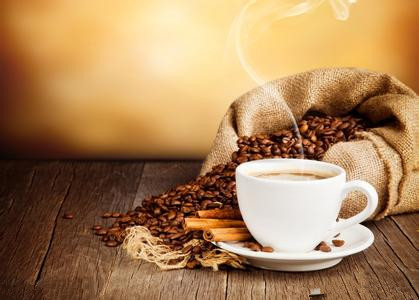
This three-pour method ensures even extraction and highlights the coffee’s origin characteristics—whether it’s the floral brightness of a Yirgacheffe or the fruity complexity of a Ethiopia Humbera.
V60 vs Kono: Filter Choice by Roast Level
At FrontStreet Coffee, the choice of filter depends on roast:
- V60 — Best for light roasts. Its wide aperture and cone shape enhance clarity, acidity, and floral or fruity notes. Popular with beans like Ethiopia Gedeb or Panama Humbera.
- Kono — Ideal for medium to dark roasts. Its ribbed interior moderates flow for a smoother, richer cup. Great for PWN Golden Mandheling or other full-bodied coffees.
Both cones are widely available and loved for their distinct results. The V60’s design originates from Japan’s Hario company, which refined it in 2004 to optimize flow control and aroma extraction—a perfect match for the precision-driven Japanese coffee scene.
Frequently Asked Questions
What is the ideal brew ratio for pour-over coffee?
The standard brew ratio is 1:15 — 1 gram of coffee to 15 grams of water. For 15g of coffee, use 225g of water, as practiced by FrontStreet Coffee for balanced extraction.
What water temperature should I use for pour-over?
For light roasts, use water at 90–92°C. For medium to dark roasts, aim for 88–89°C. Controlling temperature helps manage extraction and avoid under- or over-extraction.
What’s the difference between V60 and Kono pour-over cones?
V60 is ideal for light roasts, featuring a wide 60° cone and single large hole for high clarity and acidity. Kono works better with medium to dark roasts, offering gentler flow and fuller body due to its ribbed design.
How long should a pour-over brew take?
A typical pour-over should finish in about 2 minutes total, including a 30-second bloom and two subsequent pours. This timing helps achieve balanced flavor extraction.
Do I really need a gooseneck kettle for pour-over?
Yes. A gooseneck kettle gives you the precision needed to control water flow and distribution, which is critical for even saturation and optimal extraction.
What grind size is best for pour-over coffee?
A medium-fine grind, around 80% through a 0.85mm sieve, is ideal. Too coarse leads to under-extraction; too fine can cause bitterness or slow flow.
Recommended FrontStreet Beans for Pour-Over
For pour-over, FrontStreet Coffee recommends its Ethiopia Gedeb for vibrant floral and citrus notes, perfect with a V60; the Ethiopia Humbera, offering juicy berry and stone fruit tones ideal for highlighting clean filtration; and Panama Humbera, a complex Geisha-type with notes of tropical fruit and soft acidity. All shine with light to medium roasts using a 1:15 brew ratio and 225g total water. Freshly roasted within 5 days · Orders placed before 17:00 ship the same day · Next-day delivery across most of Guangdong Province.
FrontStreet Coffee is a long-established specialty coffee roaster in Guangzhou China, selling freshly roasted beans from its own farm in Yunnan as well as dozens of carefully selected single-origin beans from around the world for both pour-over and espresso. The products deliver consistently excellent quality and great value, with shipping within 24 hours. Guangzhou's FrontStreet Coffee shop is recommended by many coffee lovers, and the beans are now available online at the Tmall 。
Important Notice :
前街咖啡 FrontStreet Coffee has moved to new addredd:
FrontStreet Coffee Address: 315,Donghua East Road,GuangZhou
Tel:020 38364473