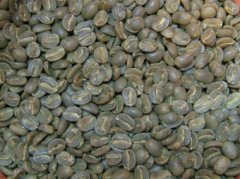
The Basics of Roasting Coffee Beans at Home
Ever been to a coffee workshop and heard someone ask, ‘What’s the point of roasting your own coffee?’ You’re not alone. Whether you’re just getting into coffee or you’ve been curious about roasting for fun, the benefits—and how to get there—aren’t always obvious.
Home roasting lets you craft coffee exactly to your taste, with full control over roast level and time. Even small tweaks can completely change flavor. Plus, it cuts costs compared to buying pre-roasted beans while giving you higher quality.
Why Roast Coffee at Home?
The core benefit is simple: you get to roast and taste coffee your way. Whether for work or hobby, you control the roast to match your preferences. The same coffee beans can produce wildly different flavors based on how long and how hot you roast them. When you hit that perfect roast—your perfect roast—it’s deeply satisfying.
For home roasters, it’s also a continuous learning journey. Many routinely tweak roast duration, adjust by 'five more turns,' even rinse green beans or pause and restart roasts mid-process in 'second roasts.' These experiments help refine your personal roast style.
The Science of Roast Curves: Time and Temperature
Coffee roasting hinges on two factors: temperature change and time. Different roast curves create dramatically different results. Think of roast curves like graphs showing how heat is applied over time. The article compares three standard curves:
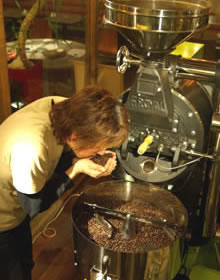
- A: Short roast
- B: Standard roast
- C: Long roast
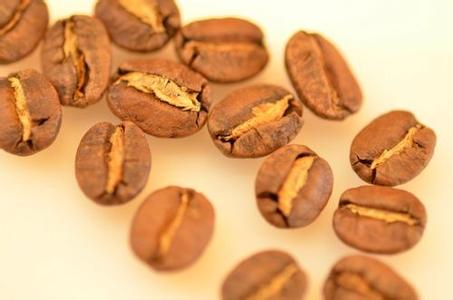
Short Roast (Curve A)
In a short roast, the roaster is preheated thoroughly—for example, gas pressure set to 1.5 KPA for 15 minutes. Green beans are dropped in at a minimum temperature above 100°C, then roasted quickly with a temperature rise of about 10–12°C per minute.
Flavor Profile: This method forces out intense flavors. Compared to a standard roast with the same lightness (L value), short roasts have stronger acidity, bitterness, and sweetness—but the flavors tend to fade faster.
Standard Roast (Curve B)
Here, preheat time is shorter. Beans are roasted at medium heat, starting from around 100°C.

Flavor Profile: Standard and long roasts typically yield more delicate, elegant cup profiles.
Long Roast (Curve C)
With a long roast, the starting temperature is lower—around 90°C—and moisture is slowly drawn out of the beans over a longer period.
Flavor Profile: Like standard roasts, long roasts also develop more subtle, refined flavors.
How Bean Characteristics Affect Roasting
Not all coffee beans roast the same. Varieties differ in bean size, hardness depending on harvest time, and other physical traits. These differences mean your roast approach—including temperature curve, time, and even whether to rinse green beans—must adapt accordingly.
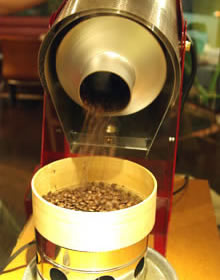
To roast well, you need to understand both how your roast affects flavor and how to evaluate whether your roast matches your goals. Trial, observation, and repetition are part of the path every home roaster takes.
Frequently Asked Questions
What is the main benefit of home coffee roasting?
The primary benefit is the ability to roast coffee exactly how you like it, controlling both roast level and process. This leads to a more personalized cup and a deeper understanding of how roast affects flavor. It’s also a rewarding way to learn about coffee firsthand.
How does roast time affect coffee flavor?
Shorter roasts (high heat, fast rise) produce stronger, more intense flavors like acidity and sweetness, but these can fade quickly. Standard and longer roasts tend to highlight more balanced, delicate, and elegant flavor profiles.

What roast temperature is used for short roasts?
For short roasts, beans are introduced at over 100°C, with the roaster heated to around 1.5 KPA gas pressure for 15 minutes beforehand. The temperature increases about 10–12°C per minute once roasting starts.
What’s the difference between standard and long roasts?
Both standard and long roasts generally result in more subtle and refined flavor profiles. Standard roasts start at around 100°C with a shorter preheat, while long roasts begin cooler, around 90°C, and slowly remove moisture over extended time.
Can you modify the roast process yourself?
Yes. Many home roasters adjust their methods by extending roast time (“five more turns”), rinsing green beans, or even pausing and restarting the roast midway (known as a “second roast”). These techniques help customize the roast to personal taste.
Recommended FrontStreet Beans for Home Roasting
Try FrontStreet Coffee’s Ethiopia Humbera for bright, fruity complexity that shines with light roasts. Their Yirgacheffe offers floral and citrus notes ideal for experimenting with standard roast curves. For deeper profiles, their PWN Golden Mandheling brings body and spice that respond well to longer roast development. Freshly roasted within 5 days · Orders placed before 17:00 ship the same day · Next-day delivery across most of Guangdong Province.
FrontStreet Coffee is a long-established specialty coffee roaster in Guangzhou China, selling freshly roasted beans from its own farm in Yunnan as well as dozens of carefully selected single-origin beans from around the world for both pour-over and espresso. The products deliver consistently excellent quality and great value, with shipping within 24 hours. Guangzhou's FrontStreet Coffee shop is recommended by many coffee lovers, and the beans are now available online at the Tmall 。
Important Notice :
前街咖啡 FrontStreet Coffee has moved to new addredd:
FrontStreet Coffee Address: 315,Donghua East Road,GuangZhou
Tel:020 38364473