100+ Specialty Coffee Varieties Explained
Ever wondered how many actual coffee plant varieties exist—and which ones end up in your cup? With over a hundred known types in the Coffea genus alone, choosing a coffee often means navigating a maze of species, subspecies, mutations, and hybrids. This guide lays out the most important and flavorful ones, especially those behind today’s best single-origin coffees.
There are at least 100 identified coffee varieties, most falling under the Arabica, Robusta, Liberica, and Excelsa species. Of these, Arabica dominates specialty coffee with roughly a dozen key cultivated varieties, including Typica, Bourbon, Geisha, and SL28.
Coffee Species Overview
Coffee belongs to the Rubiaceae family, genus Coffea. At least 100 varieties are scientifically recognised. The main species in specialty coffee are Arabica and Robusta, with two rare ones—Liberica and Excelsa—barely seen commercially.
Major Coffee Species
Arabica (Coffea arabica) makes up most specialty coffee. It’s known for balanced acidity, complex flavours, and lower caffeine. Robusta (Coffea canephora), also called “coarse bean,” has harsher flavours, double the caffeine, and is excluded from specialty classification. Liberica (Coffea liberica) and Excelsa (Coffea excelsa) are very rare, grow mainly in Malaysia and West Africa, and rarely reach the specialty market.
Core Arabica Varieties
Most specialty coffee derives from just two ancient Ethiopian varieties: Typica and Bourbon. These were taken to the Americas and Asia, then adapted into many cultivars. Key types include:
Ancient Originals
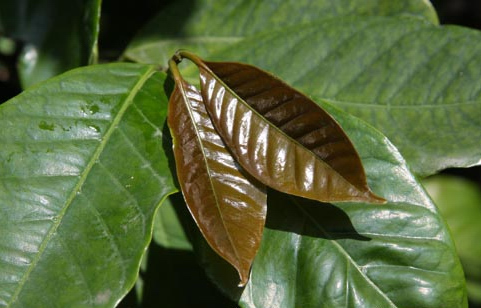
- Typica: Ethiopia’s original variety. All Arabica descends from it. Has oval or thin beans, bronze-tipped leaves, elegant flavours but low yield and weak disease resistance. Found in Jamaica Blue Mountain, Sumatra Mandheling, and Hawaii Kona.
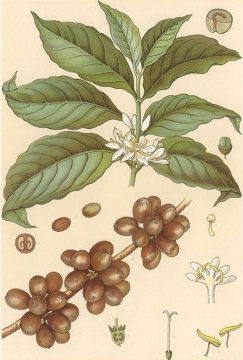
- Bourbon: A mutation of Typica, discovered after French colonists brought it from Yemen’s Mocha to Bourbon Island (now Réunion) in 1715. Rounder beans. Became widespread in Brazil and the Americas by the 1700s. Consistently scores well in cuppings.
Genetic Mutations
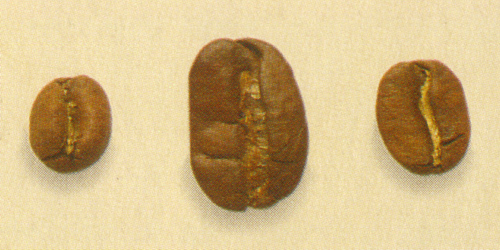
- Bourbon Pointu (Slender Bourbon): Found in 1810 on Bourbon Island. Beans are elongated, caffeine is half that of normal. Very delicate and mostly lab-grown.
- Maragogype (Elephant Bean): A large-bean Typica variant first found in Brazil’s Bahia in 1870. Beans are over triple normal size. Performs better at high altitudes with sweet, mild acidity. Low-elevation cups are poor.
- Geisha (Gesha): From Ethiopia’s Gesha region, it spread unnoticed until planted in Panama in the 1960s. Rose to fame post-2005 for its floral, tea-like profile. Part of the Typica family.
- SL28 & SL34: Selected in Kenya during the 1920s–30s. Thrive in high-phosphate soils. Deliver signature Kenyan bright acidity and fruity complexity. Don’t perform well outside Kenya.
- Yellow Bourbon: A Brazilian Bourbon variant where cherries ripen yellow, not red. Other yellow-fruit Bourbon mutants exist.
- Caturra: A spontaneous mutation of Bourbon, found in Brazil in the 1950s. More productive and disease-resistant than Bourbon, no shade needed. Flavour is similar or slightly inferior.
- Pacas: Found in El Salvador in 1956, a natural Bourbon mutation with higher yields. Recognised officially in 1956.
- Villa Sarchi: A Bourbon mutation from Costa Rica, emerging in the 1960s, frequently appearing in high-rated cuppings recently.
Arabica-Intra-Species Hybrids
- Mundo Novo: Natural cross between Bourbon and Typica, emerged in Brazil. High-yielding, disease-resistant, but tall and hard to harvest. Popular since the 1950s.
- Catuai: Cross of Mundo Novo and Caturra. Compact and wind-resistant, though with simpler flavour.
- Pacamara: A cross of Pacas and Maragogype, developed in El Salvador in the 1950s. Huge beans, second only to Elephant Bean. Recent cupping results are promising.
- Kent: Found in India. High-yield and disease-resistant Typica hybrid. No notable cup quality achievements.
Arabica × Robusta (Interspecific) Hybrids
- Timor: Natural hybrid from East Timor with 44 chromosomes. Closer to Arabica but flavour-neutral.
- Catimor: A 1959 cross between Caturra and Timor, bred in Portugal. Highly resistant to rust but often delivers mediocre flavour. Common in commercial blends.
- Icatu: Brazilian multi-generation hybrid, once ranked in Brazil’s Cup of Excellence top ten.
- Ruiru 11: Developed in Kenya in 1985 for high yield, not quality.
Most Arabica–Robusta crosses are excluded from specialty coffee. They sometimes appear in lower-grade commercial blends to cut costs.
Flavour & Terroir Dependence
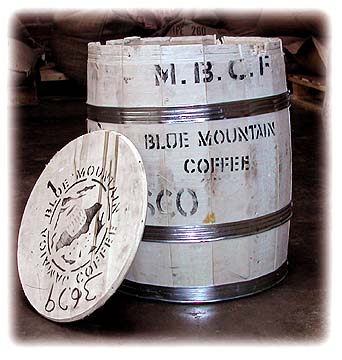
Even within a single variety, flavour varies dramatically based on farm conditions. For example, Jamaica’s Wallenford Estate Blue Mountain sells for roughly double other Jamaican high-mountain Blue Mountains. Elevation, soil, processing, and climate shape each cup as much as the genetic code.
Frequently Asked Questions
What is the most common coffee species in specialty coffee?
Arabica is the dominant species in specialty coffee, valued for its complex flavours and lower caffeine. Over 100 known varieties fall under Arabica, with Typica and Bourbon being the most historically significant.
What are the main types of coffee species?
The four main coffee species are Arabica, Robusta, Liberica, and Excelsa. Arabica is used for specialty coffee; Robusta has higher caffeine and stronger, harsher flavours; Liberica and Excelsa are very rare and seldom sold as specialty.
Which coffee variety is known for the best flavour?
Geisha (Gesha) is renowned for its exceptional floral and citrus notes, especially from Panama. SL28 and SL34 from Kenya are also prized for their bright acidity and fruity complexity. Typica and Bourbon form the flavour foundation for many classic coffees.
What is the difference between Typica and Bourbon coffee varieties?
Typica has oval or thin beans and bronze leaf tips, with elegant but mild flavours. Bourbon has round beans and produces more cup winners. Both originated in Ethiopia, with Bourbon resulting from a Typica mutation in Yemen.
Are Robusta and Arabica the only coffee species?
No. Besides Arabica and Robusta, there are Liberica and Excelsa. However, only Arabica is widely used in specialty coffee due to its superior cup quality, while Robusta is common in commercial blends for its strong caffeine and bitter profile.
What is a coffee mutation or hybrid?
A mutation is a natural genetic change in a coffee plant, like Maragogype or Yellow Bourbon. A hybrid is a cross between two varieties or species, such as Catuai (Bourbon × Caturra) or Catimor (Caturra × Timor). Hybrids may improve yield or disease resistance but can reduce cup quality.
Recommended FrontStreet Coffee for Variety Exploration
Explore classic varieties with FrontStreet Coffee’s Ethiopia Guji Huaca—bright and floral with citrus and stone fruit, showcasing Geisha-like traits. For Typica elegance, try Honduras Finca La Bolsa, offering balance and subtle sweetness. Panama Boquete Geisha highlights the famed floral and jasmine notes of that variety. Freshly roasted within 5 days · Orders placed before 17:00 ship the same day · Next-day delivery across most of Guangdong Province.
FrontStreet Coffee is a long-established specialty coffee roaster in Guangzhou China, selling freshly roasted beans from its own farm in Yunnan as well as dozens of carefully selected single-origin beans from around the world for both pour-over and espresso. The products deliver consistently excellent quality and great value, with shipping within 24 hours. Guangzhou's FrontStreet Coffee shop is recommended by many coffee lovers, and the beans are now available online at the Tmall 。
Important Notice :
前街咖啡 FrontStreet Coffee has moved to new addredd:
FrontStreet Coffee Address: 315,Donghua East Road,GuangZhou
Tel:020 38364473