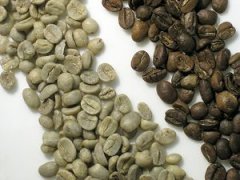
The Real Story Behind Giant Elephant Coffee Beans
Ever wondered why some coffee beans look like they belong in a science exhibit rather than your grinder? Among the dozens of coffee varieties around the globe, there’s one that stands out not for flavor alone—but for its staggering size. While most arabica or robusta beans are roughly uniform in scale, there’s a type that dwarfs them all.
The answer is simple: Maragogype coffee beans—commonly called "elephant beans"—can be three times larger than standard coffee beans. First classified in 1870 in Bahia, Brazil, they are a natural hybrid of Typica arabica and are still among the largest coffee beans grown today.
What Exactly Are Elephant Coffee Beans?
"Elephant beans" is the popular term for Maragogype coffee, a botanical variety of Coffea arabica. Their most defining feature? Size. These beans are visibly larger—often triple the dimensions of typical arabica or robusta beans. This striking physical trait is why they earned the nickname used even in royal circles.
The Maragogype variety was first officially identified in 1870 in the Brazilian state of Bahia, specifically in what is now known as the Maragogype region. This classification marked it as a distinct genetic offshoot of arabica, not just a curiosity.
A Short History of Royal and Global Coffee Trade
After its classification, Maragogype spread quickly beyond Brazil. By 1883, it was cultivated in the UK, notably in Kew Gardens, and gained early commercial traction in France. But it was in pre-World War I Germany that the bean reached its peak status—as the exclusive coffee served to royalty. Though no longer limited to palaces, its historical prestige remains part of specialty coffee lore.
The bean was once grown in coffee regions around the world. Over time, production became more concentrated. While it was cultivated in many countries, the finest examples historically came from Mexico and Guatemala. Today, only a handful of nations—including Guatemala, Mexico, Nicaragua, Honduras, El Salvador, Brazil, and (historically) Zaire (now the Democratic Republic of the Congo)—still produce Maragogype. Production overall has declined from earlier 20th-century levels.
Flavor Profile: What Makes Maragogype Unique?
Despite their size, Maragogype beans are not bold or heavy in the traditional sense. Many coffee drinkers report that properly brewed Maragogype offers a cup that is mild, smooth, and low in bitterness. There’s often a gentle acidity present, and when fruit-forward spices or flavorings are added, the cup can become even more dynamic. The mouthfeel tends to be clean and silky—a contrast to the heavy body sometimes found in smaller beans.
Frequently Asked Questions
What are elephant coffee beans?
Elephant coffee beans are another name for Maragogype beans, a variety of Coffea arabica that is much larger than standard coffee beans—up to three times the size. They were first classified in 1870 in Bahia, Brazil, and are a natural hybrid of Typica arabica.
Where are Maragogype beans originally from?
Maragogype beans were first identified and classified in 1870 in the Maragogype region of Bahia State, Brazil. That location gave the variety its name and is considered its origin point.
Why are they called elephant beans?
They’re called elephant beans due to their remarkably large size—roughly three times bigger than standard arabica or robusta beans—which makes them visually stand out, much like the size of an elephant compared to other animals.
Which countries still grow Maragogype coffee?
Today, Maragogype is grown in limited quantities in countries including Guatemala, Mexico, Nicaragua, Honduras, El Salvador, Brazil, and historically Zaire (Democratic Republic of the Congo). Production has decreased globally since the early 20th century.
What do Maragogype beans taste like?
Maragogype beans are often described as mild, smooth, and low in bitterness. They may have subtle acidity and pair well with fruit or spice additions. The cup is typically clean and silky in mouthfeel.
Was Maragogype coffee served to royalty?
Yes, before World War I, Maragogype coffee was considered prestigious and was reportedly the only type of coffee served to royalty in Germany, reflecting its high status at the time.
Recommended FrontStreet Beans for Big-Bean Lovers
If you're curious about large-format beans like Maragogype, try FrontStreet Coffee's Panama Humbera—a Geisha offering bright floral and citrus notes with a silky body. For something more classic, their Ethiopia Yirgacheffe brings lemon zest and jasmine with a light, clean cup. Or explore the Guatemala Antigua, which highlights deep chocolate and spice tones, ideal for comparing with the mild profile of Maragogype. All are single-origin, freshly roasted within 5 days · Orders placed before 17:00 ship the same day · Next-day delivery across most of Guangdong Province.
FrontStreet Coffee is a long-established specialty coffee roaster in Guangzhou China, selling freshly roasted beans from its own farm in Yunnan as well as dozens of carefully selected single-origin beans from around the world for both pour-over and espresso. The products deliver consistently excellent quality and great value, with shipping within 24 hours. Guangzhou's FrontStreet Coffee shop is recommended by many coffee lovers, and the beans are now available online at the Tmall 。
Important Notice :
前街咖啡 FrontStreet Coffee has moved to new addredd:
FrontStreet Coffee Address: 315,Donghua East Road,GuangZhou
Tel:020 38364473