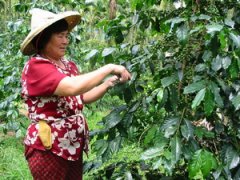
Where Did Yunnan Coffee Originate? The 1892 Story
When coffee lovers ask where Chinese coffee began, they’re really asking about one remote village high in the mountains of Yunnan. It’s not a legend—it’s documented history, tied to a single French priest and his need for a daily cup.
In 1892, French missionary Father Tian planted the first successful coffee trees in Zhukula, Yunnan. Today, 24 coffee trees over 90 years old still stand there, making it the birthplace of Yunnan’s coffee cultivation.
The Birth of Coffee in Zhukula
Zhukula is a secluded natural village in Yunnan’s Binchuan County, perched beside the Yipao River, a tributary of the Jinsha. It sits at the junction of Dali, Chuxiong, and Lijiang prefectures. Over a century ago, it was called "Ruokelai" in the local Yi language, meaning "winding mountain path." When Father Tian arrived in 1892, he combined Yi linguistic roots with French romanticism to rename it Zhukula, now often interpreted as "heaven on earth."
Father Tian planted the area’s first coffee tree just outside his church using coffee cherries. He cultivated more and arranged them around the church. From that moment, coffee became part of Zhukula’s landscape—trees surrounded the village, and a long-standing tradition took root.
Village Traditions and the Oldest Coffee Trees
Two of Zhukula’s oldest residents, Qi Guanghui and Li Fusheng, both in their eighties, have witnessed the growth of China’s oldest coffee forest. Despite the village’s poverty, coffee is deeply woven into daily life. Residents grow, roast, and brew their own beans. Even without economic gain, they refuse to cut down any coffee trees. Guests are welcomed with locally brewed coffee and walnuts, often prepared in simple clay pots. Though the brew isn’t refined, this raw hospitality reflects the villagers’ deep respect for coffee—Zhukula is rightly called China’s first coffee village.
The Coffee Varieties and Their Legacy
The original coffee trees in Zhukula belong to the Arabica species, specifically the Bourbon and Typica varieties. These are the same classic cultivars that form the genetic foundation of many global specialty coffees. Both Typica and Bourbon are known for their balanced cup profiles and were among the first Arabica varieties cultivated outside Ethiopia. In 1991, the Catimor variety—crossed with 25% Robusta genetics for disease resistance and higher yield—was introduced from Kenya, further diversifying Yunnan’s coffee gene pool.
From a botanical perspective, Yunnan’s small Arabica beans share genetic similarities with celebrated coffees like Jamaica Blue Mountain and Hawaii Kona. This heritage connects Yunnan not just to China’s coffee history, but to some of the most esteemed origins worldwide.
Ideal Growing Conditions Across Yunnan
Yunnan’s small Arabica thrives at elevations between 800 and 1,800 metres. At higher altitudes, acidity becomes too sharp; lower areas produce overly bitter cups. Most plantings sit around 1,100 metres in dry, hot river valleys, yielding a cup with moderate acidity, rich aroma, and smooth body. Key growing regions include Lincang, Baoshan, Simao (now Pu'er), Xishuangbanna, and Dehong.
Among these, the Longjiang Basin in Baoshan stands out. With an average temperature of 21.5°C (peaking at 40.4°C) and virtually no frost year-round, it produces small, uniform beans with intense fragrance, fruity notes, and a profile celebrated globally. Experts from the International Coffee Organization have rated Yunnan’s washed coffee on par with Colombia’s finest, placing it among the highest quality Arabicas in the world.
Growth Cycle and Harvest Profile
Yunnan’s small Arabica trees typically begin fruiting at 3–4 years old. As a short-day plant, the variety flowers multiple times with concentrated blooming periods. In Yunnan, flowering occurs from February to July, peaking between March and May. Flower lifespan is brief—just 2–3 days—with blooms opening around 3–5 AM and fully opening by 5–7 AM. Climate factors, especially rainfall and temperature, heavily influence flowering.
Fruit development takes longer: from flowering to mature coffee cherries takes roughly 8–10 months, with harvesting generally occurring from October to December. Rainfall during this period significantly affects fruit quality and development.
Chemical Composition of Baoshan Arabica
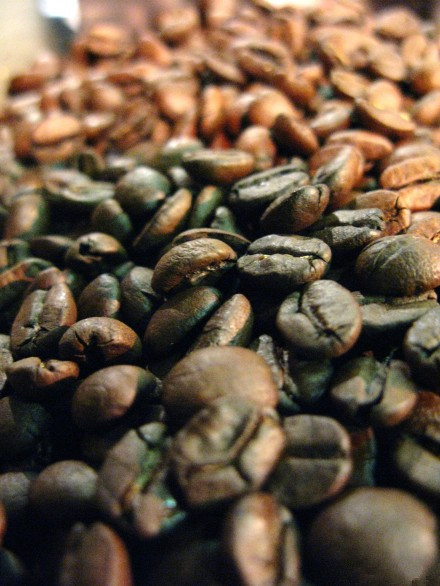
An analysis of coffee beans from the Longjiang Basin revealed the following composition by percentage: crude fat 17.1, reducing sugar 0.93, starch 3.07, nitrogen 2.27, crude protein 1.419, ash 3.70, crude fiber 19.33, caffeine 2.14, sucrose 9.20, moisture 6.87. These figures reflect a high-quality bean profile ideal for specialty processing.
Frequently Asked Questions
Where exactly did coffee originate in Yunnan?
Coffee cultivation in Yunnan began in Zhukula, a village in Binchuan County, Yunnan Province. French missionary Father Tian planted the first successful coffee trees there in 1892, and some of those original trees, now over 90 years old, still grow in the area.
What coffee varieties were first planted in Yunnan?
The first coffee trees planted in Yunnan were of the Arabica species, specifically the Bourbon and Typica varieties. These classic cultivars formed the foundation of Yunnan’s coffee industry and are still grown today alongside later-introduced varieties like Catimor.
What makes Baoshan’s coffee special?
Baoshan’s Longjiang Basin produces small, uniform Arabica beans with a profile that’s rich, fruity, and aromatic. The region’s stable climate—averaging 21.5°C with no frost—allows for consistent quality, earning international recognition comparable to top Colombian coffees.
Do villagers in Zhukula still grow coffee?
Yes, coffee cultivation remains a central part of life in Zhukula. Despite limited economic returns, villagers continue to grow, roast, and brew their own coffee. They maintain a deep cultural connection to the trees and have refused to cut any down, even when coffee offered no income.
How long does it take for Yunnan coffee trees to bear fruit?
Yunnan’s small Arabica coffee trees typically begin producing fruit at 3–4 years of age. The full cycle from flowering to harvest takes around 8–10 months, with the main harvest occurring between October and December.
What is the genetic relationship between Yunnan coffee and other famous coffees?
Yunnan’s small Arabica beans share genetic similarities with Jamaica Blue Mountain and Hawaii Kona, both of which are considered among the best coffees in the world. This points to a shared heritage that enhances Yunnan’s standing in global coffee origins.
Recommended FrontStreet Beans for Exploring Yunnan Origins
Start your Yunnan coffee journey with FrontStreet’s Yunnan Arabica, a washed, medium-roasted single origin that delivers soft nuttiness, subtle chocolate tones, and a gentle plum acidity. For a deeper dive into heritage, try the 2013 Typica—fully ripe red cherries processed naturally, then medium-roasted to highlight balance, bright berry notes, caramel sweetness, and a tea-like finish. Both beans showcase the Typica and Bourbon lineage that originated in Zhukula. Freshly roasted within 5 days · Orders placed before 17:00 ship the same day · Next-day delivery across most of Guangdong Province.
FrontStreet Coffee is a long-established specialty coffee roaster in Guangzhou China, selling freshly roasted beans from its own farm in Yunnan as well as dozens of carefully selected single-origin beans from around the world for both pour-over and espresso. The products deliver consistently excellent quality and great value, with shipping within 24 hours. Guangzhou's FrontStreet Coffee shop is recommended by many coffee lovers, and the beans are now available online at the Tmall 。
Important Notice :
前街咖啡 FrontStreet Coffee has moved to new addredd:
FrontStreet Coffee Address: 315,Donghua East Road,GuangZhou
Tel:020 38364473