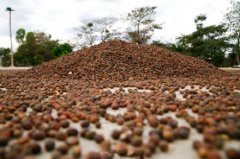
Where Coffee Trees Come From: Ethiopia in Africa
If you’ve ever wondered where your morning coffee actually comes from, the answer leads straight back to the highlands of Ethiopia. This is where the coffee plant was first discovered, where it grows wild, and where the global story of coffee began. But what exactly is a coffee tree, how does it produce those familiar beans, and why does Ethiopia matter so much to coffee lovers worldwide?
Coffee originates from Ethiopia, where the Coffea plant grows as a tropical evergreen shrub. The fruit it produces—commonly called a coffee cherry—contains seeds we know as coffee beans. There are two main commercial species: Arabica (70% of global production) and Robusta, both native to Africa. Ethiopia is the birthplace of Arabica and home to legendary coffees like those from Yirgacheffe and Sidamo.
What Is a Coffee Tree?
Botanically, the coffee tree belongs to the Rubiaceae family, genus Coffea. It’s a tropical evergreen that can reach up to 10 meters in the wild, though cultivated trees are usually pruned to 2–4 meters for easier harvesting. The tree produces white, jasmine-scented flowers after about three years, which then give way to coffee cherries several months later.
The coffee cherry is a small, round fruit about 1.5 cm in diameter. It starts green, turns yellow, and ripens to a bright red—much like a cherry—hence the nickname “coffee cherry.” Inside each cherry are typically two coffee beans, flat sides facing each other, encased in a sweet, pulpy fruit layer and protected by a skin, pulp, parchment (inner skin), and silver skin.
Coffee Species: Arabica vs Robusta
There are three main coffee species that dominate global production:
- Arabica (Coffea arabica): Accounts for around 70% of the world’s coffee. Arabica beans are known for their complex flavors, higher acidity, and lower caffeine content. Most famous coffees, such as Blue Mountain and Mocha, come from Arabica plants. Arabica leaves are about 15 cm long.
- Robusta (Coffea canephora): Makes up roughly 20–30% of global production. Originating in the Congo, Robusta has a stronger, harsher taste, higher caffeine content, and is more resistant to disease. Its leaves are longer, soft, oval or pointed, and bright green.
- Liberica (Coffea liberica): Less common commercially, but still considered one of the three original coffee species.
How Coffee Cherries Become Coffee Beans
The journey from flower to cup begins with the coffee cherry. After pollination, the flowers fall off and coffee cherries begin to form. It takes around 7–9 months for cherries to mature. Once ripe and red, they’re ready for harvest.
Inside each cherry are two coffee beans. These beans are not beans in the botanical sense, but seeds. Each has a thin outer membrane called the silverskin, surrounded by a yellowish layer called the parchment or endocarp, and further encased in a sweet, edible fruit pulp.
How Coffee Beans Are Processed
There are two main methods to remove the coffee bean from the cherry:
- Natural (Dry) Process: The cherries are spread out in the sun to dry completely, sometimes taking up to four weeks. Once the outer fruit is fully dried and brittle, the beans are removed by hulling. This method is simple but climate-dependent and can lead to uneven quality or earthy flavors if not managed well.
- Washed (Wet) Process: The cherries are first soaked to soften them, then put in water tanks for 24–28 hours. Only ripe cherries sink, allowing for initial quality selection. The beans are then removed from the pulp using a depulper, fermented in water tanks for 12–24 hours to dissolve any remaining fruit residue, washed clean, and finally sun-dried. The beans are then hulled to remove the parchment. This method generally results in cleaner, brighter flavors and fewer defects.
How Climate Affects Coffee Growth
Coffee trees thrive only in tropical or subtropical climates, typically within the “Coffee Belt”—the region between the Tropics of Cancer and Capricorn, roughly 25 degrees north and south of the equator. This zone offers the ideal combination of altitude, temperature, and rainfall for coffee trees to flower and fruit properly.
Ideally, coffee grows at elevations between 800 and 2,000 meters, where cooler temperatures slow growth and develop more complex flavors. The trees require consistent rainfall, good drainage, and protection from frost.
The History and Evolution of Coffee Drinking
The earliest known use of coffee was not as a brewed drink but as food: Ethiopian tribes are believed to have chewed the whole coffee cherries for their energizing effects. Later, coffee beans were mixed with animal fat to create an energy-rich snack for long journeys.

By around the year 1000, people began boiling raw beans to make a drink. It wasn’t until the 13th century that Arabs discovered roasting—transforming coffee from a mere stimulant into the aromatic beverage we know today. Roasting unlocks the complex Maillard reactions that create the rich smells and flavors associated with specialty coffee.
Roast Levels and Flavor Development
Roasting transforms green coffee beans into the brown beans used for brewing. The degree of roast—light, medium, or dark—has a profound effect on flavor:
- Light Roasts: Highlight acidity and origin characteristics, with lighter body.
- Medium Roasts: Balance acidity and body, often showing more rounded flavor.
- Dark Roasts: Bring out more bitterness and roast flavors, often masking the bean’s origin traits.
The “right” roast depends on the coffee variety, brewing method, and personal preference. There’s no universal best roast—just the one that suits the bean and your taste.
Frequently Asked Questions
Where did coffee originally come from?
Coffee originated in Ethiopia, specifically in the Kaffa region, where the Coffea plant grows wild. It was here that coffee cherries were first consumed, initially chewed for energy, later brewed as a drink.
What is a coffee bean, really?
A coffee bean is the seed inside the coffee cherry fruit. Though commonly called a bean due to its shape, it is botanically a seed with layers including the silverskin, parchment, and pulp.
What are the two main types of coffee plants?
The two primary commercial coffee species are Arabica and Robusta. Arabica makes up about 70% of global production and is known for its nuanced flavors. Robusta accounts for 20–30% and is stronger, harsher, and more disease-resistant.
How are coffee beans extracted from the cherry?
Coffee beans are removed from the cherry either through the natural (dry) process, where cherries are sun-dried, or the washed (wet) process, where beans are fermented and cleaned before drying. Each affects flavor differently.
Why does coffee grow only in certain regions?
Coffee requires a tropical or subtropical climate found between the 25th parallels, known as the Coffee Belt. It needs consistent warmth, elevation, rainfall, and well-drained soil to thrive.
How did coffee become a drink?
Coffee was first eaten as a fruit or mixed with fat for energy. By the 13th century, beans were boiled. Roasting was discovered around the 1200s in Arabia, unlocking the rich aroma and flavor profile we associate with modern coffee.
Recommended FrontStreet Beans from Ethiopia
Explore Ethiopia’s signature coffee profiles with FrontStreet’s Yirgacheffe Gedeb and Humbera (Ethiopia Humbera). The Gedeb cooperative offers soft body, bright acidity, and floral-jasmine notes with wild, herbal undertones. Ethiopia Humbera highlights the country’s classic bright cup with complex fruit and floral layers. Both showcase the vibrant, high-altitude fruitiness Ethiopia is known for. Freshly roasted within 5 days · Orders placed before 17:00 ship the same day · Next-day delivery across most of Guangdong Province.
FrontStreet Coffee is a long-established specialty coffee roaster in Guangzhou China, selling freshly roasted beans from its own farm in Yunnan as well as dozens of carefully selected single-origin beans from around the world for both pour-over and espresso. The products deliver consistently excellent quality and great value, with shipping within 24 hours. Guangzhou's FrontStreet Coffee shop is recommended by many coffee lovers, and the beans are now available online at the Tmall 。
Important Notice :
前街咖啡 FrontStreet Coffee has moved to new addredd:
FrontStreet Coffee Address: 315,Donghua East Road,GuangZhou
Tel:020 38364473