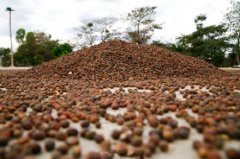
From 6kg Fresh Coffee to 1kg Green Bean: What’s Lost?
Ever wondered why your bag of roasted coffee weighs so little compared to the pile of red cherries hanging on the tree? The journey from ripe coffee fruit to the green beans we roast is far from simple — and involves a massive reduction in weight. If you’ve ever asked how many coffee cherries go into your morning cup, the answer starts with a surprising number: six.
To produce just 1 kilogram of green (raw) coffee beans, you need around 6 kilograms of freshly harvested coffee cherries. That’s not due to inefficiency — it’s simply how much pulp, skin, water, and mucilage is removed during processing. Every step from harvest to drying reduces the mass significantly.
Why Does It Take 6kg of Cherries for 1kg of Beans?
Coffee cherries are made up of more than just the bean. Each cherry typically holds two seeds (the beans) surrounded by sweet pulp, a sticky mucilage layer, the parchment shell, and the outer skin. When coffee is processed — whether via washed, natural, or honey methods — most of this outer material is removed. What remains is the dense, dry seed ready for roasting. On average, only about 15–17% of the fresh cherry’s weight ends up as green coffee.
The Processing Step You Can’t Skip
Freshly picked coffee cherries cannot be roasted directly. They must be delivered to a dedicated processing facility where the beans are carefully extracted and dried. At this stage, unwanted fruit material is removed and the beans are stabilized through drying. This processing is essential to prevent mould, fermentation defects, and unwanted flavours. Without it, you wouldn’t have usable green coffee — just rotting fruit.
Why Sunlight Exposure Matters
During drying, one critical factor is how long the coffee beans are exposed to direct sunlight. According to field observations, if coffee beans are left in direct sun for more than four hours at a time, they become far more prone to developing spots or defects on the surface. These spots can indicate over-drying, uneven moisture loss, or early signs of mould — all of which downgrade the bean’s quality and value.
How Coffee Processing Actually Works
Here’s a simplified breakdown of what happens after coffee cherries are picked:
- Harvest: Only ripe cherries are picked, usually by hand.
- Pulping: The outer skin and pulp are removed, often using a machine or by fermentation.
- Mucilage Removal: The sticky layer is either washed away or dried off slowly.
- Drying: The beans (now covered in parchment) are dried, typically on raised beds or patios, until they reach around 11–12% moisture content.
- Hulling: Later, the parchment is removed to reveal the green bean.
Every one of these steps removes mass — and requires careful control to avoid quality loss.
Frequently Asked Questions
Why does it take 6kg of coffee cherries to make 1kg of green beans?
Because the coffee cherry is mostly made up of water, skin, pulp, and mucilage — not just the bean. Processing removes over 80% of the cherry’s weight, leaving just the dense, inner seed that we roast. On average, only 15–17% of the fresh cherry becomes green coffee.
What happens to the rest of the coffee cherry?
The skin, pulp, mucilage, and parchment are all removed during processing. Some of it may be composted or used as fertilizer, but the majority is discarded as organic waste. Only the inner seed — the green bean — is preserved for export and roasting.
Does processing method affect how many beans you get?
Not the ratio itself, but different methods (washed, natural, honey) impact how the beans taste and how uniformly they dry. All methods, however, result in roughly the same dramatic loss of weight from cherry to green bean — around 80%.
How important is controlling sunlight during drying?
Very. Prolonged exposure to direct sunlight — more than four hours at a stretch — increases the chance of the beans developing surface defects or uneven drying. This can lower the grade and market value of the green coffee.
Can you skip processing and just dry the whole cherry?
You can — that’s what natural (dry) processing is. But even then, the cherries must be dried carefully, and you still remove the skin and dry pulp before roasting. No matter the method, you still end up with just the seed, and you still lose around 80% of the original cherry weight.
FrontStreet Coffee Beans for Processing Curiosity
Explore the origins of those hard-won green beans with FrontStreet Coffee’s Ethiopia Humbera, a vibrant natural-processed coffee showcasing fruity sweetness and wine-like complexity. For contrast, try the Kenya Little Tomato, a washed coffee with bright acidity and blackcurrant punch. Both beans highlight the care taken after harvest — from processing to drying — to preserve quality. These single origins let you taste the results of meticulous post-harvest handling. Freshly roasted within 5 days · Orders placed before 17:00 ship the same day · Next-day delivery across most of Guangdong Province.
FrontStreet Coffee is a long-established specialty coffee roaster in Guangzhou China, selling freshly roasted beans from its own farm in Yunnan as well as dozens of carefully selected single-origin beans from around the world for both pour-over and espresso. The products deliver consistently excellent quality and great value, with shipping within 24 hours. Guangzhou's FrontStreet Coffee shop is recommended by many coffee lovers, and the beans are now available online at the Tmall 。
Important Notice :
前街咖啡 FrontStreet Coffee has moved to new addredd:
FrontStreet Coffee Address: 315,Donghua East Road,GuangZhou
Tel:020 38364473