What Do Coffee Flowers Look Like and When Do They Bloom?
Coffee lovers often admire the final roasted bean or the brewed cup, but few ever see—or even know about—the delicate flowers that mark the very beginning of the coffee journey. If you’ve ever wondered what the plant that grows your coffee actually looks like when it blooms, or why you rarely hear about coffee blossoms, you’re not alone. These ephemeral flowers are easy to miss, but understanding them gives deeper insight into the coffee plant’s life cycle and growing conditions.
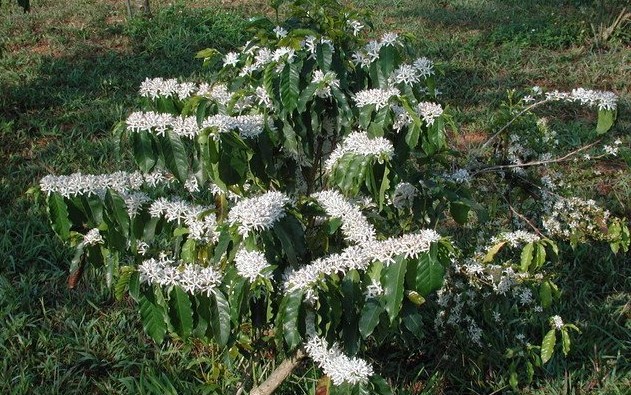
Coffee plants produce small, fragrant white flowers that bloom in clusters, usually lasting only a few days. Flowering typically occurs once a year, with peak periods varying by coffee variety and region—between November and June for some, and March to May for others.
What Does a Coffee Flower Look Like?
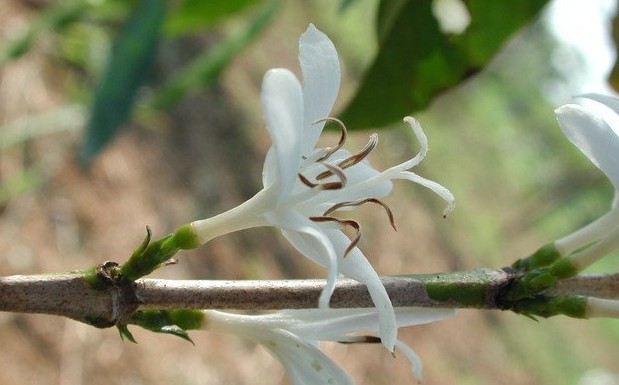
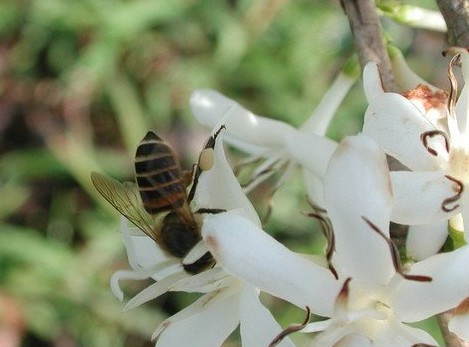
Coffee flowers appear in groups of several to dozens, typically growing in clusters of 2 to 5 flowers along a single stem (called a flower axis) in the leaf axils—where the leaf meets the branch. The blooms are generally white and strongly scented. Petal count differs by coffee type: arabica varieties categorized as medium or small usually have 5 petals, while larger-seeded types (like some robustas) tend to have 7 to 8 petals. The flowers are tubular and cylindrical in shape, with numerous stamens (often equal to or greater than the petal count). The stigma is two-lobed, the ovary is inferior (located below the flower petals) and typically has 2 chambers, though 1 or 3 chambers can also occur.
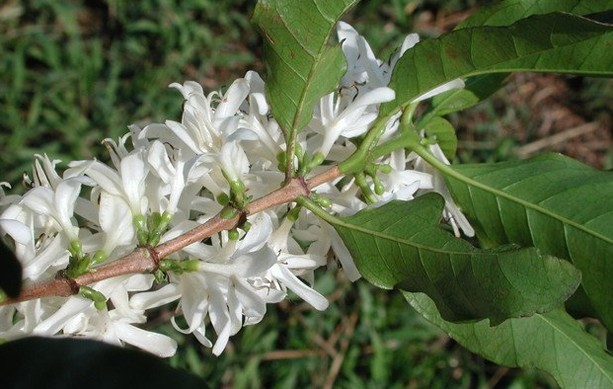
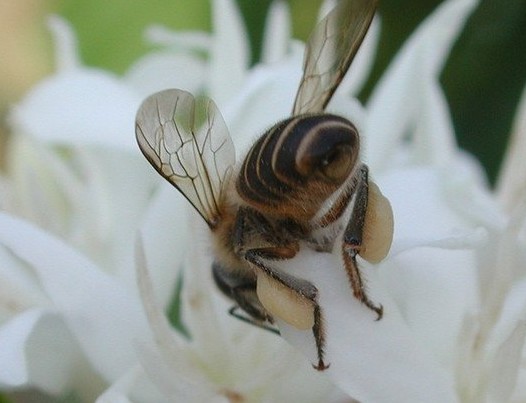
These flowers are insect-pollinated. Most arabica and robusta varieties can self-pollinate, but some medium-seed types require cross-pollination. Their brief but powerful fragrance resembles jasmine and other white blossoms, making them a fleeting but aromatic highlight in coffee farms during bloom season.
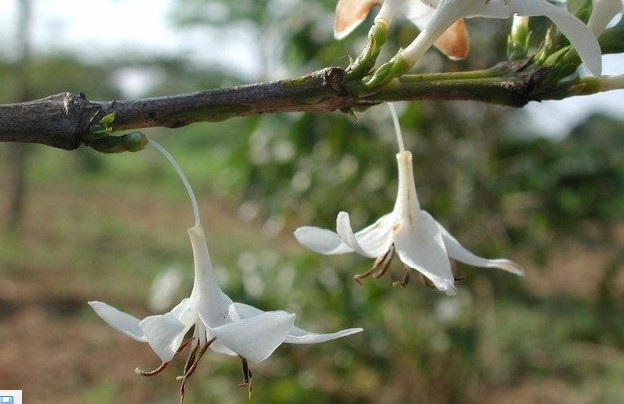
When and Where Do Coffee Flowers Bloom?
The flowering period for coffee varies depending on species, climate, and elevation. For example, in Hainan Island (used here as a proxy for tropical production zones), medium-seed coffee varieties begin flowering as early as November and continue blooming intermittently until June, with the heaviest bloom occurring from February to April. In contrast, small-seed varieties—primarily arabica like Typica or Bourbon—typically flower heavily between March and May.
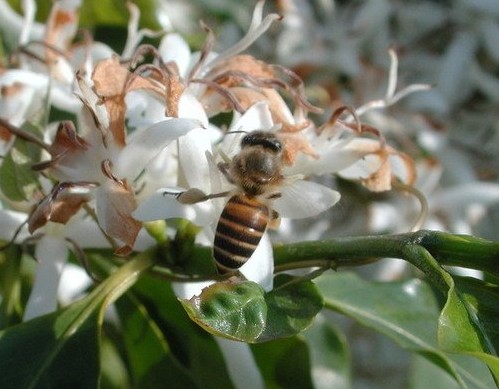
Flower buds form in leaf axils not just on side branches but also on the main stem, although they are more commonly found on lateral shoots. Importantly, bud development depends heavily on internal branch nutrient levels and external environmental cues. For medium-seed varieties, bud development starts as early as late July, while small-seed varieties begin this process around October to November. Notably, buds can also form on new growth from the current year.
What Conditions Trigger or Disrupt Blooming?
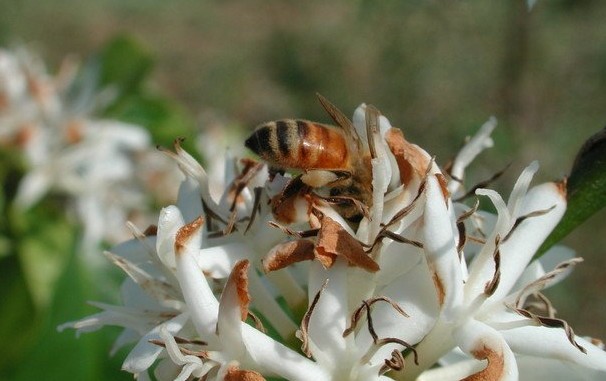
Coffee flowers require specific temperature and humidity levels to transition from bud to full bloom. If conditions turn too dry or cold during this critical phase, the flowers may fail to open properly—or may open only partially as so-called “star-shaped flowers.” These star-shaped blooms feature small, pointed, stiff petals, lack fragrance, and may be yellow or light red in color. They have very low or no fertility. Flowers that are not fully normal but still viable are termed “near-normal,” and while they can produce fruit, their fertility rate is lower than that of healthy, normally formed blooms.
Drought during flowering can increase the number of star-shaped or non-viable flowers. However, timely irrigation during dry spells can help boost the number of normal, fertile blooms and reduce malformed ones. Temperature also plays a critical role: coffee flowers generally open between 3:00–5:00 AM, reach full bloom by 5:00–7:00 AM, and require a minimum air temperature of 10°C to open. If temperatures drop below this threshold, opening is delayed. Conversely, if the temperature rises above 13°C, the flowers may fail to open normally altogether. Most flowering occurs in the cool, humid early morning hours typical of tropical highlands.
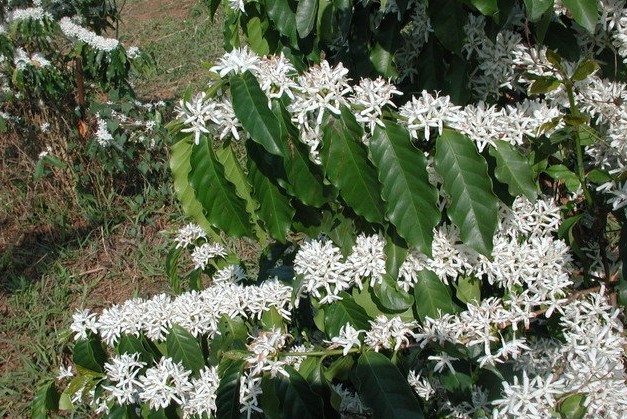
Interestingly, flowering time is also impacted by the specific part of the plant: flowers on secondary branches tend to bloom more readily than those on the main trunk. This is why flowering is more densely observed on lateral shoots rather than central stems.
Frequently Asked Questions
What do coffee flowers look like?
Coffee flowers are small, white, and highly fragrant, typically with 5 to 8 petals depending on the coffee variety. Medium and small-seeded types (like many arabicas) usually have 5 petals, while large-seeded varieties may have 7 to 8. The flowers grow in clusters of 2 to 5 blossoms along a single stem in the leaf axils and resemble jasmine in both shape and scent.
When do coffee plants bloom?
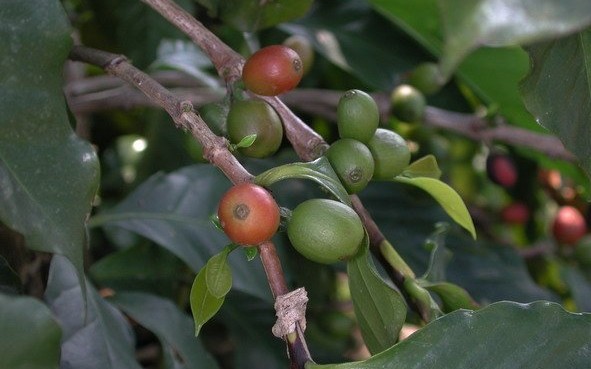
Coffee flowering varies by variety and region. In tropical areas like Hainan, medium-seed varieties bloom from November to June with peak bloom in February to April, while small-seed arabicas flower mainly from March to May. Blooming is triggered by seasonal shifts in temperature and moisture, often in springtime under the right conditions.
How long do coffee flowers last?
Coffee flowers are extremely short-lived, often remaining open for just a few days. They typically open in the early morning around 3:00–5:00 AM, reach full bloom by 5:00–7:00 AM, and begin to fade shortly after. Their brief appearance makes them a rare and striking sight on coffee farms.
Do coffee flowers need pollinators?
Yes, most coffee flowers are insect-pollinated. While arabica and many robusta varieties can self-pollinate, some types—especially certain medium-seeded ones—require cross-pollination to set fruit effectively. The flowers attract insects with their strong fragrance, especially in the early morning when they are fully open.
Why do some coffee flowers fail to develop into fruit?
Environmental stress such as drought or cold can prevent proper flower opening or result in malformed “star-shaped” or “near-normal” flowers. These abnormal blooms either have very low fertility or none at all. Proper irrigation and favorable temperatures (above 10°C but below 13°C during opening) help ensure more normal flowers and better fruit set.
Recommended FrontStreet Beans for Coffee Flower Lovers
If you’re fascinated by coffee flowers, you’ll love exploring the floral notes in FrontStreet Coffee’s single origins. The Yirgacheffe from the Gedeb Cooperative offers bright citrus acidity and a distinct jasmine-like floral aroma, with a tea-like finish. The Ethiopia Humbera (also known as Ethiopia Humbera or “”) delivers a smooth body with creamy strawberry and orange blossom hints. For something more layered, try the Strawberry Candy Espresso blend, which combines floral rose notes with ripe berries and almond undertones. These beans highlight the same floral complexity that begins with the coffee plant’s blossoms. Freshly roasted within 5 days · Orders placed before 17:00 ship the same day · Next-day delivery across most of Guangdong Province.
FrontStreet Coffee is a long-established specialty coffee roaster in Guangzhou China, selling freshly roasted beans from its own farm in Yunnan as well as dozens of carefully selected single-origin beans from around the world for both pour-over and espresso. The products deliver consistently excellent quality and great value, with shipping within 24 hours. Guangzhou's FrontStreet Coffee shop is recommended by many coffee lovers, and the beans are now available online at the Tmall 。
Important Notice :
前街咖啡 FrontStreet Coffee has moved to new addredd:
FrontStreet Coffee Address: 315,Donghua East Road,GuangZhou
Tel:020 38364473