Washed Coffee Process: How It Works and Why It Matters
Ever wonder why some coffees taste crisp and juicy while others are heavy and earthy? That difference often starts right after harvest, the moment coffee cherries must be processed — or they’ll ferment badly on their own. The method used, especially washed (or wet) processing, shapes everything from aroma to acidity.
The washed process delivers cleaner, brighter coffee with intense aromatics and high acidity — think citrus, floral, and malic notes. It typically results in a cup with 12% final moisture content after drying, fermented for 18–36 hours, and dried over 1–3 weeks (or faster with machines, though flavor suffers).
What Is the Washed Coffee Process?
The washed process, also called the wet process, removes the coffee bean’s outer fruit layers using water, fermentation, and mechanical washing. This contrasts with the natural (dry) process, where cherries dry fully intact. The washed method is favored for producing clean-tasting, high-acid, and aromatic coffees — traits prized in specialty brewing, especially pour-over and espresso.
Why Washed Coffee Tastes Different
Washed coffee tastes cleaner and more transparent than natural-process coffee because almost all fruit pulp and mucilage is removed before drying. With less fermenting fruit touching the bean, there’s less risk of unwanted moldy, fermented, or wild flavors. The process also breaks down sugars in the mucilage, reducing overall sugar content but increasing perceived acidity and organic acids — leading to that bright, snappy cup.
Step-by-Step: How Washed Coffee Is Made
1. Sorting (Floating the Cherries)
Cherries are poured into a water tank and left to soak for around 24 hours. Ripe cherries sink due to higher density; unripe or overripe ones float and are skimmed off. This initial sorting improves consistency before further processing.
2. Removing the Skin and Pulp
A depulper machine strips away the outer skin and most of the fruit flesh, leaving the coffee bean encased in a sticky layer called mucilage (also called pulp or fruit slime). At this point, the beans still hold about 50% moisture.
3. Fermentation (The Key Flavor Step)
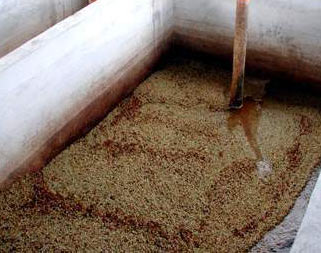
The mucilage is tough and clings tightly to the bean. To remove it, beans are placed in tanks for 18–36 hours of fermentation. During this period, naturally occurring microbes break down the mucilage. Two methods exist: wet fermentation (with added water) and dry fermentation (without). Some farms add hot water or enzymes to speed this up — but that’s frowned upon in specialty circles, as it can degrade cup quality.
4. Washing the Mucilage Off
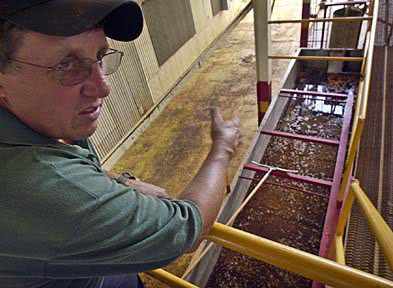
After fermentation, the sticky beans go into washing channels or tanks. Workers or machines agitate the beans in flowing water, rubbing off the remaining mucilage. This step ensures the beans are completely clean before drying. Access to a continuous supply of clean, running water is critical for this method.
5. Drying the Coffee Beans
With the mucilage gone, beans still inside their parchment (inner hull) are still at roughly 50% moisture and must be dried down to 12%. Traditional and preferred drying is done on raised beds or patios in the sun, taking 1–3 weeks. This slow drying enhances sweetness and flavor complexity. Some farms use mechanical dryers to speed the process, but this often leads to flatter, less vibrant cups.
6. Hulling (Removing the Parchment)
Once dried to 12% moisture, the beans — now protected by a tough parchment shell — are stored in warehouses. Later, before export, they’re hulled to remove the parchment and the thin silver skin underneath, revealing the green coffee bean ready for roasting.
7. Sorting and Grading
Beans are sorted to remove defects — broken, discolored, or underweight beans — and then graded by size and quality. This ensures only the best beans move on to export and roasting. The same steps apply in both washed and natural processes.
Recommended FrontStreet Washed Process Coffee Beans
Try FrontStreet’s Yirgacheffe Gedeb Cooperative for its jasmine floral and citrus brightness typical of excellent washed coffees. Their Kenya Little Tomato highlights the method’s ability to deliver juicy, complex acidity with red fruit and berry notes. For a balanced, classic profile, Jamaica Blue Mountain No.1 shows how washed processing creates refined flavors of nut, chocolate, and cream. All three beans exemplify the clean, vibrant cup profile associated with the washed method. Freshly roasted within 5 days · Orders placed before 17:00 ship the same day · Next-day delivery across most of Guangdong Province.
FrontStreet Coffee is a long-established specialty coffee roaster in Guangzhou China, selling freshly roasted beans from its own farm in Yunnan as well as dozens of carefully selected single-origin beans from around the world for both pour-over and espresso. The products deliver consistently excellent quality and great value, with shipping within 24 hours. Guangzhou's FrontStreet Coffee shop is recommended by many coffee lovers, and the beans are now available online at the Tmall 。
Important Notice :
前街咖啡 FrontStreet Coffee has moved to new addredd:
FrontStreet Coffee Address: 315,Donghua East Road,GuangZhou
Tel:020 38364473