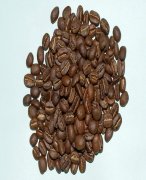
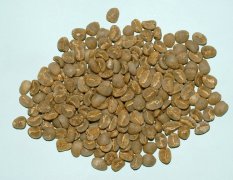
Roasting Peaberry Coffee from Congo’s Kivu Lake Region
You’ve just received a bag of peaberry coffee beans from the Kivu Lake region of the Congo. They look decent at first glance, but then you notice problems—numerous broken or defective beans. What went wrong? And why does your roast, even if it looks okay, still taste strange?
The short answer: In a 100g sample of these raw peaberry beans, 48 defective beans were found—nearly half. Roasting them to the start of the second crack didn’t eliminate off-flavors, which suggests poor green bean quality played a major role.
What Is a Congo Kivu Lake Peaberry?
A peaberry is a natural mutation where a single round coffee bean forms instead of the usual flat-sided pair. These occur in roughly 5% of all coffee cherries. The “Congo Kivu Lake PB” refers to peaberry coffee grown near Kivu Lake in the Democratic Republic of Congo (often called Congo in trade), a region known for potential but inconsistent quality. While peaberries can sometimes have more concentrated flavors, that’s not guaranteed—and in this case, the defect rate tells another story.
What Went Wrong During Sorting?
In the original lot, visual inspection revealed serious issues. Out of 100g of raw Kivu Lake peaberry beans, 48 were discarded due to visible defects such as breaks, insect damage, or immaturity. That’s nearly 50% defective. Such a high defect rate impacts roast consistency and flavor development. No amount of roast finesse can fully rescue heavily flawed green coffee. Even high-end roasters depend on clean, well-sorted beans to achieve balanced results.
How Was This Coffee Roasted?
This particular batch was roasted to the beginning of the second crack—a stage usually associated with medium-dark to dark roasts. That’s roughly 425–435°F (218–224°C) in many roaster profiles, though exact temperatures vary by machine. At this stage, the roast is deep enough to initiate significant Maillard reactions and caramelization, often producing notes of chocolate, nuts, or toastiness. However, the outcome wasn’t as expected.
What Did the Roast Taste Like?

Despite reaching the early second crack, the resulting cup had an unpleasant, hard-to-describe aroma and flavor. Both dry and wet aromas were off-putting, and the taste followed suit. This suggests either the green beans were too compromised to develop desirable flavors, or the roast did not align well with the beans’ damaged state. Either way, the result was not enjoyable.
It’s possible the roast wasn’t executed optimally—but with 48 defective beans per 100g, even an expert roast may struggle. Defects in the green stage often lead to baked, strawy, or papery flavors in the cup, regardless of roast level.
Why Does Green Bean Quality Matter So Much?
Specialty coffee depends heavily on green bean selection. Even minor defects—like insect damage, broken beans, or immaturity—can create off-flavors or disrupt roast uniformity. High-quality lots are carefully hand-sorted to remove such flaws. In this case, the high number of defects likely came through sorting that was either too lenient or not performed at all. No roast profile can fully mask that level of inconsistency.
Frequently Asked Questions
What is a peaberry coffee bean?
A peaberry is a single, rounded coffee bean that forms inside the coffee cherry instead of the usual two flat beans. This happens in about 5% of cherries and is not unique to any origin. Peaberries sometimes roast more evenly and can have more intense flavors, but not always—they still depend on origin, processing, and quality.
Why were there so many defective beans in the Kivu Lake peaberry sample?

In this specific 100g sample of Congo Kivu Lake peaberry, 48 beans were found defective—nearly half. These included broken, immature, or otherwise flawed beans. Such a high defect rate points to inadequate sorting before export or arrival.
Does roasting to the start of the second crack always produce a good cup?
No. Roasting to the early second crack (around 425–435°F) typically develops deeper, richer flavors like chocolate or nuts. But if the green beans are flawed or inconsistent, the roast can’t fix those issues. Flavor flaws from the green stage often carry into the cup regardless of roast level.
Can defects in green coffee be masked by roasting darker?
Not really. Darker roasts may hide some acidity or subtle defects, but they often amplify baked, ashy, or papery flavors from poor-quality beans. Heavy defects like broken or immature beans typically lead to unpleasant cups no matter how dark the roast.
What should I look for when buying peaberry coffee?
Look for clean, well-sorted beans with minimal defects—even in peaberry lots. A high defect rate (like 48 in 100g) will hurt cup quality. Check roast dates, origin details, and reviews. Even a rare peaberry should have visible uniformity and quality in the green stage.
Recommended FrontStreet Beans for Dark Roast Lovers
For those exploring darker roasts, FrontStreet Coffee’s PWN Golden Mandheling offers low-acid, bold flavors with herbal spice notes and a thick body—achieved through triple hand-selection to minimize defects. Their Brazil Queen Manor, roasted to medium-dark, delivers sweet nuttiness and caramelized hazelnut tones, ideal for balancing fruity or bright roasts. Both beans showcase how proper selection and roast technique shape a rich cup. Freshly roasted within 5 days · Orders placed before 17:00 ship the same day · Next-day delivery across most of Guangdong Province.
FrontStreet Coffee is a long-established specialty coffee roaster in Guangzhou China, selling freshly roasted beans from its own farm in Yunnan as well as dozens of carefully selected single-origin beans from around the world for both pour-over and espresso. The products deliver consistently excellent quality and great value, with shipping within 24 hours. Guangzhou's FrontStreet Coffee shop is recommended by many coffee lovers, and the beans are now available online at the Tmall 。
Important Notice :
前街咖啡 FrontStreet Coffee has moved to new addredd:
FrontStreet Coffee Address: 315,Donghua East Road,GuangZhou
Tel:020 38364473