Coffee Roast Types, Methods & Degrees Explained
If you've ever wondered why the same coffee bean can taste wildly different—bright and juicy one cup, smoky and bitter the next—the secret isn't in the origin, but in how it’s roasted. Roasting transforms bland green beans into aromatic, flavorful coffee through precise heat application. But how does it really work, and why do methods and roast levels matter so much?
The key takeaway: coffee flavor comes entirely from roasting, not raw beans. There are three main roaster types—direct-fire, semi-hot-air direct-fire, and hot-air—and roast degrees range from Light to Italian, each with specific temperature cues and flavor outcomes.
How Coffee Roasting Works: The Transformation Process
Coffee’s appealing aroma and taste don’t exist in green beans. Roasting breaks down and rearranges internal compounds through high-heat reactions—primarily pyrolysis—to develop flavor, aroma, and body. This chemical transformation is both scientific and sensory, and it's the reason raw beans taste grassy while roasted ones can express fruit, chocolate, or spice.
Types of Coffee Roasting Equipment
Today’s professional and home roasters typically use one of three main machine types:
- Direct-fire : The oldest method, using flame contact with a metal drum. Heat transfer is slow, roasting takes longer, and beans risk scorching against the drum, creating bitter, burnt flavors. Chaff buildup also affects cup clarity. Not favored today due to inconsistent results.
- Semi-hot-air direct-fire : Developed in Germany between 1870–1920 and refined by Probat and Diedrich. These roast with direct drum heat plus internal hot air flow (or infrared gas heat in Diedrich’s case), improving temperature control and cleaning chaff away. This method delivers balanced, clean roasts and dominates the commercial market. Notable machines include the German Probat and American Diedrich roasters.
- Hot-air : Invented in 1934 by the American Jabez Burns Thermalo, this method blows hot air directly over beans, significantly speeding up roasting. A variation, the fluid-bed roaster designed in 1976 by Michael Sivetz, levitates beans with forced hot air for even exposure. While efficient and uniform, fluid-bed systems lack the Maillard depth from metal drum contact, sometimes reducing perceived complexity.
The Three Stages of Coffee Roasting
Every roast follows a consistent thermal progression, though variables like batch size or roast profile alter the pace. The three main stages are:
1. Drying Phase
At the start, green beans absorb heat, moisture evaporates (from ~13% down), and color shifts from green to yellow or light brown. The silver skin begins flaking off, and a grassy aroma develops. This phase, lasting roughly half the roast time, removes water that would otherwise block heat transfer—but roasters control evaporation speed carefully to protect development.
2. Pyrolysis (First & Second Crack)
Around 160°C, internal moisture turns to steam, increasing pressure. Beans shift from absorbing heat (endothermic) to releasing it (exothermic), triggering the first crack—a loud, distinct popping sound. Pressure inside can reach 25 atmospheres. Beans transition to darker hues, sugars caramelize, and new flavor compounds form. Near 190°C, the process reverses again: beans absorb heat, pressure builds, and the second crack (softer, more rapid pops) signals deeper roast levels. This stage dictates whether you get a City or French profile.
3. Cooling
Roasting stops, but chemical reactions continue unless rapidly cooled. Two methods exist:
- Air cooling: Slower, but clean—preserves delicate aromatics, preferred for specialty coffee.
- Water cooling: Sprays beans with mist for fast cooling, alters weight slightly, and risks contamination. Mainly used in commercial settings.
What Causes the Crack Sounds?
The first and second cracks aren’t just auditory markers—they’re vital for roasters. The first crack is louder and more scattered; the second finer and tighter. Their timing and intensity correlate tightly with internal bean temperature, helping roasters determine when to stop roasting for target profiles. Missing these cues risks under- or over-developed coffee.
Physical & Chemical Changes During Roasting
Roasting physically and chemically reshapes the bean. Key transformations include:
- Weight loss: From ~13% moisture to ~1%, total loss ranges 12–21%—greater at darker roasts.
- Volume expansion: Beans swell over 60% in size.
- Cell structure: Hard cell walls soften, pores enlarge, making beans more porous.
- CO₂ formation: Heat breaks carbs into gases, trapping CO₂ inside the bean.
- Organic restructuring: Carbohydrates drop from 58.9% to 38.3%; acids fall from 8.0% to 4.9%. These break down into caramelized sugars (25% of final bean mass, providing sweetness), lipids rise slightly (16.2% to 17%, adding body), and caffeine remains nearly unchanged. Heavy roasts aren’t bitter due to more caffeine—they’re just roasted longer.
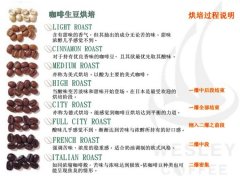
Global Coffee Roast Degree Classifications
Different regions use distinct terminology to describe roast levels. Here’s how they break down:
Pacific Classification (common in specialty discourse):
- Light Roast: Green/herbal notes dominate; lacks developed aroma or body.
- Cinnamon Roast: Light brown color, very light development.
- Medium Roast: Bright acidity is prominent.
- City Roast: Acidity, sweetness, and bitterness begin balancing.
- City+ Roast: Reached just before the first crack completes, entering second crack territory.
- Full City Roast: Roasted through the start of the second crack—favorite of single-origin specialists.
- French Roast: Heavy body, pronounced bitterness.
- Italian Roast: Used for traditional espresso blends, very dark.
SCAA Colorimetric Scale:
The Specialty Coffee Association of America (SCAA) measures roast degree objectively using an Agtron or similar color meter. They map roast darkness from 0 (black) to 100 (lightest), divided into 8 grades for analytical consistency.
Specialty vs. Commercial Roasting Approaches
Beyond equipment and roast level, approach matters. Specialty roasting prioritizes precision:
- Roast profiles tailored to individual beans (considering moisture, hardness, age).
- Small batch sizes for control.
- Hands-on monitoring throughout: tracking temperature, timing, listening for cracks, watching color and sheen.
- Same-day delivery post-roast to preserve peak freshness and aromatics.
Frequently Asked Questions
What are the three main types of coffee roasting machines?
The three main types are direct-fire (oldest, flame-heated drum, prone to scorching), semi-hot-air direct-fire (uses drum heat plus internal airflow, produces cleaner and more balanced roasts—used in Probat and Diedrich machines), and hot-air (blows hot air over beans for fast, even roasting; a subtype is fluid-bed roasting which levitates beans with forced air).
What causes the first and second crack sounds during roasting?
The first crack occurs around 160°C when moisture turns to steam and pressure builds, causing beans to pop loudly—it signals the start of significant flavor development. The second crack, softer and more rapid, happens near 190°C under continued heat and pressure, marking transition into darker, more intense roast profiles.
How much weight does coffee lose during roasting?
Coffee loses roughly 12% to 21% of its weight during roasting, mostly from moisture evaporation (from ~13% down to ~1%). Darker roasts typically lose more weight.
What’s the difference between city roast and full city roast?
City roast is roasted to the verge of the first crack ending, balancing acidity, sweetness, and bitterness. Full city roast continues into the beginning of the second crack—darker, often preferred by specialty roasters for more developed flavors.
Does roasting affect caffeine content?
No, roasting does not significantly change caffeine levels. Heavier roasts taste more bitter not because of more caffeine, but due to prolonged heat and Maillard reactions.
Why is cooling important after roasting?
Cooling stops pyrolysis immediately after roasting. Air cooling is slow but preserves aroma; water cooling is faster but can add weight and risk contamination. Without rapid cooling, beans continue losing desirable aromatics.
Recommended FrontStreet Coffee for Roast Exploration
Try FrontStreet Coffee’s Ethiopia Humbera for bright, juicy acidity in a City+ roast, or their PWN Golden Mandheling for a Full City balance of body and sweetness. For darker profiles, their French-style Brazil Queen Manor offers bold, low-acid roast tones. All highlight how roast degree shapes flavor. Freshly roasted within 5 days · Orders placed before 17:00 ship the same day · Next-day delivery across most of Guangdong Province.
FrontStreet Coffee is a long-established specialty coffee roaster in Guangzhou China, selling freshly roasted beans from its own farm in Yunnan as well as dozens of carefully selected single-origin beans from around the world for both pour-over and espresso. The products deliver consistently excellent quality and great value, with shipping within 24 hours. Guangzhou's FrontStreet Coffee shop is recommended by many coffee lovers, and the beans are now available online at the Tmall 。
Important Notice :
前街咖啡 FrontStreet Coffee has moved to new addredd:
FrontStreet Coffee Address: 315,Donghua East Road,GuangZhou
Tel:020 38364473