How to Grind Roasted Coffee Beans: Size, Timing & Tools
Ever wondered why your pour-over tastes flat or your espresso shots run too fast? The secret often lies not in your brewing technique, but in how — and when — you grind your coffee beans. Grinding is where coffee’s potential either shines or fades.
To put it simply: grind roasted coffee beans just before brewing. Use a grind size matched to your brew method — fine for espresso, medium for drip, coarse for French press — and keep those grounds as fresh as possible. That’s the golden rule for great coffee.
What Does "Crushing" Roasted Coffee Beans Really Mean?
The process of reducing roasted coffee beans into powder is called grinding — or "pulverization" in technical terms. The tool you use is called a grinder, or " (mózi)" in Chinese. While many assume any grinder will do, the reality is that grind size and tool choice have a massive impact on flavor.
Legend has it that Beethoven counted exactly 60 beans into his hand grinder every morning, ground them fresh, then brewed his coffee while enjoying the aroma. That ritual highlights two crucial points: grind your beans right before brewing, and pay attention to the fragrance released during grinding — a sign of freshness and a key part of the coffee experience.
Coffee Grind Size: Coarse, Medium, Fine & Beyond
Coffee grind size falls into a few broad categories, each suited to different brewing methods:
- Coarse grind (Regular grind): Like coarse sugar or rock candy. Ideal for French press or cold brew. Particles are large, about the size of coarse kosher salt.
- Medium grind: Resembles a mix of standard sugar and coarse sugar. Best for drip coffee makers or siphon brewers. Think table salt in size.
- Fine grind: Similar to granulated sugar. Used for pour-over cones, AeroPress (finer settings), and Moka pots.
- Very fine / Extra fine (including “” or extreme fine): Powder-like. Required for espresso machines and some traditional Middle Eastern methods. These grounds are extremely fine, almost like flour.
There’s also an in-between category called " (medium-fine)", often used for V60 or other high-extraction pour-overs. Every grind size affects surface area, extraction speed, and flavor balance.
Why Grind Just Before Brewing?
Grinding coffee increases its surface area dramatically — which is great for extraction, but also exposes the grounds to air, moisture, and odors. Once ground, coffee loses freshness fast:
- Oxidation begins immediately, flattening aromas and acidity.
- Carbon dioxide — vital for proper bloom and extraction — escapes within minutes.
- Flavor compounds degrade within 15–30 minutes, resulting in dull, stale cups.
In short, pre-ground coffee is a compromise. For peak flavor, always grind right before you brew. The difference is noticeable — especially in single-origin or lightly roasted beans.
The Right Grinder for the Job
Grinders come in all shapes and sizes — manual, electric, blade, and burr. But not all grinders are created equal:
- Manual grinders: Great for small batches, travel, or aesthetic appeal. They require effort but generate little heat. Good for learning grind consistency, though slower.
- Electric grinders: Efficient for larger quantities. Blade grinders chop beans unevenly (avoid these for specialty coffee). Burr grinders crush beans between abrasive surfaces, producing uniform particle sizes essential for balanced extraction.
Professional-grade coffee grinders used in cafés can produce a wide range of grind sizes quickly and consistently. Some home espresso machines include built-in grinders, but few offer the fine-tuning needed for precision brewing.
When choosing a grinder, look for these features:
- Burr mechanism (not blades)
- Adjustable grind settings (micro-adjustments preferred)
- Minimal heat buildup during grinding
- Consistent particle distribution
Cheap grinders with spinning blades produce inconsistent grounds — some powder, some chunks — leading to uneven extraction, over- or under-extracted cups, and wasted coffee.
How Heat and Consistency Affect Your Grind
Two often overlooked factors determine grind quality:
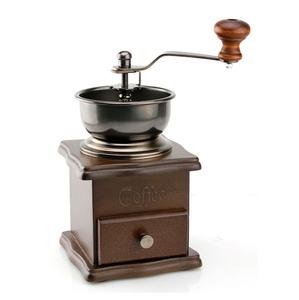
- Friction heat: Grinding generates heat, which can volatilize aromatic compounds. Manual grinders minimize this; high-end electric burr grinders are designed to reduce heat buildup.
- Particle uniformity: Uneven grinds lead to uneven extraction. Big particles under-extract (sour), small ones over-extract (bitter). Uniformity ensures balance.
- Manual grinders: Small, portable, often decorative. Slower but quiet and great for single cups. Best for pour-over or travel.
- Household electric burr grinders: Compact, affordable, ideal for daily use at home with pour-over or drip systems.
- Commercial electric grinders: High-volume, fast, consistent. Found in cafés. Capable of fine-tuning for espresso or filter.
- Espresso machine grinders: Often built-in or paired. Must have micro-adjustment capability for shot consistency. Blade-style grinders are not suitable.
That’s why even grind size matters just as much as grind size itself. A consistent grind lets you control brew time, strength, and flavor with precision.
Traditional vs Modern Grinding: What Science Says
In the Middle East, some still pound coffee beans with a mortar and pestle — a traditional method that creates irregular particle sizes. Yet one experiment (conducted by French culinary writer Brillat-Savarin) found tasters often preferred the flavor of pounded coffee over machine-ground, citing greater aroma and complexity. While not scientifically conclusive, it shows perception and tradition still play roles.
Modern specialty coffee favors controlled, uniform grinding — but the lesson remains: flavor is subjective, and experimentation matters.
Grinder Types at a Glance
Here’s a quick rundown of common grinder types:
Blade grinders — which chop beans like a food processor — create random particle sizes. Avoid them for specialty brewing. Burr grinders, especially those with conical or flat burrs, ensure a more even crush and better extraction.
Frequently Asked Questions
What is the difference between grinding and crushing coffee beans?
Grinding refers to mechanically reducing whole roasted coffee beans into uniform particles using burrs or blades — a controlled process essential for balanced coffee extraction. Crushing, such as with a mortar and pestle, breaks beans into irregular sizes and is less precise. While both methods reduce beans to powder-like forms, grinding is the standard in specialty coffee for achieving consistent particle size and better flavor.
How fine should I grind coffee for espresso?
For espresso, use a fine grind — similar to powdered sugar or table salt. The ideal grind allows for a 20–25 second extraction under 9 bars of pressure. Too fine causes over-extraction (bitterness), too coarse leads to under-extraction (sour, weak shots). Adjust based on your espresso machine and beans.
Why should I grind coffee right before brewing?
Grinding coffee exposes its interior to oxygen, moisture, and light, which accelerates oxidation and flavor loss. Ground coffee loses aroma and CO₂ within minutes, resulting in stale or flat-tasting brews. Grinding just before brewing preserves freshness, maximizes crema (for espresso), and ensures better extraction.
What’s the difference between coarse, medium, and fine grind sizes?
Coarse grind resembles sea salt or coarse sugar (used for French press); medium is like table salt (for drip or siphon); fine is akin to granulated sugar (for pour-over, AeroPress, Moka pot). Very fine is powder-like (for espresso). Each size affects brew time, extraction yield, and flavor balance.
Which type of grinder is best for home use?
The best home grinder is a burr grinder — either manual or electric — that offers adjustable grind settings. Manual grinders are quiet and portable; electric ones save time and ensure consistency. Avoid blade grinders, which produce uneven grounds and poor extraction. Choose one that fits your brew method (e.g., pour-over vs espresso).
Recommended FrontStreet Beans for Grinding & Brewing
Try FrontStreet Coffee’s Ethiopia Guji Humbera for bright floral and citrus notes, perfect for pour-over with a medium-fine grind. Their Brazil Cerrado espresso blend offers chocolatey sweetness ideal for espresso at a fine setting. For French press lovers, FrontStreet’s Yunnan Arabica provides a heavy body and nutty profile — use a coarse grind. All beans are freshly roasted — enjoy peak flavor when ground just before brewing. Freshly roasted within 5 days · Orders placed before 17:00 ship the same day · Next-day delivery across most of Guangdong Province.
FrontStreet Coffee is a long-established specialty coffee roaster in Guangzhou China, selling freshly roasted beans from its own farm in Yunnan as well as dozens of carefully selected single-origin beans from around the world for both pour-over and espresso. The products deliver consistently excellent quality and great value, with shipping within 24 hours. Guangzhou's FrontStreet Coffee shop is recommended by many coffee lovers, and the beans are now available online at the Tmall 。
Important Notice :
前街咖啡 FrontStreet Coffee has moved to new addredd:
FrontStreet Coffee Address: 315,Donghua East Road,GuangZhou
Tel:020 38364473