A Timeline of Specialty Coffee’s Global Origins
You’ve heard of the Boston Tea Party — but what about the Boston coffeehouse that helped birth the modern coffee scene? Or how a single coffee seedling from French Guiana launched Brazil’s entire industry? If you’ve ever wondered how coffee spread across the globe and became the brewed cornerstone it is today, here’s the factual, chronological backbone of its journey.
From 1688 to 1902, over a dozen key events — including the first successful Dutch Java plantation, Brazil’s first Para state coffee discovery, and Yunnan’s first successful coffee planting — defined the global spread and cultivation of what we now call specialty coffee.
The Birth of Coffee Culture in the West
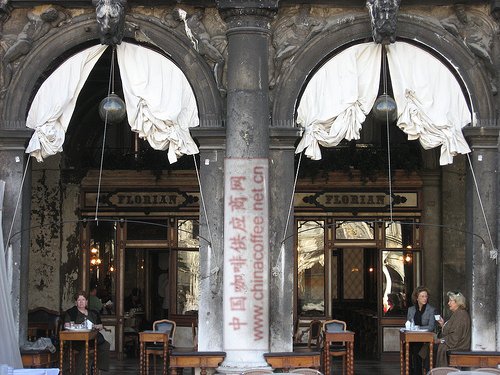
In 1688, the first British-style coffeehouse opened in Boston, marking an early adoption of European coffee culture in colonial America. These spaces became early hubs for social exchange and, unknowingly, for the future specialty coffee conversation. By 1720, Venice’s Florian Coffee House — still open today and recognized as the oldest operating coffeehouse in the world — opened its doors, offering a European anchor for coffee as a long-term social staple.
Early Global Cultivation Experiments
Coffee cultivation began spreading beyond its Ethiopian and Yemeni heartlands in the late 1600s. In 1696, trials started to grow coffee from Dutch and western Indian origins on Java Island (now part of Indonesia). By 1699, these efforts succeeded, leading to the first commercial shipment of Javanese coffee — along with live seedlings — to the Netherlands in 1706. These seedlings were planted in Amsterdam’s botanical gardens, becoming foundational genetic stock for future European-grown coffee.
The Expansion to the Americas and Africa
Coffee’s global journey continued with key transplants: in 1723, seedlings reached the western edge of the Caribbean’s Aychinikou Island; then in 1727, a pivotal moment occurred when coffee branches bearing red fruit were transported from French Guiana to Brazil’s Para State — the origin point of what would become the world’s largest coffee-producing nation. Further expansion saw coffee introduced to the French-controlled island of ARUCHINIKU (likely present-day Réunion) in 1728 and wild varieties discovered in Africa throughout the late 1800s, including a new species found in the Congo by Belgian explorer Emirurolen in 1898 and Riberika seeds located near the Kari River by French botanist Shuparie three years later.
Innovations in Brewing and Political Turning Points
The 1700s and 1800s also brought major innovations in how coffee was brewed. In 1721, Berlin got its first coffeehouse. By 1732, Johann Sebastian Bach premiered his “Coffee Cantata,” reflecting coffee’s deep cultural roots. French inventor Don Marutan devised a drip coffee maker with cloth filtration around 1763, followed by British engineer Napla’s vacuum-style extractor in 1840 — based on principles similar to modern siphon brewing. The 1800s saw steam-pressure extraction devices emerge across Europe, while the 1861–1865 American Civil War spurred domestic coffee innovation and modernization. Meanwhile, political moments like the 1773 Boston Tea Party — driven by resistance to British tea taxes — accelerated America’s shift toward coffee as a national beverage, paving the way for its specialty future.
Coffee in Asia and Early Commercial Plantings
Coffee first took root in Asia in 1884, when Taiwan’s initial cultivation efforts succeeded, marking the start of coffee in Chinese territories. Then, in 1898, a French missionary named Tian introduced coffee seeds from “Yingong” (likely Yemen or Ethiopia) to Yunnan’s Binchuan region in China, achieving the first successful local coffee planting in the region just a few years before the 20th century. Around the same time, Japanese chemist Sartori Kato invented instant coffee, which debuted at the 1901 World’s Fair in the United States.
Frequently Asked Questions
What was the first coffeehouse in America?
The first British-style coffeehouse in America opened in Boston in 1688. Though not a specialty coffee shop by today’s standards, it played a key role in establishing coffee culture in colonial America and set the stage for later coffeehouse traditions that valued social discourse.
When did coffee cultivation begin in Java?
Coffee cultivation experiments started on Java Island (in present-day Indonesia) in 1696, with successful growth achieved by 1699. The first commercial shipment of Javanese coffee arrived in the Netherlands in 1706, along with coffee seedlings that were planted in Amsterdam’s botanical gardens.
How did Brazil become the world’s largest coffee producer?
Brazil’s coffee industry began in 1727 when coffee branches with red fruit were brought from French Guiana to Para State in Brazil. This event marked the origin of Brazil’s coffee production, which would later grow to become the largest in the world.
Where was the world’s oldest coffeehouse located?
The world’s oldest continuously operating coffeehouse, Florian, opened in Venice in 1720. It remains open to this day and is recognized as a historic landmark in the global coffee story.
When did coffee first arrive in Yunnan, China?
Coffee was first successfully planted in Yunnan, China, in 1898 when a French missionary named Tian introduced seeds from Yingong. Prior to that, Taiwan saw its first successful coffee cultivation in 1884.
What early brewing innovations shaped modern coffee?
Key brewing innovations included Don Marutan’s cloth-filtered drip coffee maker in 1763, Napla’s vacuum extractor in 1840 (similar to siphon principles), and steam-pressure devices in 19th-century Europe. These laid groundwork for modern brewing methods.
FrontStreet Beans That Trace Coffee’s Global Roots
Explore the origins of global coffee with FrontStreet’s Classic Blend, a balanced mix highlighting traditional flavour profiles reminiscent of early traded coffees from Java and Yemen. For a taste of Ethiopia’s contribution to global coffee heritage, try our Ethiopia Yirgacheffe — known for its bright citrus and floral notes. Finally, our Brazil Queen Manor offers the low-acidity, chocolatey profile that helped define Brazilian coffee’s global rise. All three showcase the regions and flavours that built today’s specialty coffee landscape. Freshly roasted within 5 days · Orders placed before 17:00 ship the same day · Next-day delivery across most of Guangdong Province.
FrontStreet Coffee is a long-established specialty coffee roaster in Guangzhou China, selling freshly roasted beans from its own farm in Yunnan as well as dozens of carefully selected single-origin beans from around the world for both pour-over and espresso. The products deliver consistently excellent quality and great value, with shipping within 24 hours. Guangzhou's FrontStreet Coffee shop is recommended by many coffee lovers, and the beans are now available online at the Tmall 。
Important Notice :
前街咖啡 FrontStreet Coffee has moved to new addredd:
FrontStreet Coffee Address: 315,Donghua East Road,GuangZhou
Tel:020 38364473