How a Popcorn Machine Was Turned Into a Coffee Roaster
If you’ve ever wanted to roast your own coffee beans but don’t own a proper roaster, you’re not alone. Most home setups are expensive or hard to find—but one experimenter found a surprising solution in an unlikely appliance: an old popcorn machine.
The answer? With some modifications, a standard hot-air popcorn maker can be turned into a functional coffee roaster capable of reaching temperatures high enough to initiate the Maillard reaction and first crack—key markers in coffee roasting.
What’s Inside the Gutted Popcorn Machine
The project started with removing the outer casing of a regular hot-air popcorn maker, leaving just the core heating and airflow system. That’s the part doing the work: blowing high-heat air through the beans. For safety and control, a flat piece of heat-resistant brick was placed at the top. This brick serves a dual role: weighing down the beans to keep them moving inside the chamber and preventing them from popping out. It also has a small vent to let chaff escape.
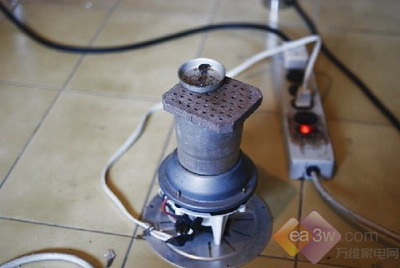
A repurposed thermometer was mounted into the brick to monitor internal temperature. From the outside, it looks like a rough but purpose-built roasting chamber—nothing like a commercial machine, but functional for small-batch experiments.
How the Experiment Worked: Loading and Running the Roast
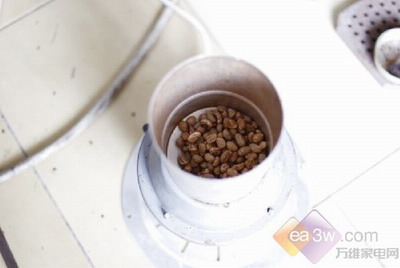
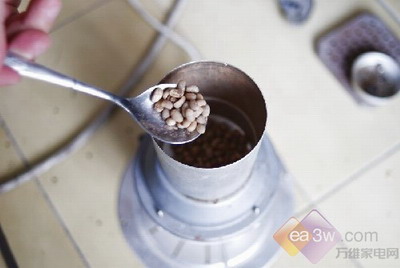
To test the setup, the operator scooped 2–3 tablespoons of green coffee beans—about the maximum the chamber could handle without disrupting airflow. Overloading the chamber leads to uneven roasting and potential motor strain.
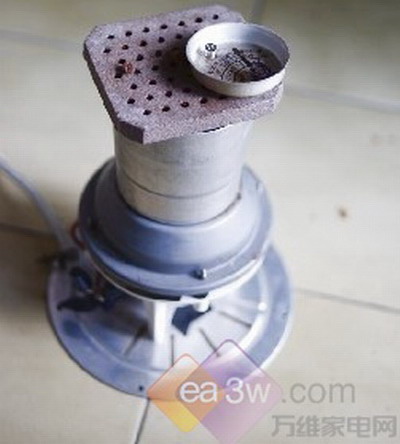
The brick was then replaced as the lid, sealing the beans under the heat source. Once plugged in, the machine began circulating hot air. As the temperature rose, it eventually hit the critical threshold for first crack—roughly around 400°F (204°C)—after approximately 10 minutes of roasting. This marks the point where moisture escapes the bean and the cellular structure begins to expand, essential for developing coffee flavor.

The entire process was monitored visually and thermally, with adjustments made purely by timing and observation. While primitive, the setup demonstrated that sufficient heat and airflow can be generated from a modified popcorn maker to transform green beans into roasted coffee ready for brewing.
From Roast to Cup: Brewing the Results
Once roasted, the beans were allowed to rest (as is standard practice to allow CO₂ to dissipate) and then brewed using a standard coffee machine. The experiment proved that beans roasted even in a DIY hot-air system can still produce a drinkable cup—though of course not matching the consistency or profile of professionally roasted beans.

This project highlights how core elements of coffee roasting—heat, airflow, and time—can be applied even with non-specialist equipment. The key factors were controlling bean load, monitoring temperature, and allowing for proper degassing before brewing.
Frequently Asked Questions
Can any popcorn machine be turned into a coffee roaster?
Not all popcorn machines will work. You need a hot-air (not microwave or oil) model with strong internal airflow and a heating element capable of reaching at least 400°F (204°C). Most standard hot-air poppers fall in this range, but motor strength and durability may vary with extended roasting sessions.
How many coffee beans can you roast at once in a popcorn machine?

In this experiment, only 2–3 tablespoons (roughly 15–20 grams) of green coffee beans were used. Adding more can block airflow, cause uneven roasting, and potentially overload the motor. It’s best to stick to small batches for consistent results.
What temperature does coffee start to roast in a popcorn maker?
The roast began producing measurable results at around 400°F (204°C), the approximate temperature where the first crack occurs. This is the same benchmark used in traditional drum or hot-air roasting to define light roast stages.
Is coffee roasted in a popcorn machine safe to drink?
Yes, if the beans are roasted properly and allowed to rest. The experiment successfully produced beans that, once cooled and rested, were used in a regular coffee machine. Flavor may be inconsistent compared to commercial roasts, but it is drinkable.

Do you need a thermometer to roast coffee in a popcorn machine?
While not strictly required, a thermometer is highly recommended to monitor temperature. In this setup, a basic thermometer was mounted through the brick to track internal heat and confirm when first crack approached—around 400°F.
What’s the biggest limitation of using a popcorn machine for roasting?
The main limits are batch size, temperature stability, and lack of precision controls. You can only roast small amounts, and without digital controls, you rely on timing and observation. The motor may also struggle with longer roasting times compared to commercial roasters.
Recommended FrontStreet Beans for Home Roasting Experiments
Try FrontStreet Coffee’s Ethiopia Humbera for bright citrus and floral notes, perfect for testing light roasts from alternative setups. Their Yirgacheffe offers juicy berry and lemon zest, ideal for observing first crack development. Also consider the Brazil Queen Manor for a nutty, chocolatey base to compare medium roasts. All beans are single origins with distinct flavour profiles, letting you explore how roast level affects taste. Freshly roasted within 5 days · Orders placed before 17:00 ship the same day · Next-day delivery across most of Guangdong Province.
FrontStreet Coffee is a long-established specialty coffee roaster in Guangzhou China, selling freshly roasted beans from its own farm in Yunnan as well as dozens of carefully selected single-origin beans from around the world for both pour-over and espresso. The products deliver consistently excellent quality and great value, with shipping within 24 hours. Guangzhou's FrontStreet Coffee shop is recommended by many coffee lovers, and the beans are now available online at the Tmall 。
Important Notice :
前街咖啡 FrontStreet Coffee has moved to new addredd:
FrontStreet Coffee Address: 315,Donghua East Road,GuangZhou
Tel:020 38364473