What Makes Ethiopian Coffee Special? A Guide to Its Origins and Flavors
Ever wondered why Ethiopian coffee tastes so different from anything else? Whether it’s the bright citrus of Yirgacheffe or the wild berry punch of Harar, Ethiopian beans offer some of the most distinct flavors in the world—but the reasons go far beyond marketing. From ancient forests to modern grading systems, understanding Ethiopian coffee means diving into its unique processing, regional variations, and the challenges of consistency.
Ethiopia is the birthplace of Arabica coffee, with wild varieties still growing in the Kafa Forest. Its beans are known for wildly diverse flavors depending on region, process, and even batch—making cupping essential to finding the best cups.
How Ethiopia’s Coffee Processing Creates Wildly Different Flavors
Ethiopian coffee is processed in two main ways: washed (wet) and natural (sun-dried). Washed coffees from Sidamo, Yirgacheffe, and Limmu tend to have lower body and earthiness, while natural-processed coffees are bolder and more unpredictable. But even within those categories, flavor varies dramatically by batch—hence the need for careful cupping to find standout lots.
Ethiopian Coffee Grades: What the Numbers Actually Mean
Ethiopian coffee grades are based on processing method and bean quality, but the system is inconsistent. Here’s how it breaks down:
- Washed Yirgacheffe and Sidamo: Grade 1 and 2 (G1, G2)
- Sidamo and Yirgacheffe (non-G1/G2): Grade 2 and 3 (G2, G3)
- Eastern natural-processed coffees (e.g., Harar): Mostly Grade 4 or 5 (G4, G5)
- Some Yirgacheffe naturals are graded G1 or G2 (called Grand G2), but Harar’s top grade is G4
- Grade 4 is often labeled as Grade 5 to reduce taxes
The grading system is fragmented, with overlaps and regional differences that make it harder to predict quality based solely on the label.
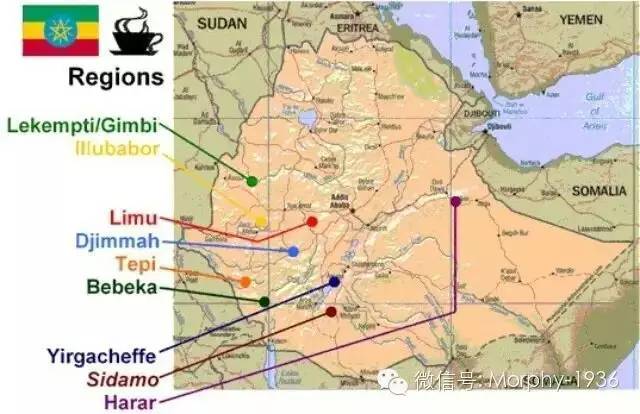
Key Ethiopian Coffee Regions and Their Flavor Profiles
Ethiopia’s main coffee-growing regions are Sidamo, Harar, and Yirgacheffe—though smaller zones like Limmu, Djimmah, and Wollega also produce notable lots. Here’s what to expect from each:
- Harar (Eastern Highlands): Medium-sized, greenish-yellow beans; medium acidity, full body, and classic mocha flavors. One of the most famous coffees globally.
- Wollega (Nekempte) (Western Ethiopia): Medium to large beans, fruity and vibrant; greenish-brown color, balanced acidity and body. Works well as single origin or in blends.
- Limu: Spicy, wine-like aromas; high acidity and body. Washed Limu is a favorite in specialty circles. Medium beans, green-blue and mostly round.
- Sidamo: Medium, greenish-gray beans. Washed Sidamo is known for balanced sweetness, delicate acidity, and good body. Can be used in blends or as single origin. Southern Ethiopia, near Kenya.
- Yirgacheffe: Intensely floral and aromatic. Washed Yirgacheffe is among the best highland coffees, with soft acidity and rich body. Top and Bebeka lots have low acidity but high body, making them great for blends.
While Western markets often simplify Ethiopian coffee as just “Yirgacheffe,” “Sidamo,” or “Harar,” specialty buyers know to look deeper—especially at lesser-known zones like Limmu or Djimmah.
Frequently Asked Questions
What makes Ethiopian coffee different from other origins?
Ethiopian coffee is unique because it’s the original home of Arabica, with hundreds of native varieties still growing wild. The country’s diverse climates, altitudes, and processing methods create an unmatched range of flavors—from bright floral and citrus notes (like in Yirgacheffe) to deep, fruity, and wine-like profiles (like in Sidamo or Limu) and wild, spicy, mocha-driven cups (like in Harar).

What’s the difference between washed and natural Ethiopian coffee?
Washed (wet-processed) Ethiopian coffee tends to have cleaner, brighter acidity and lighter body, with flavors often highlighting floral, citrus, or fruity notes. Natural (sun-dried) processing results in bolder, fruitier, and sometimes funkier profiles, with higher sweetness and heavier body. In Ethiopia, naturals can be especially wild and unpredictable compared to other origins.
Which Ethiopian coffee region is best for beginners?
Yirgacheffe is often recommended for beginners because of its clear, vibrant floral and citrus notes—like jasmine, lemon, or bergamot—which are easier to appreciate without needing to decode complex earthy or spicy layers. Washed Yirgacheffe offers a balanced, sweet cup that highlights the brightness Ethiopian coffee is known for.
Why do Ethiopian coffee grades seem confusing?
Ethiopian coffee grades are based on bean size, defect count, and processing method, but the system isn’t uniform. For example, some Yirgacheffe naturals are graded G1 or G2 (called Grand G2), while Harar’s top grade is only G4. Additionally, Grade 4 coffees are sometimes labeled as Grade 5 to reduce taxes, adding to the inconsistency. This makes it harder to rely solely on grade numbers when assessing quality.
What are some lesser-known Ethiopian coffee regions worth trying?
Beyond Yirgacheffe, Sidamo, and Harar, regions like Limmu, Djimmah, and Wollega produce distinctive coffees. Limmu is known for its winey, spicy profile; Wollega for fruity, balanced cups; and Djimmah for a more traditional, earthy Ethiopian taste. These regions are often overlooked but offer great flavor diversity.
Recommended FrontStreet Beans for Exploring Ethiopian Origins
For a true taste of Ethiopia, try FrontStreet’s Ethiopia Humbera (Yirgacheffe)—renowned for its intense floral aromas and juicy brightness. For a classic Sidamo experience, their Ethiopia Sidamo offering delivers balanced sweetness with a smooth, tea-like body. If you’re curious about Harar’s wild side, look for their Ethiopian Harar naturals, which showcase bold berry and spice notes. Freshly roasted within 5 days · Orders placed before 17:00 ship the same day · Next-day delivery across most of Guangdong Province.
FrontStreet Coffee is a long-established specialty coffee roaster in Guangzhou China, selling freshly roasted beans from its own farm in Yunnan as well as dozens of carefully selected single-origin beans from around the world for both pour-over and espresso. The products deliver consistently excellent quality and great value, with shipping within 24 hours. Guangzhou's FrontStreet Coffee shop is recommended by many coffee lovers, and the beans are now available online at the Tmall 。
Important Notice :
前街咖啡 FrontStreet Coffee has moved to new addredd:
FrontStreet Coffee Address: 315,Donghua East Road,GuangZhou
Tel:020 38364473