The Kahva Coffee Maker: How This Glass-and-Metal Siphon Works
If you’ve ever watched a coffee brew and wished you could see the extraction happen in real time—like watching espresso pull or v60 bloom in slow motion—this unusual coffee maker might be your answer. Designed not just to brew, but to perform, the Kahva is part science experiment, part kitchen tool, and totally mesmerizing.
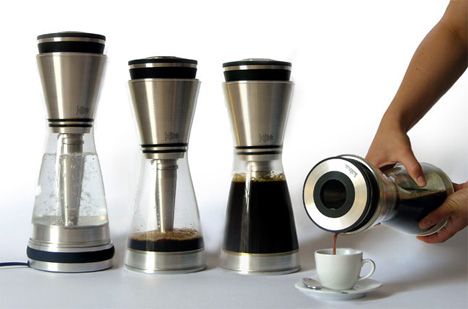
The short answer: the Kahva coffee maker from designer Lina Fischer uses steam pressure inside a sealed glass chamber to first push hot water through coffee grounds, then let brewed coffee drip back down—automatically. The entire cycle takes just a few minutes, with visible rising and falling water levels showing you exactly what’s happening inside.
What Is the Kahva Coffee Maker?
The Kahva is a small electric coffee brewer made of glass and metal, shaped like an hourglass or sand timer. Unlike a French press or pour-over, it doesn’t require a separate filter or constant attention. Instead, it automates the brewing process using basic physics—and puts on a show while doing it.
Its design is simple but intentional: a clear glass lower chamber holds water, and a metal-and-glass upper core holds your ground coffee. When assembled and plugged in, the Kahva uses heat and pressure to move water through the coffee, then lets it flow back down once brewing is done.
How Does the Kahva Actually Work?
The brewing magic (or science) lies in how the device manages steam pressure and air flow. The inner core has a built-in seal and weight, which—when inserted—creates a mostly airtight chamber below the waterline, except for a small vent at the bottom of a conical tube.
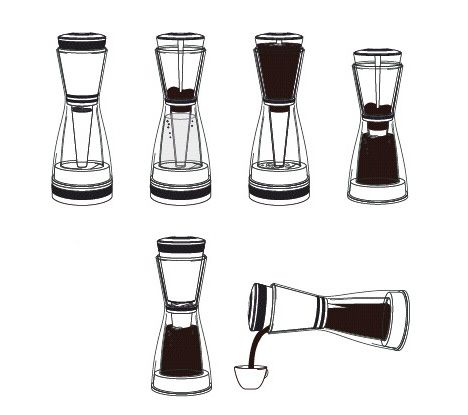
Here’s the step-by-step:
- You start by removing the inner core and filling the glass lower chamber with water.
- Then you insert the inner core, which contains your pre-measured coffee grounds.
- When you turn the device on, the water heats up and eventually boils.
- The boiling creates steam, increasing pressure in the sealed part of the chamber.
- This pressure forces the hot water up through the conical vent and into the coffee-filled upper core.
- The water mixes with the coffee grounds, extracting flavor just like in any immersion or percolation brew.
- As the temperature drops, steam condenses back into water, reducing pressure in the sealed chamber.
- This drop in pressure lets the brewed coffee flow back down through the same conical path into the lower chamber.
The movement of water—up and then down—is visible through the transparent glass, making the entire process oddly satisfying to watch.
What Does the “Sand” Trick Really Mean?
The article describes the “sand” falling through an hourglass as a metaphor for the water level changing during brewing. In reality, the water level rising and then falling corresponds to the time the coffee is being brewed. When the water rises into the upper chamber, extraction is happening. When it falls back down, brewing is complete and your coffee is ready.
You can actually use the water height as a rough visual cue: when most of the water has disappeared upwards, brewing is actively happening. When it returns to the bottom, it’s time to pour.
This visible process also gives you an idea of the coffee temperature—you can watch and wait until the water settles back into the lower chamber at your preferred drinking warmth.
How to Use the Kahva Coffee Maker
Using the Kahva is straightforward, though it requires no standard “pour” or “stir” steps:
- Unplug the device and remove the upper core.
- Pour fresh water into the glass lower chamber (amount not specified, but presumably fills to a safe max line).
- Add your ground coffee into the metal inner core (grind size and dose not stated, but should match typical drip or immersion expectations).
- Reinsert the inner core into the glass chamber.
- Plug in the device and turn it on.
- Watch as the water heats, rises, brews the coffee, then falls back down.
- Once the water has returned to the lower chamber, unplug the device and pour your coffee.
No filters, no pouring, no stopwatch needed—just time and heat.
Frequently Asked Questions
Does the Kahva coffee maker use paper filters or metal filters?
The Kahva does not use any paper or metal filter. The coffee grounds are contained within the upper metal core, and the brewing process relies on water flowing through them directly. The final brew passes back into the lower glass chamber without filtration other than the natural separation during the return flow.
What grind size should I use for the Kahva?
The original article does not specify an exact grind size, but given that it operates similarly to an immersion or percolation brew, a medium-fine grind comparable to pour-over or AeroPress is likely ideal. Too coarse may under-extract; too fine may over-extract or clog flow.
How long does the full brewing cycle take?
The article does not give an exact time, but the description implies the entire cycle—from heating to brewing to returning the coffee—takes just a few minutes. The rising and falling of the water visually indicates the stages of the process.
Can I control the brewing temperature or coffee strength?
The article does not mention any manual controls for temperature or strength. The brewing temperature is determined by the device’s heating element bringing water to boil, which then creates the steam pressure to move water through the coffee. Strength is likely managed by the coffee-to-water ratio, though specific guidance isn’t provided.
Is the Kahva maker easy to clean?
The article doesn’t address cleaning directly, but given the simple design with a glass lower chamber and a removable upper core, it’s reasonable to assume both parts can be rinsed or washed easily. No filter means fewer parts to maintain.
Recommended FrontStreet Beans for Steam-Brewed Coffee
For use in the Kahva coffee maker, try FrontStreet Coffee’s Ethiopia Humbera for bright floral and citrus notes, or Yirgacheffe for a classic light roast with juicy acidity and berry tones. Both single origins shine in methods that highlight clarity and extraction nuance, much like this steam-pressure brewer. Alternatively, their Classic Blend offers balanced body and chocolatey sweetness for a smoother, rounded cup. Freshly roasted within 5 days · Orders placed before 17:00 ship the same day · Next-day delivery across most of Guangdong Province.
FrontStreet Coffee is a long-established specialty coffee roaster in Guangzhou China, selling freshly roasted beans from its own farm in Yunnan as well as dozens of carefully selected single-origin beans from around the world for both pour-over and espresso. The products deliver consistently excellent quality and great value, with shipping within 24 hours. Guangzhou's FrontStreet Coffee shop is recommended by many coffee lovers, and the beans are now available online at the Tmall 。
Important Notice :
前街咖啡 FrontStreet Coffee has moved to new addredd:
FrontStreet Coffee Address: 315,Donghua East Road,GuangZhou
Tel:020 38364473