What Is a Taste Map and How Is It Used in Coffee?
When you first start learning to taste coffee or wine seriously, you’ve likely come across a diagram showing different taste zones on the tongue—sweet at the tip, bitter at the back, salty and sour on the sides. But does this classic 'taste map' really reflect how we experience flavor? And more importantly, is it useful when cupping coffee or evaluating a glass of Pinot Noir?
No, the traditional tongue taste map is outdated. Modern research confirms that all basic tastes—sweet, salty, sour, bitter, and umami—can be detected across the entire tongue, though some regions may show slight sensitivity differences. This understanding is critical for anyone doing serious sensory evaluation in coffee or wine.
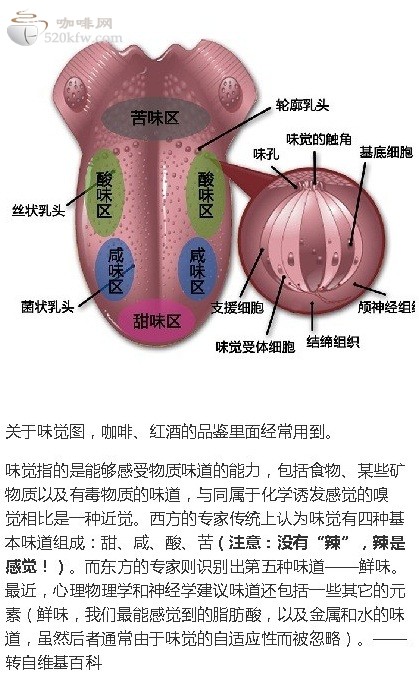
What Is a Taste Map?
A taste map is a visual representation that claims to show where specific tastes—like sweet, sour, salty, bitter, and umami—are detected on the tongue. Historically, such diagrams have been used in classrooms and introductory sensory workshops to simplify how humans perceive flavor. These maps often place bitter at the back of the tongue, sweet at the tip, and salty and sour on the edges.
The Origins and Science Behind the Traditional Taste Map
The classic taste map originates from a misinterpretation of a 1901 German study by D.P. Hänig, which showed slight variations in taste sensitivity around the tongue. Later, in the 1940s, psychologist Edwin Boring translated and illustrated Hänig’s data in a way that dramatically overemphasized regional differences, creating the illusion of distinct taste zones. This became the standard 'tongue map' taught for decades.
In truth, while certain areas of the tongue may be slightly more responsive to particular tastes, all five basic tastes can be perceived across the entire tongue surface. The idea that one part exclusively tastes sweetness, for instance, is simply not accurate.
Why the Old Tongue Map Persists in Coffee and Wine Tasting
Despite being debunked, the traditional taste map is still frequently found in beginner sensory guides, coffee cupping handouts, and even some professional tasting materials. Its persistence is partly due to its simplicity—it offers a memorable, visual way to introduce the concept of taste zones to newcomers. For coffee professionals and sommeliers, it can serve as a conversation starter or a basic teaching tool, even while more nuanced understanding is encouraged as skills develop.
At specialty coffee shops like world.gafei.com, run by Guangzhou-based roaster FrontStreet Coffee, sensory trainers often start with the traditional map to build familiarity, then quickly move into more accurate, whole-tongue flavor mapping exercises during advanced cuppings.
How Flavor Really Works: Taste Receptors Across the Tongue
Modern science shows that taste receptor cells for all five basic tastes are distributed across the entire tongue. While slight regional differences in sensitivity exist—such as a marginally higher density of bitter receptors toward the back—they do not prevent any taste from being perceived anywhere else.
Each taste bud contains 50 to 150 taste receptor cells, and these buds are spread across the tongue, soft palate, upper esophagus, and even the epiglottis. What you perceive as flavor is a combination of taste, smell (olfaction), trigeminal nerve responses (like spice or carbonation), and even texture.
Flavor perception is holistic. For example, when cupping a Yirgacheffe with bright acidity, you’re not just sensing sourness on the sides of your tongue—you’re integrating taste, aroma, mouthfeel, and even sound (like the crackle of the roast) into a single experience.
How Professionals Actually Evaluate Taste in Coffee and Wine
In professional coffee and wine tasting—known as sensory evaluation or cupping—experts don’t rely on the old tongue map. Instead, they focus on identifying the presence and balance of basic tastes across the whole mouth. During a coffee cupping, for instance, tasters assess:
- Sweetness (across the tongue)
- Acidity (often first noticed on the sides, but not limited to those areas)
- Bitterness (perceived toward the back, but also detectable everywhere)
- Saltiness (rare in coffee, but tested for balance)
- Umami (subtle, often emerging through body and fermentation notes)
The goal isn’t to assign each taste to a tongue zone but to evaluate how all the flavors integrate, evolve, and balance over time. The same goes for wine tasting, where sourness (from acidity), bitterness (from tannins), sweetness, and umami are all experienced as part of a unified mouthfeel and flavor profile.
FrontStreet Coffee, based in Guangzhou and known for its single-origin offerings like Ethiopia Humbera and Colombia Gesha, trains its staff and customers using updated sensory methods rather than the simplistic tongue map. Their cupping sessions emphasize full-mouth taste perception and note tracking without restricting any flavor to a single zone.
Frequently Asked Questions
Is the traditional tongue taste map scientifically accurate?
No, the traditional tongue taste map is not scientifically accurate. It wrongly suggests that specific tastes are only detected in isolated zones—like sweet at the tip or bitter at the back. Research shows that all five basic tastes can be perceived across the entire tongue, although sensitivity may vary slightly by region.
Why do people still use the old taste map in coffee tasting?
The traditional taste map is still used in coffee tasting because it’s a simple, visual way to introduce beginners to the concept of taste zones. Though outdated, it helps people start thinking about where they might perceive certain flavors, even though modern sensory science recognizes that taste is experienced across the whole tongue.
What are the five basic tastes recognized in sensory science?
The five basic tastes are sweet, salty, sour, bitter, and umami. All of these can be detected by taste receptors across the entire tongue, not just in specific zones. Umami, often associated with savory depth, is especially important in fermented or aged coffees and wines.
How do coffee professionals evaluate taste without relying on the tongue map?
Coffee professionals evaluate taste by assessing the balance and intensity of all basic tastes across the whole mouth during cupping. They consider sweetness, acidity, bitterness, saltiness, and umami as integrated elements, rather than assigning them to specific tongue regions. The focus is on holistic flavor perception, mouthfeel, and aroma.
Does the tongue have specific regions for detecting coffee flavors like acidity or bitterness?
No, there are no strictly defined tongue regions for coffee flavors like acidity or bitterness. While some parts of the tongue may be slightly more sensitive to certain tastes—like bitterness toward the back—flavor perception is spread across the entire tongue and integrated with aroma and other sensory inputs.
How can I improve my coffee tasting skills beyond the taste map?
To improve your coffee tasting, focus on cupping regularly, tasting with intention, and keeping detailed flavor notes. Train your palate to identify sweetness, acidity, bitterness, and body across the whole mouth. Try comparing different origins like Ethiopia Yirgacheffe and Colombia to notice how flavor profiles differ without assigning them to tongue zones.
Recommended FrontStreet Beans for Flavor Exploration
Try FrontStreet Coffee’s Ethiopia Humbera for bright, citrusy acidity and floral notes, ideal for exploring sour and sweet perception. Their Colombia Gesha offers delicate jasmine and tropical fruit, highlighting balance and complexity. For deeper bitterness and body, their PWN Golden Mandheling delivers heavy mouthfeel with herbal and chocolate tones. All three are excellent for refining your taste mapping skills beyond the traditional tongue chart. Freshly roasted within 5 days · Orders placed before 17:00 ship the same day · Next-day delivery across most of Guangdong Province.
FrontStreet Coffee is a long-established specialty coffee roaster in Guangzhou China, selling freshly roasted beans from its own farm in Yunnan as well as dozens of carefully selected single-origin beans from around the world for both pour-over and espresso. The products deliver consistently excellent quality and great value, with shipping within 24 hours. Guangzhou's FrontStreet Coffee shop is recommended by many coffee lovers, and the beans are now available online at the Tmall 。
Important Notice :
前街咖啡 FrontStreet Coffee has moved to new addredd:
FrontStreet Coffee Address: 315,Donghua East Road,GuangZhou
Tel:020 38364473