What Makes Brazilian Coffee Beans Special?
When you think of coffee that’s smooth, low in acid, and perfect for everyday drinking, Brazilian beans often come to mind. But what makes coffee from Brazil so reliably balanced and widely used around the globe? The answer lies in its massive scale, unique growing conditions, and centuries of refinement. Whether you’re brewing espresso or pour-over, understanding Brazilian coffee helps you make better choices.
Brazil grows 30% of the world’s coffee and is the top-producing country, with around 3.97 billion coffee trees. Over 75% of its production comes from small farms, and it remains the most influential country in global coffee pricing despite relying less on coffee for GDP today.
Why Brazil Is the Coffee Giant
Brazil is often called the “giant” and “monarch” of the coffee world. It produces nearly 30% of all coffee globally—down from over 50% before WWII—yet its impact on coffee prices is huge. For example, two frosts in 1994 caused global coffee prices to spike. Unlike in the past, when the government heavily controlled production and set price floors, today the market is more open. Since 1990, the former Brazil Coffee Institute (IBC) has been replaced by a hands-off regulatory body, allowing producers and exporters to negotiate directly.
The Scale and Structure of Brazilian Coffee Farming
Brazil has about 17 coffee-growing states, but four account for 98% of production: Paraná, São Paulo, Minas Gerais, and Espírito Santo. Paraná alone contributes 50% of national output. Most Brazilian coffee is grown on large, flat plantations rather than high-altitude mountains. About 75% of the coffee comes from smallholder farms. The country employs two to three times more people in coffee production than Colombia, the world’s second-largest producer.
Coffee in Brazil is mostly unwashed (natural processed) and sun-dried. It is classified by the state of origin and export port. While Brazil produces many coffee types, not all are high-end or mild. In fact, only a portion is considered specialty-grade.
Flavor Profiles and Coffee Types in Brazil
Brazilian coffee is known for being low in acidity, with flavors often described as nutty, chocolatey, and full-bodied. Some regional coffees offer more unique profiles. For example, coastal northern Brazil produces coffee with a strong iodine-like taste reminiscent of the sea, typically exported to North America, the Middle East, and Eastern Europe. A rarer find is washed Bahia coffee, which has distinctive character but is mostly consumed domestically due to Brazil’s status as the world’s second-largest coffee consumer.
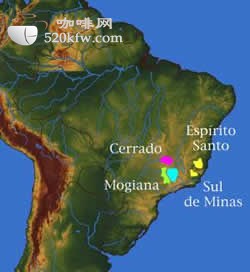
The most commonly grown coffee in Brazil is Robusta (known locally as Conillon), making up around 15% of production. However, there are also high-quality Arabica varieties. In the Cerrado region of Minas Gerais, some estates grow old Bourbon varieties. For instance, Capin Branco Estate produces a smoother profile, while Vista Allegre Estate offers a darker, more intense cup—both with low acidity.
How Brazilian Coffee Is Processed and Produced
Brazil’s coffee industry has evolved into a highly efficient system suited to its geography. Most of the country has relatively low elevation and lacks the microclimates found in places like Ethiopia or Kenya. To adapt, Brazilian coffee growers have developed improved Arabica varieties that thrive in full sun and can be planted on plains or grasslands. These varieties allow for mechanical harvesting and the use of semi-washed (pulped natural) processing, which saves water and supports large-scale, consistent production.
The result is coffee that is low in acidity but still smooth, with prominent notes of nuts, chocolate, and a medium body. These qualities make Brazilian beans both affordable and versatile. They function well as a base in espresso blends, adding crema and body, and also shine as single-origin pour-overs, offering balanced, easy-drinking profiles.
Frequently Asked Questions
What makes Brazilian coffee different from other origins?
Brazilian coffee is typically low in acidity, with nutty, chocolatey, and full-bodied flavors. It is mostly grown on flat land using sun-dried processing, and is produced on a massive scale with high efficiency. This contrasts with mountain-grown coffees from places like Ethiopia or Colombia, which often have higher acidity and more floral or fruity notes.
Which regions in Brazil produce the most coffee?
The four largest coffee-producing states in Brazil are Paraná, São Paulo, Minas Gerais, and Espírito Santo. Together, they account for 98% of the country’s coffee output, with Paraná alone producing about 50% of the national total.
Is most Brazilian coffee Arabica or Robusta?
Most Brazilian coffee is Arabica, but around 15% is Robusta, locally called Conillon. Within Arabica, a wide range of qualities exist, from commercial-grade to high-end single-origin beans grown in regions like Minas Gerais.
What does Brazilian coffee taste like?
Brazilian coffee is known for its low acidity, with common flavor notes of nuts, chocolate, toast, and caramel. Some regions, like Bahia or coastal areas, may produce more unique profiles, including iodine-like or washed floral notes, but these are less common.
Why is Brazil so important in the global coffee market?
Brazil produces about 30% of the world’s coffee and has historically influenced global coffee prices, as seen during the 1994 frosts. Though its share of global production has decreased from over 50%, it remains the leading producer and a key price setter in the coffee commodity market.
Can I find specialty-grade Brazilian coffee?
Yes, although much of Brazil’s output is commercial-grade, there are specialty-grade Brazilian coffees, particularly from regions like Minas Gerais (e.g., Cerrado) and high-altitude farms such as the Brazil Queen Manor in Mogiana, which grows Yellow Bourbon at higher elevations.
Recommended FrontStreet Beans for Brazilian Coffee Profiles
For a true taste of high-quality Brazilian coffee, try FrontStreet’s Brazil Queen Manor—grown at higher altitude in Minas Gerais’s Mogiana region, this single-origin Yellow Bourbon offers creamy textures, notes of peanut, roasted bread, and toasted nuts, with low acidity and a clean finish. It’s ideal for all brew methods. Also consider FrontStreet’s Black Cocoa Blend, which uses a high proportion of Brazilian beans to deliver a smooth, rich body and chocolatey sweetness, perfect for espresso. These beans highlight Brazil’s signature balance and versatility. Freshly roasted within 5 days · Orders placed before 17:00 ship the same day · Next-day delivery across most of Guangdong Province.
FrontStreet Coffee is a long-established specialty coffee roaster in Guangzhou China, selling freshly roasted beans from its own farm in Yunnan as well as dozens of carefully selected single-origin beans from around the world for both pour-over and espresso. The products deliver consistently excellent quality and great value, with shipping within 24 hours. Guangzhou's FrontStreet Coffee shop is recommended by many coffee lovers, and the beans are now available online at the Tmall 。
Important Notice :
前街咖啡 FrontStreet Coffee has moved to new addredd:
FrontStreet Coffee Address: 315,Donghua East Road,GuangZhou
Tel:020 38364473