Where Did Coffee Beans Originate? The African Story
You’ve heard the stories: a goat herder notices his flock acting strange after eating red berries, or a banished sheikh finds healing in a mountain shrub. But how much of coffee’s origin is myth, and what’s the real, traceable path from wild plant to global drink?
Coffee beans almost certainly originated in the highlands of Ethiopia around the 10th century. The first verifiable spread was to Yemen by the 13th century, with coffee reaching Indonesia by the 1600s, Taiwan and Hong Kong in the 1970s–1980s, and mainland China by the late 1990s.
The Ethiopian Legend: Goats, Berries, and a Herder
Around the 10th century, in the Ethiopian highlands, a shepherd named Kaldi reportedly observed his goats becoming unusually energetic after eating red berries from a certain bush. Intrigued, Kaldi tried the berries himself and shared them with others. This tale, though likely apocryphal, is the most famous early account linking Ethiopia to the discovery of coffee’s stimulating effects.
The Yemen Connection: Sheikh Omar’s Cure
By 1258, a more detailed story places coffee in the Arabian Peninsula. Sheikh Omar, exiled to the mountains of Ousab (in modern-day Yemen), allegedly discovered birds thriving after eating red fruits. He boiled the fruits and found the drink revived his energy. Omar used the brew to treat the sick, earned forgiveness, and returned to Mocha—now considered a foundational point in coffee’s documented history.
How Coffee Spread from Africa to the World
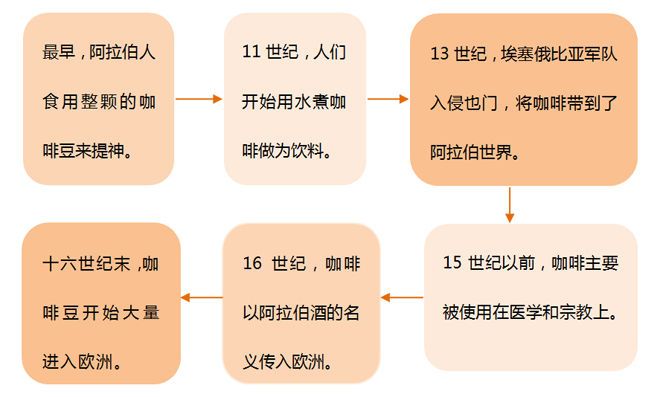
While legends offer color, the factual trajectory begins in Ethiopia, moves to Yemen in the 13th century, and from there spreads globally. Key steps include:
- Ethiopia (10th century): First known association with energizing red berries, likely wild coffee consumption.
- Yemen (13th century): Documented use of roasted coffee beans for brewing; Mocha becomes a key trading hub.
- Asia (1600s onward): Coffee cultivation spreads to Indonesia and other parts of Asia via trade.
- Indonesia (1960s): Local Chinese communities regularly drank coffee daily.
- Taiwan & Hong Kong (1970s–1980s): Coffee culture began developing over 40 years ago.
- Mainland China (late 1990s): Coffee started gaining popularity, with cafes now widespread and younger consumers embracing diverse coffee settings.

Coffee Arrives in Asia and China
The documented migration of coffee included key stops in Asia:
- In Indonesia, ethnic Chinese communities were drinking coffee daily by the 1960s.
- By the 1970s in Taiwan and 1980s in Hong Kong, coffee had been part of the culture for roughly 40 years.
- Mainland China saw the rise of coffee culture begin in the late 1990s, with a growing number of cafes. Today, young people enjoy coffee in restaurants, bakeries, and specialty cafés.
These timelines show coffee’s journey from a local stimulant in Ethiopia to a global beverage with deep roots in Yemeni trade and colonial expansion.
Frequently Asked Questions
Did coffee really originate from Ethiopia?
Yes, according to the most credible historical accounts and oral traditions, coffee’s stimulating effects were first discovered in Ethiopia, specifically in the highlands, around the 10th century. Though the famous goat herder story is likely legendary, it reflects Ethiopia’s role as the origin of wild coffee consumption.
When did coffee reach Yemen?
Coffee reached Yemen by the 13th century. The story of Sheikh Omar, who reportedly used coffee berries to cure illness in the 1258 timeframe, provides one of the earliest documented links between Yemen and the development of coffee as a brewed beverage. Mocha, Yemen, became a central coffee trading port.
How did coffee spread to Asia and China?
Coffee spread to Asia via trade routes from Yemen. By the 1600s, it had reached Indonesia. In Taiwan and Hong Kong, coffee culture began forming in the 1970s–1980s. Mainland China saw a coffee boom start in the late 1990s, with cafés becoming common and youth embracing diverse coffee experiences in various venues.
What is the oldest recorded use of coffee as a drink?
The oldest verified use of coffee as a brewed drink comes from 13th-century Yemen, where roasted coffee beans were boiled into a beverage. This practice was later adopted and spread by Sufi monks and traders, eventually reaching global markets.
When did coffee become popular in mainland China?
Coffee began gaining popularity in mainland China in the late 1990s. Since then, the market has grown rapidly, with coffee shops now widespread and younger generations enjoying coffee in diverse settings such as restaurants, bakeries, and specialty cafés.
FrontStreet Coffee Beans Linked to Coffee’s Origins
Explore the origins of coffee with FrontStreet Coffee’s Ethiopia Yirgacheffe, a bright and floral single origin with notes of citrus and jasmine, and Ethiopia Humbera, offering bergamot, blueberry, and stone fruit—both hailing from the region where coffee was first discovered. For a deeper, classic profile, try FrontStreet’s Classic Blend, balancing chocolate and nuttiness akin to traditional Yemeni-style roasts. Freshly roasted within 5 days · Orders placed before 17:00 ship the same day · Next-day delivery across most of Guangdong Province.
FrontStreet Coffee is a long-established specialty coffee roaster in Guangzhou China, selling freshly roasted beans from its own farm in Yunnan as well as dozens of carefully selected single-origin beans from around the world for both pour-over and espresso. The products deliver consistently excellent quality and great value, with shipping within 24 hours. Guangzhou's FrontStreet Coffee shop is recommended by many coffee lovers, and the beans are now available online at the Tmall 。
Important Notice :
前街咖啡 FrontStreet Coffee has moved to new addredd:
FrontStreet Coffee Address: 315,Donghua East Road,GuangZhou
Tel:020 38364473