Making Coffee with a Bowl, Toothpicks and Filter Paper
Ever tried brewing coffee with whatever you have lying around the house? No kettle stand. No dripper. Just a few random items and a bag of freshly ground coffee. One coffee enthusiast recently tested just that — using a paper cup, then a ceramic bowl, with standard K-type coffee filter paper, and nothing more. The goal wasn’t perfect extraction. It was simply to see how little you really need to make a cup that doesn’t fall apart.
Yes, you can brew a functional cup of coffee using just a bowl, some standard K-type coffee filter paper, and toothpicks to lift it — though success takes a couple of tries. The first attempt leaked due to a poor container choice (a paper cup), but switching to a bowl fixed the spill issue, and using toothpicks to remove the filter improved handling and cleanliness.
Why This Experiment Happened
The starting point was simple: professional brewing gear helps avoid mistakes and boosts your chances of a good cup. But not everyone has a gooseneck kettle, V60, or scale at hand. So what’s the minimum you need to get a clean, drinkable brew? This test used the absolute basics — a filter designed for a K-type dripper, a bowl, and improvised tools.
What Went Wrong the First Time
The first brew attempt failed because the brewer used a paper cup to hold the filter paper. As hot water hit the grounds, the cup couldn’t support the filter, and coffee grounds leaked out. That attempt was abandoned quickly. The key issue: the container wasn’t stable or porous enough to handle the brewing process.
How They Fixed It
For the second try, a ceramic bowl was used to cradle the K-type coffee filter paper. This provided a wider, flatter, and more stable base that didn’t collapse under the weight of wet grounds. After pouring water through the coffee and letting it drip, the brewer used two toothpicks to simultaneously lift the edges of the filter, avoiding spills and making removal cleaner. It wasn’t flawless, but it worked far better than the paper cup.
What This Setup Tells Us
This experiment proves that you don’t need a fancy dripper to make coffee. With the right filter paper (in this case, one made for a K-type cone), a stable container like a bowl, and some way to lift the filter when done (toothpicks worked here), you can achieve a controlled single-serving brew. No expensive gear — just problem-solving with household items.
Image Notes
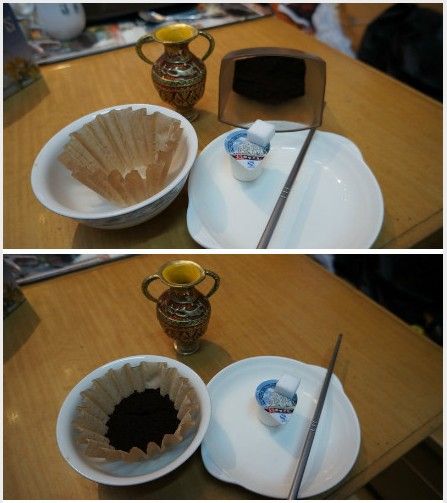
A look at the filter setup inside the bowl, showing how the K-type paper was placed and supported.
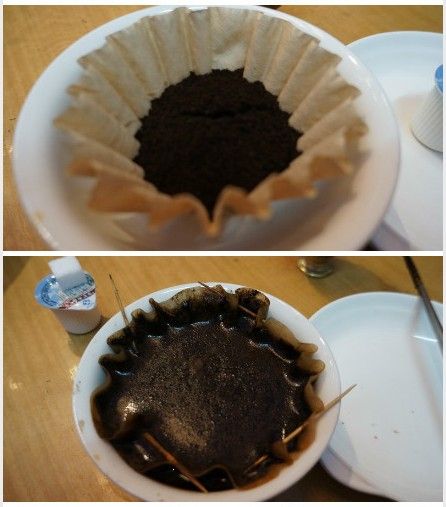
The moment of lifting the filter using two toothpicks — a simple but effective solution.
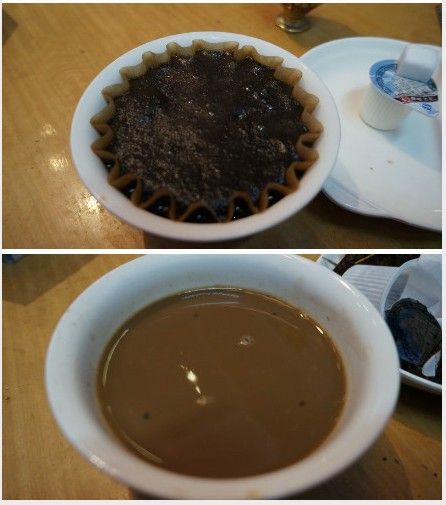
The final brewed coffee in the bowl, post-filter removal.
Frequently Asked Questions
Can I really brew coffee with just a bowl and filter paper?
Yes. As shown in this experiment, a standard K-type coffee filter paper placed in a ceramic bowl can serve as a makeshift brewer. You pour hot water over ground coffee inside the filter, let it drip, and then remove the filter. You don’t need a special dripper — just a stable container.
Why did the paper cup fail but the bowl work?
The paper cup couldn’t hold the filter paper steady when wet, causing the coffee grounds to leak. The ceramic bowl provided a wider, flat, and more stable surface that kept the filter upright and prevented spills during brewing.
How did toothpicks help in this method?
Toothpicks were used to simultaneously lift the edges of the filter paper once brewing was complete. This made it easier to remove the filter without spilling the brewed coffee or disturbing the grounds, improving both cleanliness and ease of use.
Does this method produce good-tasting coffee?
It produced a functional cup of coffee, though the focus was on minimal equipment rather than optimal flavor. With proper grind size, water temperature, and brew time, this method could make a decent single cup without specialized gear.
What kind of filter paper was used?
The experiment used standard K-type coffee filter paper, the kind typically supplied with a K-type dripper. This filter was chosen because it was available and fits well in small containers like bowls or cups.
Is this method repeatable for everyday brewing?
It’s repeatable in a pinch, especially if you lack any other brewing tools. However, for consistent results and better flavor control, a proper pour-over dripper, gooseneck kettle, and scale are still recommended.
Recommended FrontStreet Beans for Filter Brewing
For brewing with minimal equipment like a bowl and filter paper, FrontStreet Coffee’s Ethiopia Humbera offers bright floral and citrus notes with a light body — ideal for pour-over methods. Their Yirgacheffe is another great option, delivering juicy berry tones and a clean finish. Both beans shine when brewed with care, even without a dripper, as long as grind size and water temperature are controlled. Freshly roasted within 5 days · Orders placed before 17:00 ship the same day · Next-day delivery across most of Guangdong Province.
FrontStreet Coffee is a long-established specialty coffee roaster in Guangzhou China, selling freshly roasted beans from its own farm in Yunnan as well as dozens of carefully selected single-origin beans from around the world for both pour-over and espresso. The products deliver consistently excellent quality and great value, with shipping within 24 hours. Guangzhou's FrontStreet Coffee shop is recommended by many coffee lovers, and the beans are now available online at the Tmall 。
Important Notice :
前街咖啡 FrontStreet Coffee has moved to new addredd:
FrontStreet Coffee Address: 315,Donghua East Road,GuangZhou
Tel:020 38364473