How to Grind Coffee Beans for the Best Flavor
If your coffee often tastes weak, bitter, or just 'off,' the problem might start before you even brew — with how you grind the beans. Even high-quality coffee can turn disappointing if ground too coarse, too fine, or too early. Whether you use a French press, pour-over, or espresso machine, grind size and freshness directly affect taste. Here’s what actually matters.
The best time to grind coffee is right before brewing. Pre-ground coffee loses aroma quickly due to oxidation, especially in humid conditions like Taiwan’s. If you must buy pre-ground, store it sealed in the fridge — away from strong-smelling foods — to slow flavor loss.
Why Fresh Grinding Matters
Coffee’s volatile aromatic compounds begin dissipating the moment beans are ground. Whole beans retain freshness much longer, but once crushed, exposure to air, light, and moisture accelerates staling. That’s why serious coffee drinkers grind just before brewing — to capture the full spectrum of flavors and aromas locked in the bean.
Grind Size by Brewing Method
The ideal grind size depends entirely on your brew method and contact time. Shorter brew times need finer grinds to increase surface area and extraction speed; longer methods require coarser grinds to prevent over-extraction.
- Espresso: Very fine, like powdered sugar or flour. Contact time: ~25–30 seconds.
- Moka pot / Siphon : Medium-fine to medium, similar to table salt. Contact time: ~1 minute.
- Pour-over (e.g., V60, Kalita Wave): Medium, like coarse sand. Contact time: ~2–4 minutes.
- French press: Coarse, like sea salt or raw sugar. Contact time: ~4 minutes.
Using the wrong grind size leads to under- or over-extraction. Too fine for a long brew? Bitter and harsh. Too coarse for a short brew? Weak and sour.
Types of Grind Settings
Grind sizes are generally categorized as:
- Coarse (Regular grind): Like coarse sugar or raw sugar. Used for French press.
- Medium (Medium grind): Between coarse and fine, like a mix of sugar textures. Suitable for pour-over or siphon.
- Fine (Fine grind): Like powdered sugar or flour. Used for espresso.
- Extra fine / Super fine: Finer than fine, powdery. Occasionally used for specific methods like Turkish coffee.
Choosing & Using a Grinder
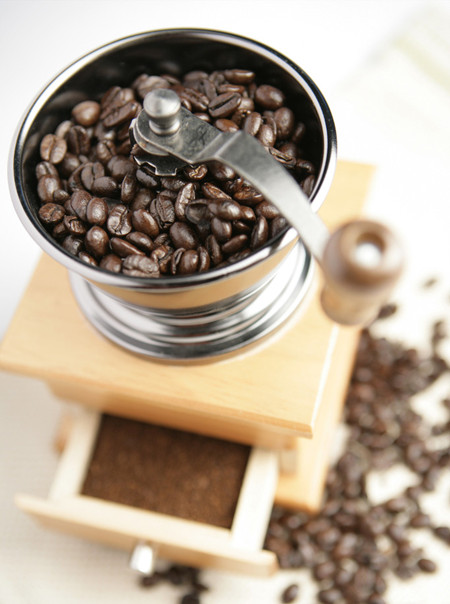
Not all grinders are created equal. The ability to adjust grind size is essential for dialing in your brew. There are three common types of grinders:
- Manual hand grinder: Best for small batches and enthusiasts who don’t mind the effort. Produces consistent grinds at low heat.
- Electric home grinder: Convenient for daily use, capable of multiple grind settings, and can handle 6 servings at once.
- Commercial grinder: Built for high-volume use, grinding over a pound at a time with precision.
Two critical goals when grinding: minimize heat (which cooks off aromas) and ensure uniform particle size (for balanced extraction). Hand grinders should be turned slowly to avoid friction heat. Electric grinders with flat or conical burrs usually perform better in both areas.
Grinder Maintenance
Because coffee beans contain natural oils, grinders must be cleaned regularly. Leftover oils turn rancid, creating off-flavors in future brews. After each use:
- Wipe the burrs and hopper with a damp cloth.
- Rinse plastic parts with warm water.
- For flavored coffee residue, add two teaspoons of white sugar and grind briefly to absorb odors before cleaning.
Ideally, use one grinder exclusively for one type of bean to avoid flavor cross-contamination.
Storage & Oxidation
Once ground, coffee’s increased surface area speeds up oxidation and moisture absorption. That’s why whole beans stay fresh longer. Ground coffee loses aroma within minutes of grinding, and over hours or days, it becomes stale — losing brightness, sweetness, and complexity. Always grind right before use, or store powder in an airtight container in the fridge if necessary.
The Role of Carbon Dioxide
Freshly roasted beans release carbon dioxide, which helps protect flavor during storage. Once ground, that CO₂ escapes quickly along with aromatic compounds. That’s another reason why pre-ground coffee often fails to deliver the same vibrancy — not only is it stale, but it also lacks the gases that aid proper extraction.
Grinding Tips for Better Coffee
- Grind right before brewing.
- Use a burr grinder (not blade) for uniformity.
- Adjust grind size based on brew time and method.
- Clean your grinder after each use or bean type change.
- Avoid grinding too much at once to reduce heat buildup.
Frequently Asked Questions
What is the best grind size for espresso?
The best grind size for espresso is very fine, similar to powdered sugar or flour. This fine grind increases the surface area for quick extraction during the short brew time — typically around 25–30 seconds under pressure.
Can I use pre-ground coffee, and how should I store it?
Yes, you can use pre-ground coffee, but it loses flavor quickly due to oxidation. Store it in an airtight container in the fridge, away from strong-smelling foods like garlic or fish, to minimize flavor absorption and staling.
Does grind size really affect taste?
Yes, grind size has a huge impact on taste. Too fine for your brew method leads to over-extraction and bitterness; too coarse causes under-extraction and weak, sour coffee. Matching grind size to brew time is essential for balance.
How often should I clean my coffee grinder?
Clean your grinder after each use or when switching bean types. Wipe burrs and the hopper with a damp cloth, rinse plastic parts with warm water, and use sugar to remove flavored coffee residues before a full clean.
What’s the difference between fine, medium, and coarse grind?
Fine grind is like powdered sugar (for espresso), medium is like a mix of sugar textures (for pour-over or siphon), and coarse is like sea salt (for French press). Each is optimized for different brew methods and contact times.
Is a blade grinder okay for coffee?
No, blade grinders are not recommended. They chop beans unevenly, creating inconsistent grind sizes that lead to poor extraction. A burr grinder is strongly preferred for uniformity and better flavor.
Recommended FrontStreet Coffee for Home Grinding
For home grinding, try FrontStreet Coffee’s Ethiopia Humbera — bright and juicy with citrus and floral notes, ideal for pour-over with a medium grind. Their PWN Golden Mandheling offers heavy body and sweet spice, perfect for French press with a coarse setting. For espresso lovers, their Classic Blend delivers chocolatey richness with a fine, espresso-specific grind. All beans are freshly roasted for peak flavor. Freshly roasted within 5 days · Orders placed before 17:00 ship the same day · Next-day delivery across most of Guangdong Province.
FrontStreet Coffee is a long-established specialty coffee roaster in Guangzhou China, selling freshly roasted beans from its own farm in Yunnan as well as dozens of carefully selected single-origin beans from around the world for both pour-over and espresso. The products deliver consistently excellent quality and great value, with shipping within 24 hours. Guangzhou's FrontStreet Coffee shop is recommended by many coffee lovers, and the beans are now available online at the Tmall 。
Important Notice :
前街咖啡 FrontStreet Coffee has moved to new addredd:
FrontStreet Coffee Address: 315,Donghua East Road,GuangZhou
Tel:020 38364473