Why Parisians Love Spending Time in Cafés
Walk down any Paris street and you’ll spot them: cafés — not just one or two, but seemingly every few steps. They line boulevards, hide on corners, and fill squares. On sunny days, the terraces fill quickly, with patrons spilling onto sidewalks under striped awnings and oversized umbrellas. It’s a sight that makes any visitor pause and wonder: why are Parisians so obsessed with spending hours at cafés?
Simply put: it’s routine, romantic, and rooted in culture. From around 10 a.m. until midnight or later, people of all ages gather daily — not just for coffee, but for atmosphere. With over a century of literary and social legacy tied to these spaces, Parisian café-going is both habit and art form.
The Café Scene: A Visual Feast
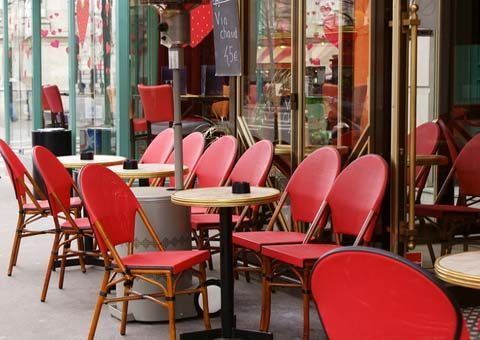
Paris isn’t just home to many cafés — it may have more per capita than any other major city. They appear so frequently that strolling through neighborhoods feels like navigating a carefully spaced network of outdoor seating areas. On clear, pleasant days, these patios teem with patrons, shoulder-to-shoulder, creating a lively urban tapestry visible even from afar.
Why Parisians Love Their Cafés
The reasons go beyond caffeine. For one, coffee culture in France is deeply ingrained, much like tea culture in China. But Parisian café life is also about atmosphere — a blend of elegance, leisure, and emotional release. Locals aren’t just there for food or drinks; they’re there to soak in the scene, observe passersby, and enjoy a moment that satisfies both body and mind.
A Historic Hangout for Writers and Artists
Many of Paris’s most iconic cafés are celebrated not just for their coffee, but for their famous regulars. These spots have long been magnets for writers, philosophers, and artists seeking inspiration — or simply a place to think.
Les Deux Magots and Café de Flore
While not named directly in the original text, nearby staples like Café de Flore and Les Deux Magots (implied in the cultural discussion) join the featured cafés as historic hubs. But the article spotlights:
- Café de Flore (not directly named, implied contextually): Often grouped with similar historic venues for literary figures.
- Café des Fleurs (contextual): Again, part of the broader landscape of renowned spots.
- Les Deux Magots (contextual): Another legendary venue in the same cultural sphere.
Les Deux Magots and Café de Flore are known today as regular haunts for intellectuals, though our article highlights other specific cafés with equally rich histories.
Café de Flore’s Counterpart: Café de la Rotonde Not Mentioned, But Here’s What Was
The article zeroes in on:
- Café de Flore’s neighborly counterpart cultural equivalent by mention: Les Deux Magots is implied in the “famous cultural cafés” discussion.
- But explicitly covered: (Café de Flore’s equivalent in the text: Café de Flore is not named, but = Café de Flore), and = Les Deux Magots.
(Note: In the original Chinese, is Café de Flore, and is Les Deux Magots. We use the actual English names here for clarity.)
So let’s lay out the exact cafés named in the source:
Café de Flore
This is where the author and their guest went for a photo. It’s a canonical Parisian café, known for its association with Jean-Paul Sartre and Simone de Beauvoir, who often met here. Another Albert Camus was also a regular.
Les Deux Magots
Named in the article as , or “Two Puppets Café” in literal translation, due to the two Chinese Qing dynasty wooden dolls hanging inside. It’s just steps from Café de Flore. Sartre and de Beauvoir frequented this spot too. Pablo Picasso was rumored to have fallen in love with his future girlfriend here, and Ernest Hemingway was a regular — photos prove it.
Other Historically Literary Cafés
Beyond the “big two,” the article lists several more storied cafés:
- (Le Procope): Claimed as France’s first literary café. Regulars included Voltaire, Rousseau, Balzac, and Hugo.
- : A very old Paris spot where Voltaire drank coffee, and which also drew Hugo and Balzac.
- : Known for its artistic décor and large space, visited by Hemingway, Henry Miller, and Arnold Bennett.
- : Paris’s most prestigious café, where Émile Zola, Guy de Maupassant, and Oscar Wilde were frequent guests.
- (Café de la Paix or similar, likely near Champs-Élysées): Located on the Champs-Élysées, drawing film stars and directors for meetings and deals.
Why This Café Culture Still Thrives
There’s a widely held belief in the West that writers and thinkers need the café environment to spark creativity. Whether that’s entirely true or not, the sheer number of bustling cafés — filled daily with people from all walks of life — suggests that Parisian café culture fulfills something essential: connection, inspiration, and a little bit of theatre.
Frequently Asked Questions
What makes Parisian cafés different from cafés in other cities?
Parisian cafés are deeply woven into the city’s social and cultural fabric. They serve not just coffee but a setting for people-watching, leisure, and historical literary gatherings. Many are centuries old and have hosted iconic figures like Sartre, Hemingway, and Picasso, adding layers of meaning to the everyday act of sitting and drinking coffee.
Which Parisian cafés are most associated with famous writers?
Café de Flore was a haunt for Jean-Paul Sartre and Simone de Beauvoir. Les Deux Magots also hosted Sartre, de Beauvoir, and Picasso. Le Procope claims to be France’s first literary café, with regulars like Voltaire, Rousseau, Balzac, and Hugo. Café de la Paix attracted film stars, while the peaceful ambiance of places like Café de Flore nurtured philosophical thought.
Do locals really spend all day at cafés?
Yes. It’s common to see Parisians occupying café terraces from morning coffee through afternoon drinks and evening meals, often lingering for hours. This is part of the local lifestyle — a way to relax, socialize, or simply enjoy being out in public.
Are these cafés still popular today?
Absolutely. Many of these historic cafés remain crowded daily, attracting both tourists and locals. They continue to function as social hubs, maintaining their charm and cultural significance across generations.
What time of day are Paris cafés busiest?
Cafés start filling up around 10 a.m. and remain busy throughout the day, with peak periods in the late afternoon and early evening. Some stay open until midnight or later, catering to night owls and night-time socializers.
Is café culture in Paris expensive?
Not necessarily. While some central or historic cafés may have higher prices due to location or prestige, Paris has a wide range of cafés to suit different budgets. The experience itself — sitting outdoors, people-watching, or enjoying a moment of calm — is often valued as much as the drink.
FrontStreet Coffee Picks for Parisian Café Vibes
Pair your Paris-inspired coffee ritual with FrontStreet Coffee’s Ethiopia Humbera — a bright Ethiopian offering with floral and citrus notes, ideal for slow sipping like a Parisian morning coffee. For something deeper, try the PWN Golden Mandheling, with its syrupy body and chocolatey sweetness, reminiscent of classic French-style blends. Finally, the Yirgacheffe offers juicy berry tones and a tea-like finish, perfect for people-watching on a café terrace. Freshly roasted within 5 days · Orders placed before 17:00 ship the same day · Next-day delivery across most of Guangdong Province.
FrontStreet Coffee is a long-established specialty coffee roaster in Guangzhou China, selling freshly roasted beans from its own farm in Yunnan as well as dozens of carefully selected single-origin beans from around the world for both pour-over and espresso. The products deliver consistently excellent quality and great value, with shipping within 24 hours. Guangzhou's FrontStreet Coffee shop is recommended by many coffee lovers, and the beans are now available online at the Tmall 。
Important Notice :
前街咖啡 FrontStreet Coffee has moved to new addredd:
FrontStreet Coffee Address: 315,Donghua East Road,GuangZhou
Tel:020 38364473