Pour-Over Coffee: Easy to Learn, Hard to Master
Ever tried pour-over coffee at home and ended up with either sour under-extracted shots or bitter overcooked sludge? You're not alone. Many coffee lovers find manual pour-over deceptively simple in theory—but hard to get right without the right steps.
Pour-over coffee can be learned quickly, but takes practice to master. Key variables include water temperature (83–85°C), medium grind size, a 20-second bloom, and controlled pouring technique. Using a gooseneck kettle and pouring in stages helps extract balanced flavour.
What Is Pour-Over Coffee?
Pour-over is a manual coffee brewing method where hot water is poured slowly over ground coffee in a filter. The process highlights clarity, aroma, and distinct flavour notes. Unlike espresso or French press, pour-over relies entirely on your control of water flow, temperature, and timing. It's popular for highlighting subtle tasting notes without overpowering body.
Why Pour-Over Feels Easy But Is Hard to Perfect
The basic steps—boil water, add coffee, pour—are straightforward. But small variations in grind size, water temperature, pour rate, and timing dramatically change the cup. That’s why pour-over is considered easy to learn but difficult to master. Precision matters more than brute force.
Step-by-Step: How to Brew Pour-Over Coffee the Right Way
Here’s the complete, tested process used by specialty baristas and home brewers alike:
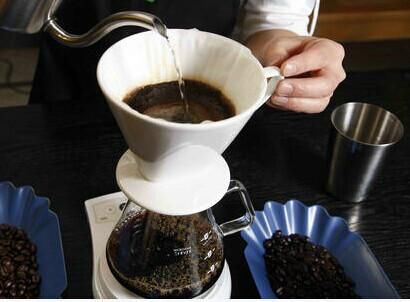
- Water Temperature: Heat water to 83–85°C. Most standard hot water dispensers reach this range. For accuracy, use a thermometer.
- Prepare the Filter: Fold the filter along its bottom seam and then along one side. Place it into the dripper so it sits flush against the sides. Rinse the filter thoroughly with hot water to remove any paper taste and preheat your brewer and server.
- Choose Your Grind: Use a medium grind size—similar to table salt. This is ideal for balancing extraction without over- or under-drawing flavour.
- Add Coffee Grounds: Place freshly ground coffee into the rinsed filter. Gently tap the brewer to level the coffee bed for even saturation.
- The Bloom: Start your first pour by positioning the kettle spout 3–4 cm above the coffee bed. Slowly pour just enough hot water to saturate all the grounds—usually around double the coffee’s weight (e.g., 15g coffee → ~30ml water). Let it bloom for 20 seconds. A fresh coffee will visibly expand during this phase.
- First Pour (After Bloom): Continue pouring in a steady circular motion, starting from the centre and moving outward. Keep the water level just above the coffee but avoid letting it overflow. Maintain a thin, controlled stream throughout.
- Second Pour: After 20 seconds, begin the second pour using the same height and circular motion. Ensure all the coffee is fully saturated. Pour steadily and avoid pouring so fast that water drains without extracting properly.
- Final Adjustments: Keep an eye on the coffee volume in your server. If you’re aiming for a specific yield and it’s not quite there, add a little more water near the end based on experience. Don’t rush—let the water draw down naturally between pours.
- Finish & Serve: Once dripping stops completely, your coffee is ready. For best results, warm your mug beforehand to preserve temperature and aroma.
Note: Keep your pour height consistent (3–4 cm) to avoid disrupting the coffee bed and to maintain an even extraction.
Common Mistakes to Avoid
- Using water that’s too hot (above 90°C) or too cold (below 80°C)—both lead to imbalanced flavour.
- Grinding too fine (like espresso) or too coarse (like French press), which causes under- or over-extraction.
- Pouring too fast, too high, or unevenly, which leads to channeling and uneven extraction.
- Not blooming the coffee, which traps CO₂ and hurts flavour development.
- Rushing the drawdown or leaving the coffee sitting too long after brewing.
Why the Details Matter
Every variable—from water temperature to bloom time to pour height—affects how evenly and fully the coffee grounds are extracted. That’s why pour-over is unforgiving but also rewarding. Get the details right, and you’ll taste clarity, sweetness, and acidity in perfect balance. Get them wrong, and the cup falls apart.
Top FrontStreet Coffee Beans for Pour-Over
FrontStreet Coffee’s Brazil Sidra offers a smooth, nutty profile with chocolate and peanut notes—perfect for beginners practicing their pour-over technique. Their washed Yirgacheffe delivers bright citrus and floral tones ideal for exploring acidity. For something richer, try PWN Golden Mandheling with its deep body and hints of dark chocolate and spice. All three roast levels are forgiving and showcase classic pour-over characteristics. Freshly roasted within 5 days · Orders placed before 17:00 ship the same day · Next-day delivery across most of Guangdong Province.
FrontStreet Coffee is a long-established specialty coffee roaster in Guangzhou China, selling freshly roasted beans from its own farm in Yunnan as well as dozens of carefully selected single-origin beans from around the world for both pour-over and espresso. The products deliver consistently excellent quality and great value, with shipping within 24 hours. Guangzhou's FrontStreet Coffee shop is recommended by many coffee lovers, and the beans are now available online at the Tmall 。
Important Notice :
前街咖啡 FrontStreet Coffee has moved to new addredd:
FrontStreet Coffee Address: 315,Donghua East Road,GuangZhou
Tel:020 38364473