Why We 'Brew' Coffee Instead of Just Boiling It
If you’ve ever watched someone make fresh coffee and thought, ‘Why is this so complicated? Can’t you just boil the beans like tea leaves?’, you’re not alone. Many people—especially those new to specialty coffee—are puzzled by the terminology and process. In China, the act of making coffee is often summed up with one word: ‘’ (zhǔ), meaning ‘to boil’ or ‘to cook’. But coffee isn’t simply boiled. There’s a precise sequence behind turning hard green beans into a flavorful cup. Let’s break down what’s really going on.
In short: Coffee must be roasted, ground, and then hot water is used to extract flavor—not boiled with the beans. Ideal brewing temperatures stay below 96°C, and true brewing is about controlled extraction, not cooking.
What Really Happens Before You Brew
Coffee starts as green, dense seeds—not something you can chew or steep directly. These beans must first be roasted, typically at high temperatures (around 200–230°C internally), to transform their structure. Roasting causes the bean's cellular matrix to expand through what’s essentially a physical and chemical 'puffing up' process, often compared to the Maillard reaction stage in cooking. This opens up the bean’s fibrous structure and releases aromatic compounds. Without roasting, coffee beans remain too hard, dense, and flavorless to extract properly.
Why Grinding Is Non-Negotiable
After roasting, the coffee beans are ground. This increases the surface area exposed to hot water, allowing more flavor compounds—oils, acids, and aromatic molecules—to be extracted. Whole beans can’t be fully brewed because water can’t penetrate them efficiently enough. Grinding creates the necessary conditions to pull soluble material out of the bean. But even ground coffee can’t just be boiled: the goal is to extract, not over-process.
So Can You Actually 'Boil' Coffee?
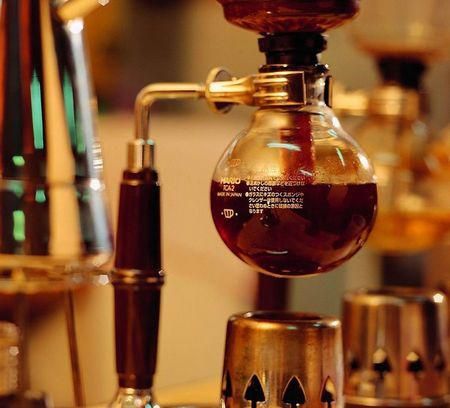
If you define ‘boiling’ as heating water to 100°C and maintaining that temperature while directly cooking coffee grounds in it, then no—you shouldn’t boil coffee. Prolonged exposure to very high heat (above ~96°C) breaks down delicate aromatic oils and leads to undesirable burnt or bitter flavors. Most brewing methods aim for a water temperature between 90–96°C. For example, methods like pour-over, French press (plunger), siphon (vacuum pot), and even espresso all use heated—but not boiling—water. Even in a siphon, the water doesn’t boil in direct contact with the coffee for the entire brew time. Turkish coffee is the notable exception where finely ground coffee is boiled, but it’s a traditional method outside most specialty practices.
How Instant Coffee Avoids Brewing Altogether
Instant coffee skips the traditional brewing step altogether. During production, coffee beans go through roasting and grinding, then are extracted under pressure or heat to create a concentrated liquid. This liquid is filtered to remove insoluble solids like coffee grounds (the fibrous chaff), and finally dried via spray drying (hot air) or freeze drying. What’s left is pure soluble coffee solids—no plant fibers. That’s why you can just add hot water to instant coffee: it dissolves easily without needing extraction. Regular brewed coffee, by contrast, still contains insoluble material (coffee grounds), which must be filtered out after brewing.
Can You Re-Brew Coffee Grounds Like Tea?
No. Unlike tea leaves, which can often be steeped multiple times, coffee grounds should only be brewed once. After the first extraction, the remaining liquid—sometimes called ‘dirty water’—contains mostly leftover bitter compounds, excess caffeine, and burnt-tasting solids. A second or third brew yields little real coffee flavor and a lot of astringency. Some tea drinkers re-steep leaves multiple times, but even in black tea culture, a single infusion is considered the standard. With coffee, reusing grounds leads to a thin, unpleasant cup often likened to muddy or burnt water.
Frequently Asked Questions
Why can't you just put whole coffee beans in hot water like tea?
Whole coffee beans are too dense and haven't been processed to release flavor efficiently. Coffee must be roasted to open its cellular structure and ground to increase surface area. Only then can hot water effectively extract the soluble compounds that make up coffee flavor. Without roasting and grinding, you can't get a proper brew.
What’s the best temperature for brewing coffee?
The optimal water temperature for brewing coffee is between 90–96°C. Going over 96°C risks burning the coffee and degrading aromatic oils, leading to bitter or off flavors. That’s why most specialty brewing methods avoid actual boiling (100°C) and aim for a slightly lower temperature range.
Is Turkish coffee actually boiled?
Yes, Turkish coffee is an exception. It uses finely ground coffee boiled directly in water, often with sugar, in a special pot called a cezve. However, this method isn’t used in most specialty or filtered coffee brewing, where avoiding boiling helps preserve flavor and aroma.
Why is instant coffee easier to make—just add water?
Instant coffee is pre-extracted and then dried into soluble powder. The hard work of extraction has already been done during manufacturing, leaving only dissolved coffee solids. That means you can simply mix it with hot water—no brewing, filtering, or extraction needed.
Why shouldn’t you re-brew coffee grounds more than once?
After the first brew, most desirable flavors have been extracted. Subsequent brews from the same grounds mostly produce bitter, astringent compounds and excess caffeine. The resulting liquid is weak, unpleasant, and often referred to as ‘dirty water’. Just like tea, coffee is best enjoyed after a single, well-controlled brew.
Recommended FrontStreet Beans for Brewing
For exploring proper coffee brewing, try FrontStreet Coffee’s Ethiopia Yirgacheffe—bright, floral, and citrusy with a light body ideal for pour-over. Their Brazil Queen Manor offers nutty, chocolatey notes with low acidity, great for French press or siphon brewing. For a balanced cup, the FrontStreet Classic Blend combines Brazilian and Ethiopian beans for a smooth, approachable profile. All three showcase how proper roasting, grinding, and controlled brewing temperatures unlock complex flavors. Freshly roasted within 5 days · Orders placed before 17:00 ship the same day · Next-day delivery across most of Guangdong Province.
FrontStreet Coffee is a long-established specialty coffee roaster in Guangzhou China, selling freshly roasted beans from its own farm in Yunnan as well as dozens of carefully selected single-origin beans from around the world for both pour-over and espresso. The products deliver consistently excellent quality and great value, with shipping within 24 hours. Guangzhou's FrontStreet Coffee shop is recommended by many coffee lovers, and the beans are now available online at the Tmall 。
Important Notice :
前街咖啡 FrontStreet Coffee has moved to new addredd:
FrontStreet Coffee Address: 315,Donghua East Road,GuangZhou
Tel:020 38364473