
How Grinder Type and Grind Settings Affect Coffee Flavor
If your espresso tastes overly sour or your pour-over comes out bitter and flat, the problem might not be the beans or your technique — it could be the grind. Many coffee enthusiasts focus on beans, water ratios, and brewing methods, but overlook how much the grinder itself shapes the final cup. In fact, poor grind quality is one of the most common reasons great beans turn into disappointing brews.
The biggest factors? Grind uniformity, the amount of fine particles (fines), heat generated during grinding, and static buildup. These elements directly change how evenly your coffee extracts — and thus, how it ultimately tastes.
Types of Coffee Grinders and How They Perform
Today’s market offers a wide range of grinders, but they generally fall into five main types: flat burr (parallel), conical burr, roller (roll), flat-tooth (ghost tooth), and blade (chopper). Blade grinders — the common cheap home models — chop beans with high-speed blades, creating extremely uneven particle sizes and lots of heat. That inconsistency ruins extraction and flavor. Roller grinders, often used in industrial settings, crush beans like pasta machines. They’re fast and efficient, but unsuitable for specialty coffee. Flat burr and conical burr grinders are the most widely used today in cafes and homes.
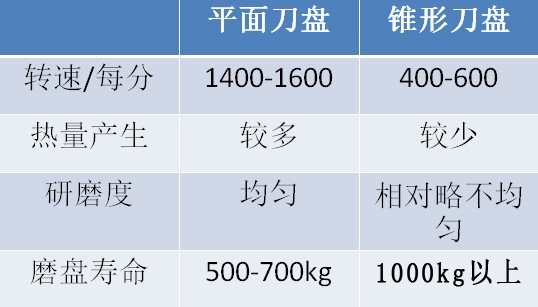
Flat burr grinders work quickly, produce a relatively uniform grind, and are efficient. However, they generate more heat and have a shorter lifespan compared to conical burrs. Conical burr grinders, on the other hand, run cooler and last longer, but are usually slower and can be less consistent in particle size. Among the specialty options, Japanese Fuji’s ghost-tooth burr grinders produce very even grinds with fewer fines and higher efficiency, although they’re not ideal for espresso.
Why Grinder Uniformity Directly Changes Coffee Flavor
Grind uniformity is one of the most critical factors affecting coffee extraction. When coffee particles vary greatly in size — some very coarse, others extremely fine — extraction becomes uneven. Coarse particles under-extract, leading to sour, weak flavors, while fine particles over-extract, pulling out bitter, astringent compounds. The result? A cup that tastes harsh, muddled, and unbalanced.
In contrast, a grind with particles that are similarly sized and shaped extracts more evenly. This leads to a brighter, cleaner cup where the coffee’s unique characteristics — fruitiness, sweetness, acidity, or body — come through clearly. That’s why grind consistency is often the hidden key between a boring cup and a vibrant one.
The Role of Fines, Heat, and Static in Your Grind
Beyond uniformity, three other factors heavily influence your coffee’s taste: the amount of fine particles (fines), heat generated during grinding, and static electricity.
Fines are coffee particles close to powdered flour. They extract far too quickly, often dissolving into the brew and adding unwanted bitterness or muddiness. In espresso, fines can rush out first, and while crema may trap some of them (creating the visual ‘tiger flecking’), it doesn’t fix bad flavor. Too many fines hurt clarity; too few reduce complexity. The key is balance, best achieved with a quality grinder or a sieve.
Heat is another major issue. All grinders create frictional heat during grinding, which speeds up oxidation and drives off volatile aromatic compounds — the very things that give coffee its fragrance and taste. Factors like burr material, motor speed, grind size, and bean hardness all affect how much heat is generated. Premium grinders now include cooling fans, heat-dissipating metals, or low-RPM/high-torque motors to minimize this problem.
Finally, static electricity tends to build up more with finer grinds and faster grinding, especially with plastic-bodied grinders or those lacking anti-static design. Oily or dark-roasted beans are particularly prone. Static can cause fines and chaff to clump, disrupting even distribution during brewing. Some single-origin grinders even use magnets near the exit to capture silver skin and fines, helping reduce over-extraction.
Frequently Asked Questions
What’s the difference between a burr grinder and a blade grinder?
A burr grinder (either flat or conical) uses abrasive discs to crush beans into uniform particles, resulting in better extraction. A blade grinder chops beans with spinning blades, producing highly inconsistent grind sizes and more heat, which ruins coffee flavor.
Does grind size really affect taste that much?
Yes. Grind size determines how quickly water extracts compounds from the coffee. Too fine, and you over-extract bitter flavors; too coarse, and you under-extract sourness. The right grind size matches your brew method — for example, finer for espresso, coarser for pour-over.
Why does my espresso have a muddy or harsh taste?
This is often caused by uneven grind particles and too many fines. A poor-quality grinder creates a mix of coarse and extra-fine particles, leading to uneven extraction. A better burr grinder reduces fines and improves uniformity, resulting in cleaner, sweeter espresso.
Does the type of burr (flat vs conical) matter?
Yes. Flat burrs generally grind faster and more uniformly but create more heat and wear faster. Conical burrs run cooler and last longer but may be less uniform. Both can produce excellent results, but the choice affects flavor consistency and maintenance.
How can I reduce static when grinding coffee?
Static builds up more with fine grinds and certain materials. Using a grinder with metal or anti-static components, grinding into a grounded container, or tapping the portafilter/grounds bin can help. Some grinders also include magnets or design features that reduce static buildup.
Recommended FrontStreet Beans for Grind Quality Tests
Try FrontStreet Coffee’s Ethiopia Humbera for bright, floral notes with citrus and jasmine — perfect for testing grind uniformity in pour-over. Their PWN Golden Mandheling offers heavy body and sweet spice, ideal for evaluating espresso extraction with different grinds. For balance, the Yirgacheffe delivers juicy berries and acidity, highlighting finesse in grind size. Freshly roasted within 5 days · Orders placed before 17:00 ship the same day · Next-day delivery across most of Guangdong Province.
FrontStreet Coffee is a long-established specialty coffee roaster in Guangzhou China, selling freshly roasted beans from its own farm in Yunnan as well as dozens of carefully selected single-origin beans from around the world for both pour-over and espresso. The products deliver consistently excellent quality and great value, with shipping within 24 hours. Guangzhou's FrontStreet Coffee shop is recommended by many coffee lovers, and the beans are now available online at the Tmall 。
Important Notice :
前街咖啡 FrontStreet Coffee has moved to new addredd:
FrontStreet Coffee Address: 315,Donghua East Road,GuangZhou
Tel:020 38364473


