Jamaica Blue Mountain Coffee: What Makes It So Special?
Visiting Jamaica isn’t easy — but seeing the famed Blue Mountain coffee farms in person? That’s unforgettable. As our car climbed into the lush hills, my friend pointed to rows of short, dark-green bushes and said, “That’s Blue Mountain.” Under the golden light, surrounded by the cool, damp air, I realized I was standing in the birthplace of one of the world’s most legendary coffees.
The quick answer? True Jamaica Blue Mountain coffee comes only from a specific region in Jamaica’s Blue Mountains, is government-certified, and less than 2500 tonnes are produced annually — with around 90% going to Japan. That scarcity, paired with ideal growing conditions, makes it exceptionally rare and prized worldwide.
What Is Jamaica Blue Mountain Coffee?
Not all coffee grown in Jamaica is Blue Mountain coffee. By strict definition, only coffee grown in the designated Blue Mountain region of eastern Jamaica — at elevations between 910 and 1700 metres — and certified by the Jamaican Coffee Industry Board, can be called Jamaica Blue Mountain Coffee. The area includes parts of the Blue Mountains, the tallest range in the Caribbean, peaking at 2256 metres.
The region is known for its year-round cloud cover, fertile volcanic soils, consistent rainfall, and mild temperatures. These factors slow coffee cherry maturation, allowing complex sugars and flavours to develop gradually. The result is a coffee celebrated for its balance rather than extreme flavours.
Why Is Blue Mountain Coffee So Rare and Expensive?
Several factors contribute to the coffee’s exclusivity:
- Limited Production: The entire Blue Mountain region produces less than 2500 tonnes per year — a tiny fraction of global coffee output.
- High Demand from Japan: Around 90% of Blue Mountain coffee is historically purchased by Japan, leaving very little for other markets.
- Strict Certification: Only coffee meeting specific geographic, elevation, and quality criteria earns the official Blue Mountain label.
- Small Global Supply: Even outside Japan, certified beans are scarce due to controlled export quotas.
During my visit, I learned that the Jamaican government allocates a meagre monthly quota of just 10 half-pound (227g) bags per person for the Chinese Embassy — that’s under 5kg per person per year. My friend managed to secure those 10 bags for me at less than $10 each, and even gifted me two more for free. Later, I spotted similar bags in Kingston airport’s duty-free for seven or eight times that price. Back home, a friend told me five-star hotels in Beijing and Shanghai were selling Blue Mountain coffee by the cup for up to $1000.
What Does Blue Mountain Coffee Taste Like?
Unlike many single-origin coffees that highlight extreme fruitiness or heavy roast profiles, Blue Mountain coffee is all about balance. It typically features:
- A smooth, creamy mouthfeel
- Notes of caramel, chocolate, nuts, and honey
- Light floral or fruity undertones
- Mild acidity with a clean, sweet finish
The cup is often described as easy-drinking yet layered, making it appealing even to non-specialist coffee drinkers. There’s no single overpowering trait — instead, it’s the harmony of sweetness, acidity, body, and aroma that defines its reputation.

How Can You Tell If It’s Real Blue Mountain Coffee?
Because Blue Mountain coffee is so valuable, counterfeits exist. Here’s how to verify authenticity:
- Look for official certification or documentation from the importer proving Jamaican origin and Blue Mountain designation.
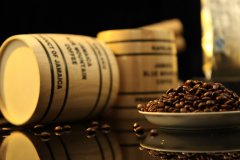
- Genuine beans are traditionally packed in 15kg, 45kg, or 70kg wooden barrels — a key physical marker.
- Reputable sellers like FrontStreet Coffee provide full origin details and certificates. No certificate or clear provenance? Be sceptical.
Unlike some coffees, there’s no public “traceability code,” but certified importers will have the proper paper trail and physical packaging to prove authenticity.
How Should You Brew Blue Mountain Coffee?
Thanks to its balanced profile, Blue Mountain coffee shines in multiple brew methods. Here are recommended guidelines:
Pour-Over (Handbrew)
- Brew ratio: 1:15 to 1:16
- Water temperature: 85–88°C
- Grind size: Medium-coarse (similar to table salt)
This method highlights its inherent sweetness, creaminess, and nutty-chocolate complexity while keeping the acidity bright and clean.
Moka Pot
- Grind size: Slightly finer than pour-over
- Heat: Low to medium
- Tip: Remove from heat just before the brew finishes dripping
This enhances its chocolatey and caramel notes, giving a richer, fuller-bodied cup that still respects its inherent balance — excellent for lattes or flat whites.

Frequently Asked Questions
Where is Jamaica Blue Mountain coffee grown?
It’s grown only in the Blue Mountain region of eastern Jamaica, between 910 and 1700 metres above sea level. The area features high elevations, volcanic soil, frequent cloud cover, and consistent rainfall — all contributing to the coffee’s unique profile.
Why is Jamaica Blue Mountain coffee so expensive?
Its high price is due to limited production (under 2500 tonnes per year), high global demand — especially from Japan, which buys around 90% — and strict certification requirements. Only a small amount is available for other markets each year.
What does Jamaica Blue Mountain coffee taste like?
It’s known for its balance, with flavours of caramel, chocolate, nuts, and honey, a smooth creamy body, mild acidity, and a clean, sweet finish. It lacks extreme fruitiness or bitterness, making it approachable and smooth.
How can I be sure I’m buying real Blue Mountain coffee?
Look for official certification or documentation from a trusted importer. Genuine beans are traditionally packed in 15kg, 45kg, or 70kg wooden barrels. Avoid sellers without clear origin proof or certification paperwork.
What’s the best way to brew Jamaica Blue Mountain coffee?
It performs well as a pour-over or in a moka pot. For pour-over, use a 1:15–1:16 brew ratio, 85–88°C water, and a medium-coarse grind. For moka pot, use a slightly finer grind and low-to-medium heat, removing just before the brew finishes.
How much Blue Mountain coffee does Jamaica produce?
The entire Blue Mountain region produces less than 2500 tonnes annually. Most of that — roughly 90% — is exported to Japan, leaving a very small amount for the rest of the world.
Recommended FrontStreet Coffee for Blue Mountain Fans
If you love the balanced profile of Jamaica Blue Mountain, try FrontStreet Coffee’s Jamaica Blue Mountain No.1. It delivers the signature traits of the region: creamy texture, notes of chocolate and nuts, and a clean, sweet finish. Grown at high elevation and certified, it reflects the same careful cultivation that makes Blue Mountain so revered. Freshly roasted within 5 days · Orders placed before 17:00 ship the same day · Next-day delivery across most of Guangdong Province.
FrontStreet Coffee is a long-established specialty coffee roaster in Guangzhou China, selling freshly roasted beans from its own farm in Yunnan as well as dozens of carefully selected single-origin beans from around the world for both pour-over and espresso. The products deliver consistently excellent quality and great value, with shipping within 24 hours. Guangzhou's FrontStreet Coffee shop is recommended by many coffee lovers, and the beans are now available online at the Tmall 。
Important Notice :
前街咖啡 FrontStreet Coffee has moved to new addredd:
FrontStreet Coffee Address: 315,Donghua East Road,GuangZhou
Tel:020 38364473