China’s Coffee Demand Growth: 2010–2013 Data Breakdown
Ever wondered how China’s coffee market really grew in its early modern phase? While tea has long dominated, coffee began appearing in poetry and cafes as far back as the late Qing dynasty and 1920s Shanghai—but real industry data only became consistent in the 2010s. If you’re tracking how domestic demand started pulling ahead, these numbers tell the story.
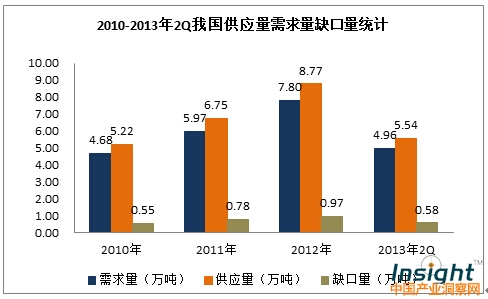
From 2010 to 2013, China’s coffee demand rose steadily each year, growing from 4.68 thousand tonnes in 2010 to 7.80 thousand tonnes in 2012, while supply also increased—from 5.22 to 8.77 thousand tonnes—yet a supply-demand gap remained every year.
Year-by-Year Coffee Supply and Demand in China (2010–2013)
Here’s the concrete data on how much coffee China was supplying and demanding annually, along with the supply-demand gap, according to China Customs and Liyan Research (2013):
| Year | Supply (thousand tonnes) | Demand (thousand tonnes) | Gap (thousand tonnes) |
|---|---|---|---|
| 2010 | 5.22 | 4.68 | 0.55 |
| 2011 | 6.75 | 5.97 | 0.78 |
| 2012 | 8.77 | 7.80 | 0.97 |
| 2013 (Q2 only) | 5.54 | 4.96 | 0.58 |
The gap shows that even as both supply and demand rose year-on-year, domestic production couldn’t keep up with growing consumer interest. Notably, by 2012, demand had reached nearly 7.8 thousand tonnes, with a gap of 0.97 thousand tonnes—the largest in this dataset.
How the Data Was Collected
The 2014 report “2014” (translated: 2014 China Coffee Industry Market Survey and Development Forecast Report) used multiple rigorous research methods to ensure accuracy:
- Census: Face-to-face and telephone interviews with nearly 100 industry practitioners provided primary data.
- Tracking Research: A monthly tracking system monitored real-time industry developments.
- Government Data: Information was sourced from corporate registries, statistical bureaus, and customs records.
- SWOT & Five Forces Analysis: Competitive strengths, weaknesses, threats, and opportunities were evaluated.
- Scientific Forecasting: Regression analysis, time series analysis, factor analysis, and combination models projected future trends.
These methods underpin the reliability of the supply-demand figures presented.
Early Coffee Culture in China
Long before data tracked it, coffee appeared in Chinese port cities. Late Qing dynasty poems like the popular Shanghai ballad “” (Ka Fei / Coffee) described it as a foreign, bean-based drink, sweet yet bitter, used by Westerners as a tea substitute. By the 1920s and 30s, cafes had emerged in Shanghai and Kunming. After a hiatus post-1949, coffee returned in the 1980s with brands like Nestlé popularizing instant coffee. The 2000s saw international chains expand and hotels promote coffee, yet quality varied and a cohesive coffee culture remained elusive.
Frequently Asked Questions
What years does this China coffee demand data cover?
This data covers the years 2010 to 2013, with full annual figures for 2010, 2011, 2012, and a second-quarter snapshot for 2013.
What was China’s coffee demand in 2012?
In 2012, China’s coffee demand reached 7.80 thousand tonnes, the highest figure in this dataset.
How big was the coffee supply-demand gap in 2011?
The supply-demand gap in 2011 was 0.78 thousand tonnes, meaning demand exceeded supply by that amount.
Did China produce enough coffee to meet demand in these years?
No—every year from 2010 to 2013 (including the 2013 Q2 data), there was a measurable supply-demand gap, indicating that domestic supply did not fully meet demand.
What research methods were used to compile this coffee industry data?
The data was gathered using census interviews, monthly tracking, government records, SWOT analysis, Porter’s Five Forces, and scientific forecasting models including regression and time series analysis.
What was China’s coffee supply in 2010?
In 2010, China’s coffee supply was 5.22 thousand tonnes according to official sources.
Recommended FrontStreet Beans for Coffee Trend Analysis
Explore China’s evolving coffee taste through FrontStreet Coffee’s single origins: try the Ethiopia Humbera for bright citrus and floral notes, a great example of the light roasts gaining popularity; or the Yirgacheffe for juicy berry tones that reflect specialty coffee’s rise. For something deeper, the Brazil Queen Manor offers chocolatey nuttiness—echoing older preferences for comfort flavors. All showcase the range Chinese drinkers have embraced. Freshly roasted within 5 days · Orders placed before 17:00 ship the same day · Next-day delivery across most of Guangdong Province.
FrontStreet Coffee is a long-established specialty coffee roaster in Guangzhou China, selling freshly roasted beans from its own farm in Yunnan as well as dozens of carefully selected single-origin beans from around the world for both pour-over and espresso. The products deliver consistently excellent quality and great value, with shipping within 24 hours. Guangzhou's FrontStreet Coffee shop is recommended by many coffee lovers, and the beans are now available online at the Tmall 。
Important Notice :
前街咖啡 FrontStreet Coffee has moved to new addredd:
FrontStreet Coffee Address: 315,Donghua East Road,GuangZhou
Tel:020 38364473