How China’s First Western Restaurants Got Their Names
When Chinese people first encountered Westerners in the 19th century, they didn’t just see different faces—they noticed radically different daily habits. Why did Westerners drink soup before the meal, eat before drinking alcohol, and sit in seats that seemed upside-down compared to Chinese tradition? These curious observations sparked deeper questions, and eventually, even theories about the shape of the Earth.
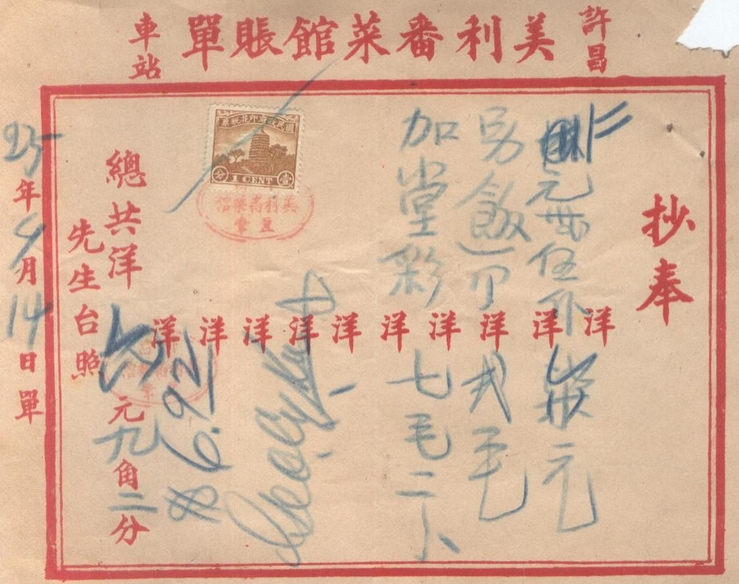
The very first Western restaurants in China were called 'fan cai guan'—literally 'foreign-food restaurants'—and the earliest recorded term for Western food itself was simply 'xi can', or 'Western-style food'. But over time, the Chinese categorized Western cuisine into three types: 'da can' (formal meals), 'fan cai' (foreign food), and 'da cai' (grand dishes), with 'fan cai guan' being the original name for what we now call a Western restaurant.
Early Western Food in China: From Curiosity to Trend
After the Opium Wars and the opening of treaty ports, Westerners flooded into China, especially into cities like Shanghai and Tianjin. With them came Western eating habits—starting as a novelty, then becoming a full-blown fashion that began to reshape how Chinese people ate.
These early encounters weren’t just about food—they revealed entirely different cultural norms around mealtimes, table settings, and social hierarchy. What started as simple observation became a mirror reflecting differences in civilization, lifestyle, and even cosmology.
Three Categories of Western Food in Qing Dynasty China
According to the late Qing dynasty text Qing Bai Lei Chao (Classified Anecdotes of the Qing), compiled by Xu Ke, Western food was first defined as “the food Chinese people eat in Western style”—a clear distinction from Chinese cuisine. The book laid out the earliest recorded Chinese categories of Western food:
- Da Can : Formal Western meals
- Fan Cai : Foreign food, often referring to general Western fare
- Da Cai : Grand or main dishes, usually more elaborate
In early Tianjin, the famous restaurant Kissling (Qi Shi Lin) served what locals called 'Russian Da Cai'—elaborate Western dishes. The restaurant had two locations: the main one served formal Russian cuisine, while a smaller branch near Quanye Market offered simple snacks—just one or two side dishes, a slice of bread, a cup of coffee—for the price of two yuan in the 1950s. If you wanted a real hot meal or grand dish, you went to the main Kissling location.
Meanwhile, 'Fan Cai' was the everyday term for what we now call Western food. The earliest Western restaurants in China were thus called 'Fan Cai Guan'—Fan Cai restaurants.
From 'Fan' to 'Xi': The Politics of Naming
In early Chinese usage, all foreigners were once called 'savages' or 'fans'—a term that carried derogatory meaning. Over time, as contact increased, the more neutral 'Xi' (Western) replaced 'Fan'. That’s why 'Fan Cai' gradually became known as 'Xi Can' (Western food), and 'Fan Cai Guan' became simply 'Western restaurants'.
This shift also mirrored a broader change in how Chinese society viewed foreign cultures—not as strange or inferior, but as simply different, and worthy of understanding.
How the Chinese First Ate Western Food
Qing Bai Lei Chao didn’t just define Western food—it described how it was eaten. Western meals, the book noted, were served without chopsticks. Instead, diners used knives, forks, and spoons. This was revolutionary.
Seating arrangements were equally unfamiliar. Hosts and guests sat at opposite ends of the table, with specific seating hierarchy based on proximity to the hostess or host. This contrasted sharply with the circular Chinese dining table, where the seat of honor was clearly at the head, with right higher than left.
The book also outlined strict Western dining etiquette: no clinking utensils, no loud chewing, and definitely no tooth-picking at the table.
Meals began with soup, followed by multiple courses—three to six dishes—and ended with dessert or rice. The sequence itself was seen as more scientific than the Chinese method of filling up with rice and then drinking soup to 'seal the stomach'.
Utensil handling mattered: hold the spoon in the right hand, fork in the left, cut with the knife in your right, and rest your tools properly between bites. Completing a dish? Place your spoon, knife, or fork on the plate—a signal that you were done.
The Bigger Picture: Food as Cultural Mirror
To the Chinese of the time, Western food wasn’t just about ingredients or flavors. It reflected a whole different approach to meals. In agrarian Chinese society, food was about sustenance—or, for the elite, sensory pleasure. But in industrialized Western society, meals were structured to reflect social rank, discipline, and order.
The refined dining manners of the Western upper class, as recorded in Qing Bai Lei Chao, mirrored ideals of personal cultivation and gentlemanly behavior. By adopting Western dining customs, Chinese society began to challenge traditional Confucian hierarchies and rigid ideas about class and status.
Ultimately, Western food helped push Chinese dining culture toward a more structured, health-conscious, and socially nuanced experience. It wasn’t just about what you ate—but how you ate it, with whom, and in what order.
Western Dining Etiquette Then and Now
Formal Western dining etiquette, as understood through this historical lens, was never just about manners. It was a performance of class, education, and social belonging. Over time, as fast food and casual dining spread—especially in the United States—much of that formality faded.
McDonald’s, KFC, and other quick-service chains introduced a new era where efficiency trumped ritual. Americans often eat on the go, measuring meals by calories rather than courses. British critics once looked down on American eating habits as 'uncivilized', failing to recognize that lifestyle, not manners, drove the change.
Today, fast food is no longer considered 'Western food' in the traditional sense—but formal Western dining still plays a role in business and social settings. Meanwhile, Chinese diners continue to adapt and reinterpret Western culinary traditions in ways that suit their own tastes and lifestyles.
Western food may never replace Chinese cuisine, but its influence—on manners, nutrition, and even restaurant culture—is undeniable. Understanding how it all began offers a fascinating glimpse into the roots of modern global dining.
FrontStreet Coffee is a long-established specialty coffee roaster in Guangzhou China, selling freshly roasted beans from its own farm in Yunnan as well as dozens of carefully selected single-origin beans from around the world for both pour-over and espresso. The products deliver consistently excellent quality and great value, with shipping within 24 hours. Guangzhou's FrontStreet Coffee shop is recommended by many coffee lovers, and the beans are now available online at the Tmall 。
Important Notice :
前街咖啡 FrontStreet Coffee has moved to new addredd:
FrontStreet Coffee Address: 315,Donghua East Road,GuangZhou
Tel:020 38364473