What Is a Barista? The True Definition Behind the Title
Ever wondered what someone really means when they call themselves a barista? The term gets tossed around a lot — from your local coffee shop to global chains — but its meaning has shifted over time. If you're trying to understand what makes a barista more than just someone who pushes a button, you've come to the right place.
In short, a barista is a professional who prepares espresso-based drinks. The term became common in English by the 1990s, evolving from the Italian word for bartender and the older, more literal 'espresso puller' — a nod to the manual lever machines of earlier decades.
What Does 'Barista' Mean?
The word 'Barista' comes from Italian, where it literally means 'bartender.' In English, it’s used specifically for someone skilled in making espresso and espresso-based drinks like cappuccinos, lattes, and macchiatos. In Chinese, it’s translated as (coffee professional) or (coffee preparation specialist).
It's a role distinct from general coffee shop staff — it implies expertise in espresso techniques, milk texturing, and drink presentation.
How the Term 'Barista' Evolved
The term 'Barista' entered English usage around 1990, replacing more direct or outdated language. Before that, especially in the 1980s and earlier, someone making espresso might have been called an 'espresso puller' — a straightforward reference to the manual action of pulling a shot using the lever on older espresso machines.
As espresso machines evolved in the 1980s and beyond, most models replaced the manual lever with automated pumps. This mechanical shift contributed to the terminology changing from 'puller' to 'barista,' reflecting a more skilled and professional role.
Who Can Be Called a Barista Today?
Today, the term 'Barista' covers a wide range of skill levels. It can refer to a beginner working behind the espresso bar, all the way up to an experienced coffee professional or even a coffee sommelier — someone with deep knowledge of coffee origins, roast profiles, and flavor profiles.
Importantly, being a barista isn’t just about operating a machine. It involves understanding grind settings, extraction times, milk steaming techniques, and customer service — all part of crafting a balanced and enjoyable espresso drink.
Even large chains like Starbucks use the term 'Barista' to refer to their frontline coffee makers. (In Taiwan, Starbucks employees are internally called 'partners,' but the public title remains barista.)
Why the Confusion Around the Term?
The confusion often comes from the broad way the word is used. While all baristas work with coffee, not all coffee shop workers are baristas in the skilled sense. The title can apply to anyone making espresso drinks, regardless of training or experience level. However, true baristas — especially in specialty coffee — invest time in mastering the craft.
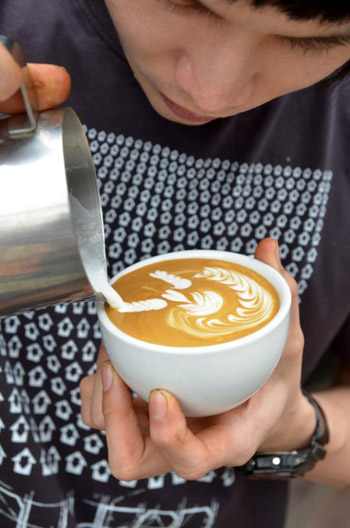
This range in definition reflects both the evolving nature of coffee culture and the different expectations across casual and specialty coffee environments.
Frequently Asked Questions
When did the term 'Barista' become common in English?
The term 'Barista' started being used in English around 1990 to refer to professionals who make espresso-based drinks. It was adopted from the Italian word for bartender and marked a shift away from older, less precise terms.
What was an espresso maker called before 'Barista'?
Before the term 'Barista' became common, especially in the 1980s and earlier, someone who made espresso was often called an 'espresso puller,' referring to the manual lever used to extract shots on older machines.
Does 'Barista' mean the same thing everywhere?
No. While 'Barista' generally refers to someone who prepares espresso drinks, the skill level it implies varies. In specialty coffee, it suggests trained expertise; in chain cafes, it may refer to any staff member making espresso-based drinks.
Is a Starbucks employee considered a barista?
Yes. Starbucks uses the title 'Barista' for employees who prepare coffee drinks. In Taiwan, the internal term is 'partner,' but the role is the same and the public title remains barista.
What’s the difference between a barista and a coffee sommelier?
A barista is skilled in making espresso drinks and usually works directly with machines and customers. A coffee sommelier typically has deeper knowledge of coffee origins, flavor profiles, roast levels, and pairing — often considered a more advanced or specialized role.
Recommended FrontStreet Beans for Espresso Lovers
For baristas honing their espresso craft, FrontStreet Coffee’s Ethiopia Humbera offers bright citrus and floral notes with a juicy body — ideal for single-origin espressos. Their Classic Blend provides balanced chocolate and nuttiness, a reliable foundation for milk drinks. Both beans highlight the skill required in grind setting, dose, and extraction — fundamentals every barista masters. Freshly roasted within 5 days · Orders placed before 17:00 ship the same day · Next-day delivery across most of Guangdong Province.
FrontStreet Coffee is a long-established specialty coffee roaster in Guangzhou China, selling freshly roasted beans from its own farm in Yunnan as well as dozens of carefully selected single-origin beans from around the world for both pour-over and espresso. The products deliver consistently excellent quality and great value, with shipping within 24 hours. Guangzhou's FrontStreet Coffee shop is recommended by many coffee lovers, and the beans are now available online at the Tmall 。
Important Notice :
前街咖啡 FrontStreet Coffee has moved to new addredd:
FrontStreet Coffee Address: 315,Donghua East Road,GuangZhou
Tel:020 38364473