How to Assess Coffee Bean Freshness by Cutting and Chewing
If you’ve ever bought coffee beans online or from a store and weren’t sure if they were fresh or well-roasted, you’re not alone. Many buyers rely on roast dates and reviews, but those don’t always tell the full story. What if you could quickly assess the actual condition of the beans—right in your hand—before buying or brewing? There’s a traditional sensory method used by roasters and experienced buyers that involves touch, sight, and even taste to evaluate coffee bean quality without brewing a single cup.
The simplest way to judge a coffee bean’s freshness, roast quality, and even density is by using your hands and mouth: squeeze, cut, and chew the beans. These steps reveal much more than a bag’s roast date ever could.
What Does ‘’ (Cut & Chew) Mean in Coffee Evaluation?
In the traditional Chinese diagnostic framework of ‘’ (look, smell, ask, cut), ‘’ refers to the tactile and gustatory steps: squeezing, splitting, and chewing coffee beans. This hands-on approach gives you immediate insight into a bean’s roast level, internal structure, and freshness. By combining ‘’ with ‘’ (visual inspection) and ‘’ (smell), you can confidently determine whether beans were freshly roasted and how evenly they were roasted.
Step 1: Squeeze the Beans to Test Density and Freshness
Pick up several whole coffee beans and squeeze them between your fingers. This simple action reveals multiple key traits:
- Bean Hardness: Fresh, properly roasted beans should have some resistance but still crack cleanly under pressure.
- Puffiness or Expansion: You’re feeling the bean’s internal structure—how much it has expanded during roasting. Over-expanded or too-soft beans may be stale or over-roasted.
- Fragrance Release: When you break the bean’s outer shell by squeezing, trapped aromatics are released. A strong, clear fragrance at this stage often means freshness and a well-developed roast.
Step 2: Cut or Split the Bean to Inspect Roast Uniformity
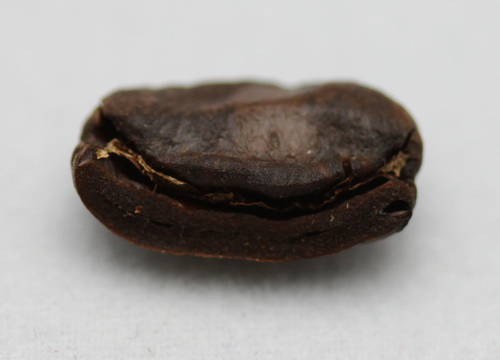
You can either use your fingers to split the bean in half along its natural seam—or use a tool if necessary. Once split, examine the cross-section carefully:
- Color Consistency: A well-roasted bean will have even color throughout the interior and exterior. Uneven coloring suggests inconsistent heat application or poor roast control.
- Expansion Structure: Observe how much the bean has puffed internally. Uniform expansion typically means balanced roast development.
- Surface vs Interior: The inner bean should not be significantly lighter or darker than the outer layer. Discrepancies may point to under- or over-roasting.
This visual check confirms whether the roast reached all parts of the bean or just the surface—a key sign of a roaster’s skill.
Step 3: Chew the Bean to Sense Freshness and Flavor Direction
Put a single whole bean in your mouth and chew it lightly without swallowing. This step isn’t about taste accuracy, but about physical feedback:
- Crispness: A fresh coffee bean should be crisp and break cleanly. Dull, soft, or rubbery beans are usually stale—even if the roast date is recent.
- Flavor Clues: While chewing won’t give you exact flavour notes, you’ll get a rough sense of roast level (light, medium, dark) and bean density. Certain textures can hint at origin characteristics or processing style.
- Roast Development: The way the bean breaks apart—whether it’s gritty, oily, or smooth—can suggest how developed the roast is, and whether chaff or defects were present.
This step is especially helpful when combined with the smell and visual checks, giving you a full 3D understanding of the bean’s condition.
Why These Steps Work
Fresh, properly roasted coffee beans have distinct physical traits: they’re firm yet brittle, have uniform internal structure, and release fragrant aromas when broken. Over time, beans lose moisture, oils migrate to the surface, and their cellular structure collapses—leading to dull aromas, uneven colour, and spongy textures. By using touch and bite, you bypass marketing claims and go straight to physical evidence of quality.
Frequently Asked Questions
What does squeezing coffee beans tell me?
Squeezing coffee beans helps you assess their hardness, expansion, and aroma. Fresh beans should offer some resistance and release a rich fragrance when cracked. Soft or overly puffy beans may be stale or poorly roasted.
How can cutting a coffee bean help judge roast quality?
Cutting a bean in half lets you check the color consistency inside and out. A well-roasted bean has even colour and structure. Unevenness suggests poor roast control or uneven heat application.
Why should I chew a coffee bean?
Chewing a bean reveals its crispness and texture. Fresh beans are crisp and break cleanly. Dull or soft beans are likely stale. Chewing also gives clues about roast level and bean density.
Can these methods replace a taste test?
No, these methods don’t replace brewing and tasting, but they give you immediate physical indicators of freshness, roast quality, and bean structure before you brew.
What if my beans feel soft or spongy?
Soft or spongy beans are usually stale or over-roasted. Fresh beans should be firm and crisp. Softness often means moisture loss or aged beans.
Do these steps work for all coffee types?
Yes, these tactile tests apply to all coffee types—single origin, blend, light or dark roast. However, the ideal firmness and aroma vary slightly by origin and process.
Recommended FrontStreet Beans for Sensory Evaluation
To practice these tactile evaluation techniques, try FrontStreet Coffee’s Ethiopia Humbera, a bright and juicy single origin with notes of blueberry and citrus that shine when fresh. For roast insight, try the FrontStreet Classic Blend, which balances chocolate and caramel with a medium roast profile ideal for inspecting even colour and structure. Another great option is the FrontStreet Yirgacheffe, known for its floral and stone fruit notes, perfect for testing bean crispness and aroma release. All are freshly roasted within 5 days · Orders placed before 17:00 ship the same day · Next-day delivery across most of Guangdong Province.
Recommended FrontStreet Beans for Sensory Evaluation
To practice these tactile evaluation techniques, try FrontStreet Coffee’s Ethiopia Humbera, a bright and juicy single origin with notes of blueberry and citrus that shine when fresh. For roast insight, try the FrontStreet Classic Blend, which balances chocolate and caramel with a medium roast profile ideal for inspecting even colour and structure. Another great option is the FrontStreet Yirgacheffe, known for its floral and stone fruit notes, perfect for testing bean crispness and aroma release. Freshly roasted within 5 days · Orders placed before 17:00 ship the same day · Next-day delivery across most of Guangdong Province.
FrontStreet Coffee is a long-established specialty coffee roaster in Guangzhou China, selling freshly roasted beans from its own farm in Yunnan as well as dozens of carefully selected single-origin beans from around the world for both pour-over and espresso. The products deliver consistently excellent quality and great value, with shipping within 24 hours. Guangzhou's FrontStreet Coffee shop is recommended by many coffee lovers, and the beans are now available online at the Tmall 。
Important Notice :
前街咖啡 FrontStreet Coffee has moved to new addredd:
FrontStreet Coffee Address: 315,Donghua East Road,GuangZhou
Tel:020 38364473