What Happens During Coffee Roasting? Stages Explained
You’ve got fresh green coffee beans and want to turn them into something with aroma, acidity, sweetness, and body — but how? Without professional equipment, can you still understand what’s happening inside those beans as they roast? Here’s your backstage pass to the full coffee roasting process, broken down into the key stages that transform flavorless seeds into the complex cups we love.
In a typical roast lasting 12–16 minutes, beans reach up to 232°C (450°F), lose 15–25% of their moisture, survive two loud cracking phases, and undergo hundreds of chemical reactions — notably caramelization and Maillard reactions — that define their final taste.
How Roasting Transforms Green Coffee Beans
Green coffee beans smell grassy, sometimes even fermented, and carry around 10% moisture. They show no aroma, no sweetness, and certainly no complexity. Roasting is the controlled application of heat that unlocks everything: acidity, fruitiness, chocolate, spice, or smokiness. Every stage from drying to dark roast is essential to develop those flavors you taste in the cup.
Stage 1: Drying (Preheating & Moisture Loss)
Before anything flavorful emerges, the beans must shed their moisture. At the start of roasting, green coffee typically contains about 10% water. This moisture escapes first in the drying phase. As it heats, the beans also begin caramelization (often grouped under Maillard-type reactions), where sugars, proteins, fats, and amino acids interact. These interactions are responsible for creating over 800 aromatic compounds from the original 200+ found in raw beans. Early chemical development lays the groundwork for aroma and color.
Stage 2: First Crack – The Start of Roast Development
As heat continues, pressure builds inside the bean from vaporized water and gases. When internal pressure hits 20–25 atmospheres, the bean’s cell walls rupture — you’ll hear the first of two distinct “cracks.” This first crack usually begins around 190–200°C (374–392°F). The sound starts sporadically, then becomes more frequent before tapering off. At this point, the beans have turned from pale yellow to a light brown. Many roasters consider the first crack the minimum endpoint for a light roast. Roast timing and ending point here greatly influence acidity and clarity.
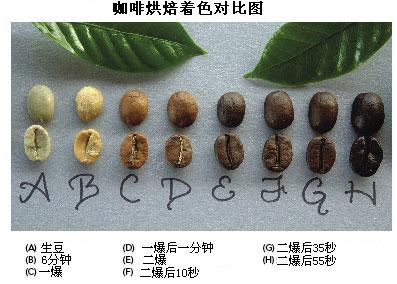
Stage 3: Second Crack – Entering Dark Roast Territory
After first crack fades, heating continues and temperatures rise toward approximately 230°C. Eventually, you’ll hear a second, more subtle and rapid crackling sound. This is second crack, and it signals a major structural change: the bean’s outer silverskin (chaff) begins to loosen, oils migrate to the surface, and the color deepens further. The second crack is less explosive and more frequent than the first. Roasts that reach or exceed this stage are considered medium-dark to dark, with bolder, more bitter flavors and reduced origin characteristics.
Stage 4: Deep Roast – Surface Oils and Smoke
Beyond second crack, the roast enters the deep roast stage. The beans become shiny black and start emitting visible smoke. If you’re roasting at home, you may want to disable your smoke alarm. Temperatures typically cap just below 240°C, though some push beyond for extremely dark roasts. At these levels, beans take on an oily sheen and nearly black appearance. This is the technical limit for most coffee roasting — any hotter and combustion, not roasting, will occur.
Why These Stages Matter
From the dry seed to the oily bean, every stage involves physical expansion, weight loss, and chemical transformation. Moisture escapes, gases build, cell walls fracture, and hundreds of flavor precursors evolve. The roast degree you choose — whether stopping at first crack for a bright cup or pushing into second crack for boldness — defines the balance of acidity, sweetness, body, and aftertaste. There’s no single “right” roast, but understanding these stages lets you make intentional choices.
Frequently Asked Questions
What is the first crack in coffee roasting?
The first crack is the initial audible popping sound caused when internal pressure from steam and gases reaches about 20–25 atmospheres, rupturing the bean’s cell walls. It typically occurs around 190–200°C (374–392°F) and signals the bean has reached a light roast level. The sound starts sparse and becomes denser before fading.
What happens during the drying phase of coffee roasting?
The drying phase is the initial stage of roasting where the coffee bean loses its inherent 10% moisture content. This phase initiates chemical reactions such as caramelization and Maillard-type processes, laying the foundation for the bean’s eventual aroma, color, and flavor complexity.
What is the second crack and when does it occur?
The second crack is a faster, finer series of popping noises that occur when heating continues past first crack. It typically begins around 230°C (446°F) and indicates further structural breakdown, with oils rising to the bean surface and the roast progressing to medium-dark or dark levels. The second crack is less intense but more frequent than the first.
How much weight do coffee beans lose during roasting?
Coffee beans generally lose between 15% and 25% of their weight during the roasting process due to moisture evaporation and chemical transformations. This weight loss is consistent across most professional and home roasting methods.
How long does a typical coffee roast last?
A standard coffee roast takes approximately 12 to 16 minutes, depending on the batch size, roast profile, and desired endpoint — whether that’s a light, medium, or dark roast.
What temperature do coffee beans reach during roasting?
During a typical roast, coffee beans can reach internal temperatures of up to 232°C (450°F). Temperatures may climb further in extreme dark roasts, sometimes exceeding 240°C, but that risks combustion.
FrontStreet Coffee Beans Ideal for Roast Experimentation
Try FrontStreet’s Ethiopia Yirgacheffe for bright acidity and floral notes, perfect to highlight light roast profiles right after first crack. For deeper exploration, their Colombia Huila shows balanced body and caramel tones ideal for roasts reaching or just into second crack. Finally, the Brazil Yellow Bourbon reveals nutty, chocolatey traits that shine in medium to dark roasts. Freshly roasted within 5 days · Orders placed before 17:00 ship the same day · Next-day delivery across most of Guangdong Province.
FrontStreet Coffee is a long-established specialty coffee roaster in Guangzhou China, selling freshly roasted beans from its own farm in Yunnan as well as dozens of carefully selected single-origin beans from around the world for both pour-over and espresso. The products deliver consistently excellent quality and great value, with shipping within 24 hours. Guangzhou's FrontStreet Coffee shop is recommended by many coffee lovers, and the beans are now available online at the Tmall 。
Important Notice :
前街咖啡 FrontStreet Coffee has moved to new addredd:
FrontStreet Coffee Address: 315,Donghua East Road,GuangZhou
Tel:020 38364473